
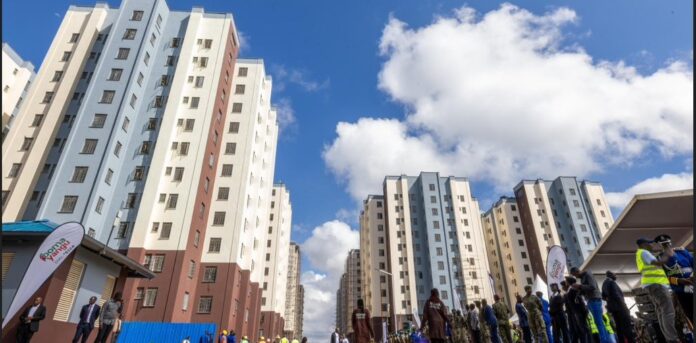
The government is looking beyond the housing levy to finance its ambitious affordable housing programme, with plans to bring international development partners into the funding model. Housing PS Charles Hinga says the strategy could help Kenya sustain construction of 200,000 affordable homes every year while ensuring proceeds from completed units continue funding new projects.
Highlights
- Housing levy collects about KSh6 billion every month.
- Government targets 200,000 affordable homes annually.
- World Bank and other development partners could provide long-term financing.
- Money from completed housing units will be reinvested in new projects.
- Buyers completing tenant-purchase payments will receive sectional title deeds.
Main Story
Government Seeks More Money for Affordable Housing
Kenya is considering new ways of financing its affordable housing programme as the government works towards its target of constructing 200,000 homes every year.
Housing and Urban Development Principal Secretary Charles Hinga said the existing housing levy remains a key source of funding, but additional financing will be needed if the government is to significantly increase the number of units being delivered.
The 1.5 per cent housing levy currently generates approximately KSh6 billion each month, providing a steady stream of funds for the programme.
World Bank Partnership on the Table
The government is also looking at long-term financing arrangements with international development institutions, including the World Bank.
Under the proposed approach, revenue collected through the housing levy could be used to attract larger pools of financing from development partners.
This would give the government greater financial capacity to support construction at a larger scale without relying solely on monthly levy collections.
Housing Sales to Fund New Projects
Another part of the model involves recycling money generated from completed housing developments.
As units are sold, the proceeds would be channelled back into the programme and used to finance additional developments.
The approach is designed to create a continuous funding cycle, allowing money from completed projects to support the construction of more homes.
Homebuyers to Receive Title Deeds
Kenyans purchasing units through the tenant-purchase arrangement will also have a clear path to ownership.
Once a buyer completes the required payments, they will receive a sectional title deed confirming their ownership of the property.
This provides homeowners with formal documentation of their investment after completing the purchase process.
Nyali Housing Project Nears Completion
At the Boma Yangu Nyali VOK Estate in Mombasa, construction has reached 74 per cent.
The development is among the projects being delivered under the affordable housing programme, with approximately 85 per cent of the units already allocated.
The progress highlights the government’s broader push to increase housing supply while creating opportunities for Kenyans to own homes through structured payment arrangements.
A Bigger Financing Model
The proposed expansion of financing could become an important part of the government’s plans as it seeks to maintain construction across multiple housing projects.
By combining housing levy collections, proceeds from completed units and potential development-partner financing, the government hopes to create a model capable of supporting affordable housing at a much larger scale.
The bigger question will be whether the expanded financing structure can translate into faster construction, accessible payment terms and actual home ownership for more Kenyan families.
For Kenya’s affordable housing dream to become a reality at scale, the real measure will be whether every new financing shilling brings more families closer to owning a home.

