
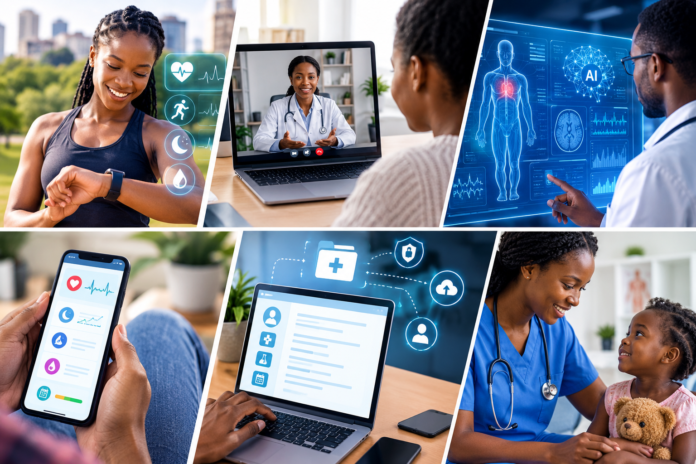
Managing your health is no longer limited to hospital visits and occasional check-ups. From smartwatches that track your heart rate to virtual consultations with doctors, technology is changing how people understand their bodies, access medical care and make informed health decisions.
Highlights
- Wearables can track important health and fitness information in real time.
- Telemedicine allows patients to consult healthcare professionals remotely.
- Artificial intelligence is helping doctors identify potential health risks.
- Digital records make medical information easier for patients to access.
- Technology is making healthcare more personalised and convenient.
How Technology Is Changing Healthcare
Healthcare Is Going Digital
Technology has become an increasingly important part of how people monitor and manage their health.
Instead of waiting until something feels wrong before seeking medical attention, people can now use digital tools to monitor different aspects of their wellbeing every day.
This shift is changing the relationship between patients, healthcare professionals and personal health information.
Smartwatches Are Becoming Health Tools
Wearable devices such as smartwatches and fitness trackers have moved beyond counting steps.
Many devices can monitor heart rate, physical activity and sleep patterns, while some can also track other health-related measurements depending on the device.
Having this information readily available can help users understand their daily habits and notice changes that may be worth discussing with a healthcare professional.
However, these devices are not substitutes for professional medical diagnosis.
Telemedicine Brings Doctors Closer
For people who live far from healthcare facilities or have difficulty travelling, telemedicine can make accessing medical advice easier.
Virtual consultations allow patients to communicate with healthcare professionals remotely, often through a smartphone or computer.
Remote monitoring can also help healthcare providers follow up with patients without requiring every interaction to happen inside a hospital or clinic.
For busy people, this can save time while improving access to certain healthcare services.
AI Is Entering Healthcare
Artificial intelligence is also changing how medical information is analysed.
AI-powered systems can process large amounts of information and assist healthcare professionals in identifying patterns that could point to potential health problems.
The technology is also being explored in personalised healthcare, where information about an individual’s health, lifestyle and medical history can help inform treatment decisions.
AI is designed to support healthcare professionals rather than replace medical expertise.
Your Medical Records at Your Fingertips
Digital health records are making it easier for patients to access important medical information.
Depending on the system being used, online health platforms can allow people to view test results, manage appointments and request prescription refills without relying entirely on physical paperwork.
Having medical information available digitally can also make it easier for healthcare providers to access a patient’s history when appropriate.
Technology Gives Patients More Control
One of the biggest changes brought by digital healthcare is the amount of information people can access about their own health.
Patients can monitor their habits, keep track of appointments and communicate with healthcare professionals without always needing to visit a facility.
But greater access to health information also comes with responsibility.
People should be careful about interpreting data from apps and wearable devices, especially when it comes to serious symptoms. Online information and technology can support healthcare decisions, but they should not replace professional medical advice.
The Future of Personal Health
As technology continues to develop, healthcare is likely to become increasingly connected and personalised.
Wearables, virtual consultations, artificial intelligence and digital medical records are already changing how people interact with healthcare.
The goal is not simply to make healthcare more digital, but to make it more accessible, responsive and centred around individual needs.
Technology may not replace the doctor, but it is changing how people monitor their health, access care and take a more active role in their wellbeing.
More on this topic: New Kenya-US Partnership Targets Early Detection of Zoonotic Diseases. Learn more on how technology is changing health care: WHO on digital health.

