
Hollywood has entered a new era after Paramount Skydance completed its $110 billion takeover of Warner Bros Discovery, bringing some of the entertainment industry’s biggest brands and franchises under one corporate roof. The deal is set to reshape streaming, film production and television while placing CNN and several major entertainment brands in a new corporate structure.
Highlights
- Paramount Skydance has completed its $110 billion acquisition of Warner Bros Discovery.
- HBO, CNN, CBS, DC Studios, Nickelodeon and other major brands are now part of the combined company.
- David Ellison will focus on strategy and technology as Ynon Kreiz oversees day-to-day operations.
- The merger has faced competition concerns and legal challenges in the US.
- The new company will operate under the Skydance Corporation name.
Main Story
A New Hollywood Powerhouse
Paramount Skydance has officially completed its acquisition of Warner Bros Discovery in a deal valued at $110 billion, creating one of the largest entertainment companies in the world.
The merger brings together two major Hollywood studios and a huge collection of film, television, news and streaming properties.
The newly combined company will operate under the name Skydance Corporation, bringing together brands that include HBO, Max, CBS, CNN, Nickelodeon, Showtime, Comedy Central, Food Network and DC Studios.
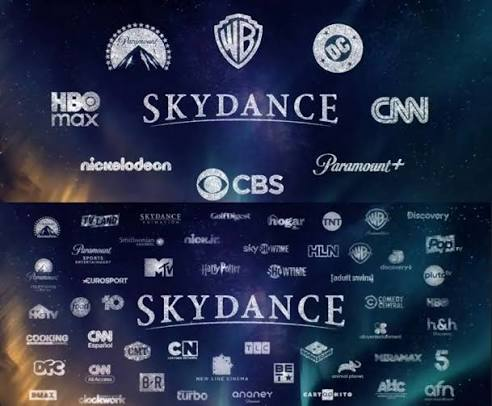
For audiences, the biggest impact could be felt across streaming and entertainment as the company works to integrate its vast library and operations.
Some of Hollywood’s Biggest Franchises
The deal gives Paramount control of a number of globally recognised entertainment properties associated with Warner Bros Discovery.
Among them are franchises such as Harry Potter, Game of Thrones, The Lord of the Rings and Mission: Impossible.
The scale of the catalogue gives the new company a significant collection of films and television content as it competes for audiences in an increasingly crowded streaming market.
David Ellison Calls Deal Historic
Skydance chairman and CEO David Ellison described the completion of the transaction as a major moment for the entertainment industry.
Ellison is expected to concentrate on the company’s broader strategy and technology, while Ynon Kreiz, the former Mattel chief executive, takes responsibility for daily operations and the integration of the two businesses.
The leadership structure also keeps several familiar figures in important positions.
Mark Thompson, the former BBC director general, will remain chairman and editor-in-chief of CNN Worldwide, while Bari Weiss will continue as editor-in-chief of CBS News.
Casey Bloys, who has led HBO and Max content, will take on a wider role as co-chair and chief content officer for the company’s direct-to-consumer operations.
Cost Cutting Remains a Major Question
The merger comes with pressure to reduce costs and improve profitability.
Research analyst Mike Proulx said the move puts the HBO leadership team in charge of the combined streaming business, but warned that Bloys could face pressure to identify savings that may eventually affect content.
Analyst Dan Coatsworth of AJ Bell also pointed to the company’s debt burden, arguing that the enlarged business will need to generate stronger profits and reduce expenses.
That pressure comes at a challenging time for Hollywood, where expensive productions do not always translate into box-office success.
CNN and Editorial Independence
CNN’s future under the new ownership structure has also attracted attention.
As part of an agreement reached with US states, Paramount has committed to establishing a news editorial independence board intended to protect independent and fact-based reporting at CNN and CBS.
The issue has been particularly sensitive at CBS following its earlier change in ownership.
The new arrangement means the merged company will have to balance commercial priorities with the editorial independence of its major news organisations.
Merger Faced Legal Opposition
The takeover did not have a smooth path to completion.
Netflix had initially reached an agreement involving part of Warner Bros Discovery before Paramount Skydance entered the race, triggering a bidding contest.
The proposed takeover later faced legal challenges from several US states, with critics arguing that the merger could reduce competition, increase costs for consumers and affect movie theatres and other parts of the entertainment industry.
A settlement with Paramount eventually cleared the way for the transaction to proceed.
New Rules for Film Production
The settlement also includes conditions governing how the combined company produces films.
Paramount has committed to releasing at least 30 films annually. Failure to meet the requirement could trigger the sale of its 49% stake in Miramax.
The agreement also sets targets for how much of the company’s film production must take place in the United States.
For the first two years, at least 20% of production is required to take place domestically, with the proportion increasing to more than 30% during the following three years.
The deal also contains restrictions intended to prevent the annual film requirement from being met through low-budget or AI-generated productions.
What It Means for Viewers
For millions of viewers, the biggest question is what the merger will mean for the content they watch and how they access it.
The combined company now controls an enormous collection of movies, television programmes and entertainment brands.
But integrating such a large portfolio could also bring changes to streaming services, programming strategies and content budgets as executives look for ways to make the new business more efficient.
The Hollywood landscape has changed dramatically, and the next phase will show whether the new Skydance Corporation can turn its enormous catalogue and global reach into a sustainable entertainment powerhouse.
When two Hollywood giants become one, the biggest story may not be the deal itself, but how much of the entertainment we know today will look different tomorrow.

