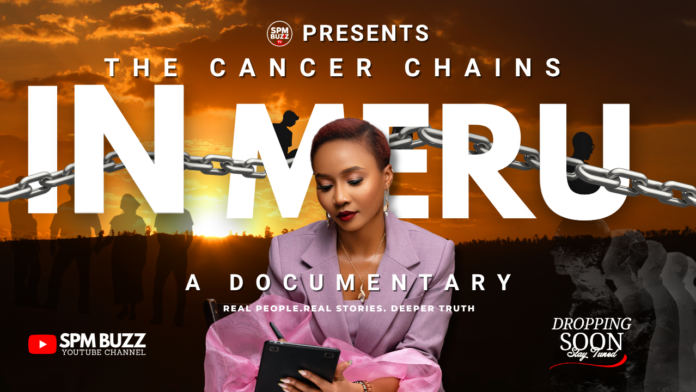
What is really behind the cancer burden in Meru? A new SPM Buzz documentary, “Cancer Chains of Meru: The Untold Story of Cancer in Meru, Kenya,” takes viewers into the experiences of patients, families, healthcare professionals and community voices while examining some of the difficult questions surrounding cancer in the region.
Rather than offering a single explanation, the documentary explores possible contributing factors ranging from agricultural practices and environmental exposure to diet, lifestyle and access to healthcare.
Highlights
- SPM Buzz has released a new documentary exploring cancer in Meru.
- Patients, families, health professionals and community voices feature in the film.
- The documentary examines questions around agriculture, environment and diet.
- Experts caution that cancer has multiple risk factors and no single proven cause has been established for Meru’s cancer burden.
- The film calls for stronger conversations around prevention, screening and access to care.
Main Story
Beyond the Statistics
Cancer is often discussed through numbers, diagnoses and mortality figures. “Cancer Chains of Meru” attempts to bring the conversation closer to the people living through it.
The documentary gives patients and families an opportunity to describe their experiences while healthcare professionals provide medical perspectives on cancer and the factors that can influence its development.
For SPM Buzz, the project is also about creating space for questions that communities may find difficult to raise.
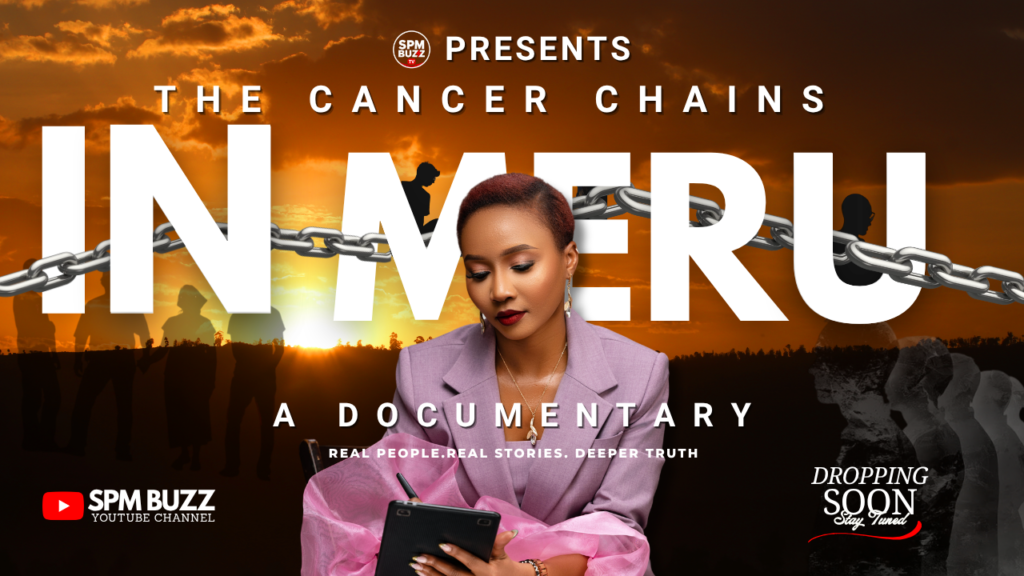
Miss Kithinji says the documentary is not intended to provide one definitive explanation for cancer in Meru.
“This documentary is not about giving people one answer to cancer. It is about asking the questions, listening to the people affected and putting a difficult conversation in the public space.”
Agriculture and Chemical Exposure
One of the issues examined in the documentary is Meru’s agricultural economy and the widespread use of farm chemicals.
The film explores concerns raised around pesticides, herbicides and fertilisers, including questions about how agricultural practices could affect soil, food and the wider environment.
However, these discussions are presented as questions for further investigation rather than proof that agricultural chemicals are responsible for cancer in Meru.
Ammi Veggieman also contributes to the conversation, offering perspectives on soil, agriculture and the relationship between communities and their environment.
What We Eat Matters Too
The documentary also looks at diet and its possible relationship with some cancers.
Medical professionals featured in the film discuss the presence of gastrointestinal cancers and possible dietary considerations, including fibre intake and consumption of processed foods.
Diet is one of several recognised factors that can influence cancer risk, alongside age, genetics, tobacco use, obesity and other lifestyle and environmental factors.
The Aflatoxin Question
Another issue explored is aflatoxin exposure.
Aflatoxins are toxins produced by certain fungi that can contaminate food crops when they are improperly grown, dried or stored. Their potential impact on health makes food handling and storage an important public-health conversation.
The documentary raises questions about whether environmental and agricultural practices in communities such as Meru warrant deeper research.
Giving Patients a Voice
At the centre of the project are the people directly affected by cancer.
Patients and families share their experiences, bringing a human dimension to a subject that can sometimes become reduced to statistics.
Their stories also highlight broader questions about early detection, treatment, healthcare access and the emotional and financial pressure that cancer can place on families.
A National Health Concern
The Meru conversation comes against the backdrop of a wider cancer challenge in Kenya.
According to the National Cancer Institute of Kenya, the country recorded an estimated 35,867 new cancer cases and 22,888 cancer deaths annually, based on GLOBOCAN 2024 estimates.
Meru has also attracted attention over reports of high cancer numbers in some communities, prompting calls for more research and stronger prevention, screening and treatment services.
But the documentary makes an important distinction: there is currently no single proven cause that explains the cancer burden in Meru.
Cancer is a complex disease with multiple potential risk factors, and establishing whether a particular environmental or agricultural exposure is responsible for increased cancer rates requires scientific investigation and reliable local data.
Starting a Bigger Conversation
Through “Cancer Chains of Meru,” SPM Buzz hopes to move the conversation beyond speculation and toward greater public awareness.
The documentary seeks to:
- Give cancer patients and affected families a platform to share their experiences.
- Explore questions surrounding agriculture, the environment and public awareness.
- Encourage conversations about prevention and early detection.
- Highlight challenges around access to cancer care.
- Encourage communities to ask informed questions about cancer in their own surroundings.
- Bring a community-level Kenyan perspective to the wider national cancer conversation.
Watch the Documentary
“Cancer Chains of Meru: The Untold Story of Cancer in Meru, Kenya” is now available on the SPM Buzz YouTube channel.
The documentary does not claim to have found a single explanation for cancer in Meru. Instead, it brings together different voices and perspectives while encouraging viewers to look more closely at prevention, research, early detection and access to care.
Sometimes the first step toward finding answers is not having them but having the courage to ask better questions.

