
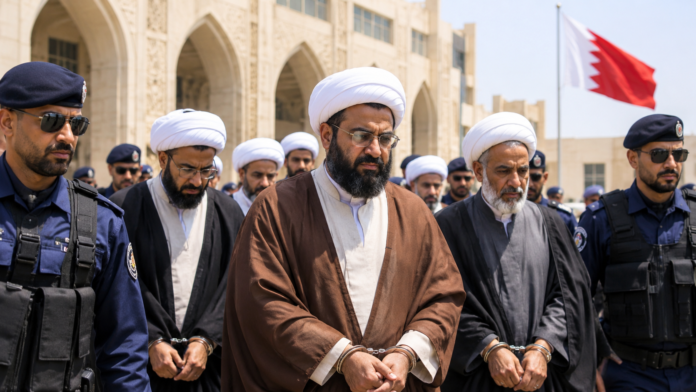
A Bahraini court has sentenced 64 Shia Muslims, most of them religious clerics, to life imprisonment over alleged links to Iran’s Islamic Revolutionary Guard Corps (IRGC), in a major terrorism case that has drawn criticism from international human rights organisations.
Another five defendants received 15-year prison sentences following proceedings at the High Criminal Court in Manama on Monday, November 16, 2026.
The verdict has sparked fresh concerns about religious freedoms, alleged torture in detention and the treatment of Bahrain’s Shia community amid escalating tensions between Bahrain and Iran.
Highlights
- 64 defendants sentenced to life imprisonment in Bahrain.
- Five additional individuals received 15-year prison terms.
- The defendants were accused of establishing a terrorist organisation linked to Iran’s Revolutionary Guards.
- Human rights groups raised concerns about alleged torture and coerced confessions.
- Prominent Shia cleric Sheikh Isa Qassim was reportedly among those tried in absentia.
Main Story
Bahrain Court Hands Down Life Sentences
The High Criminal Court in Manama convicted 69 defendants accused of participating in an alleged terrorist organisation linked to Iran’s Islamic Revolutionary Guard Corps.
According to the Bahrain Institute for Rights and Democracy (BIRD), 64 defendants were handed life sentences, while the remaining five received 15-year prison terms.
The prosecution accused the defendants of establishing a group allegedly intended to undermine the country’s constitutional order and change its system of government.
Other allegations included promoting Iran’s doctrine of Velayat-e Faqih, collecting funds without authorisation and using religious institutions to encourage allegiance to Iran’s supreme leader.
The Bahraini advocate general confirmed the convictions and sentences, although his announcement did not provide the full identities or number of defendants.
Prominent Shia Clerics Among Those Convicted
BIRD reported that 60 of the 69 defendants were Shia clerics, while the remaining nine were affiliated with them, including religious reciters.
Among the religious figures named in the case were Sheikh Mohammed Sanqour and Sheikh Ali al-Sadadi, who had led Friday prayers at the Imam al-Sadiq Grand Mosque in Duraz.
Another prominent figure was Sayed Moosa al-Alwedaie, who served as an imam at the Grand Mosque in Ras Rumman.
The organisation also identified Sheikh Isa Qassim, an influential religious leader within Bahrain’s Shia community, among the 13 defendants reportedly tried in absentia.
Qassim, who holds the religious rank of ayatollah, has been living in Iran since 2018, according to reports.
BIRD said 56 defendants had been arrested during May and June, including 47 clerics and nine associates.
Human Rights Groups Question Fairness of Trial
The convictions have attracted criticism from human rights organisations, which have raised concerns about how the investigation and court proceedings were conducted.
BIRD alleged that some defendants experienced torture, prolonged blindfolding, forced standing, sleep deprivation and threats against themselves and their families while in detention.
The organisation also claimed that some defendants were pressured into signing lengthy statements without being allowed to read them.
Concerns were further raised about restrictions placed on defence lawyers, including limited access to case documents and evidence.
Last week, BIRD joined Human Rights Watch, Amnesty International and other organisations in an open letter calling on Bahraini authorities to investigate the allegations.
The groups urged authorities to ensure that any evidence obtained through coercion or torture was not used to secure convictions.
Bahrain Government Defends Court Proceedings
Despite the criticism, Bahrain’s advocate general maintained that the defendants’ legal rights had been respected throughout the investigation and trial.
The prosecution insisted that the accused had received a fair hearing and that the convictions were based on the evidence presented before the court.
Authorities maintained that the case concerned alleged criminal activities and threats to national security rather than the religious beliefs of the defendants.
The court also imposed financial penalties on some individuals and ordered the confiscation of funds reportedly worth more than $21 million for charitable purposes.
Regional Tensions Between Bahrain and Iran
The case comes amid heightened tensions between Bahrain and Iran following the wider conflict involving Iran, the United States and Israel.
Bahraini authorities have accused Tehran of supporting activities intended to destabilise the kingdom, allegations Iran has previously rejected.
Bahrain, which is governed by a Sunni Muslim royal family despite having a Shia-majority population, has reportedly detained hundreds of people over suspected espionage and terrorism-related offences since the conflict escalated.
Authorities have also revoked the citizenship of several individuals accused of supporting or expressing sympathy for Iran.
Iran has launched missiles and drones against Bahrain and other Gulf countries hosting American military forces during the conflict.
On Sunday, Bahrain’s military reported intercepting several Iranian aerial attacks.
Verdict Raises Fresh Questions Over Religious Freedoms
The sentencing of dozens of Shia religious figures has intensified debate over religious freedoms, national security and the treatment of minority communities in Bahrain.
BIRD director Sayed Ahmed Alwadaei described the verdicts as deeply unjust, arguing that the case represents an attack on the religious identity of Bahrain’s Shia population.
The organisation has called for independent investigations into the alleged mistreatment of defendants and accountability for any officials found responsible.
With all 69 defendants convicted, the case is likely to remain under international scrutiny as human rights organisations continue questioning the fairness of the proceedings.
As Bahrain defends the convictions on national security grounds, the allegations of torture and restrictions on legal defence leave important questions about justice, accountability and religious freedoms.

