
Hong Kong democracy activist Joshua Wong has been handed another 10-year prison sentence, extending his expected time behind bars until 2036 in a case that has drawn renewed international attention to the treatment of pro-democracy campaigners in the Chinese territory. The 30-year-old activist, who first gained global recognition through the 2014 Umbrella Movement, was convicted of colluding with foreign forces under Hong Kong’s national security legislation.
Highlights
- Joshua Wong has received an additional 10-year prison sentence for alleged collusion with foreign powers.
- His expected release date has been pushed to late 2036.
- The activist has spent nearly six years in prison over separate national security cases.
- Human Rights Watch has criticised the latest sentence as cruel and unjust.
- Fellow activist Nathan Law was also identified by the court as a key figure in the alleged conspiracy.
Main Story
Another Decade Behind Bars for Joshua Wong
Hong Kong democracy campaigner Joshua Wong is set to spend another decade in prison after a court handed him a 10-year sentence on Thursday over allegations of working with foreign governments to pressure China and Hong Kong.
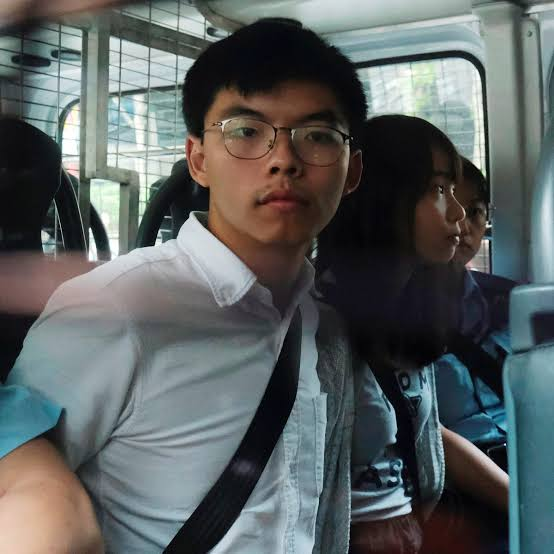
The latest ruling means Wong, who has already spent close to six years in detention, is not expected to leave prison until late 2036.
The former student activist had been due for release in January after serving four years and eight months for subversion under Hong Kong’s national security law.
However, prosecutors brought another case against him in June last year, accusing him of participating in efforts to persuade foreign countries and organisations to impose sanctions against Hong Kong and China.
The legislation, introduced by Beijing in 2020, has become central to several high-profile cases involving individuals associated with Hong Kong’s pro-democracy movement.
Court Explains the 10-Year Sentence
During Thursday’s proceedings, the court described Wong and fellow activist Nathan Law, who currently lives outside Hong Kong and is wanted by authorities, as leading figures in an alleged conspiracy against national security.
Judge William Tam said the offence was considered particularly serious and could have attracted a life sentence.
However, the court settled on an initial 13-year term before reducing it to 10 years after considering Wong’s guilty plea.
The sentencing attracted a strong police presence outside the courthouse.
Wong appeared in a blue shirt and black spectacles, maintaining a composed appearance as he entered the courtroom. He acknowledged people who had come to support him.
Following the ruling, he waved to supporters as he was escorted away. Some supporters were visibly emotional, with several expressing hope that they would see him again after his release.
Human Rights Groups Condemn the Decision
The latest ruling has attracted criticism from international human rights advocates.
Human Rights Watch questioned the legitimacy of the accusations against Wong and described the punishment as unjust.
The organisation also called on foreign governments to publicly challenge the sentences handed to pro-democracy campaigners and consider targeted measures against officials accused of overseeing the crackdown.
Wong’s case follows another major sentencing involving Hong Kong businessman and former media owner Jimmy Lai.
Lai, who founded the now-defunct Apple Daily newspaper, received a 20-year prison term in February under the same national security framework. The decision was criticised by Washington, which described it as unjust and tragic.
How Joshua Wong Became a Global Democracy Figure
Wong first attracted international attention in 2014 when he became one of the prominent faces of Hong Kong’s Umbrella Movement.
The demonstrations brought thousands of people into the streets demanding greater democratic representation and electoral freedoms.
His involvement in activism continued in the years that followed, leading to several arrests and periods of imprisonment from 2017 onwards.
Authorities later accused him of participating in international lobbying activities aimed at securing foreign pressure against Hong Kong.
Among the initiatives linked to these efforts was the Hong Kong Human Rights and Democracy Act, which gave the United States a framework to impose sanctions in response to human rights violations in the territory.
Wong also travelled to the United States in 2019 as part of a delegation seeking support for the proposed legislation.
The bill eventually became law.
Beijing’s National Security Crackdown
The political environment in Hong Kong changed significantly after Beijing introduced its national security law in 2020.
The legislation criminalised activities classified as secession, subversion, terrorism and collusion with foreign forces.
Its introduction followed the massive 2019 pro-democracy demonstrations, which included violent confrontations between protesters and security forces.
Several opposition organisations subsequently dissolved, while a number of prominent activists left Hong Kong.
Wong was among dozens of democracy campaigners convicted in the territory’s largest national security trial in 2024.
Before his latest case, he had publicly maintained his commitment to advocating for Hong Kong, despite the possibility of further imprisonment.
Friends and Supporters Remain Concerned
Beyond the courtroom, Wong’s prolonged detention has also affected people close to him.
Louis Lee, a friend who has visited him in prison, previously described the activist as remaining energetic despite the difficult circumstances.
However, Lee also recalled moments when Wong appeared concerned about his future and the uncertainty surrounding his legal situation.
For Margaret Chan, a 61-year-old supporter who has followed his activism for years, the latest sentence was particularly difficult to accept.
She praised Wong’s contribution to the democracy movement and expressed sadness that he could spend much of his adult life in prison.
Political analyst Steve Tsang of SOAS University of London also suggested that Wong’s prominence in the 2019 demonstrations had made him an important figure in Beijing’s response to the movement.
Tsang argued that the punishment reflected the Chinese government’s determination to maintain tighter control over Hong Kong’s political environment.
As Wong faces another decade behind bars, his case continues to raise questions about political freedoms, national security laws and the future of dissent in Hong Kong.
As Joshua Wong faces the prospect of spending much of his thirties behind bars, his case leaves a difficult question for the international community: where should the balance lie between national security, political freedoms and the right to challenge those in power?

