
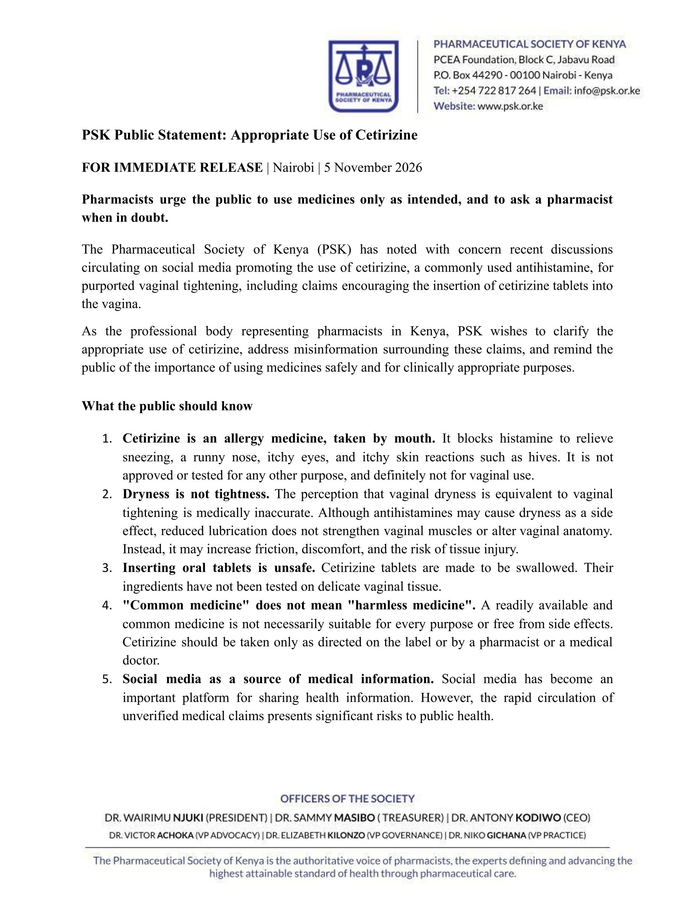
The Pharmaceutical Society of Kenya (PSK) has cautioned Kenyans against a viral social media trend promoting cetirizine tablets for vaginal tightening, warning that inserting the allergy medication into the vagina is unsafe and has no approved medical basis. The advisory comes amid concerns that misleading online health claims could expose people to irritation, discomfort and tissue injury.
Highlights
- PSK has warned against using cetirizine for purported vaginal tightening.
- Cetirizine is an oral antihistamine used to manage allergy symptoms.
- Inserting the tablets into the vagina may cause irritation and tissue injury.
- The society has urged the public to consult pharmacists or qualified medical professionals.
- Pharmacies have also been asked to maintain ethical pricing amid reported demand and shortages.
Main Story
PSK Addresses Viral Cetirizine Trend
The Pharmaceutical Society of Kenya has spoken out against claims circulating on social media that cetirizine can be used to tighten the vagina.
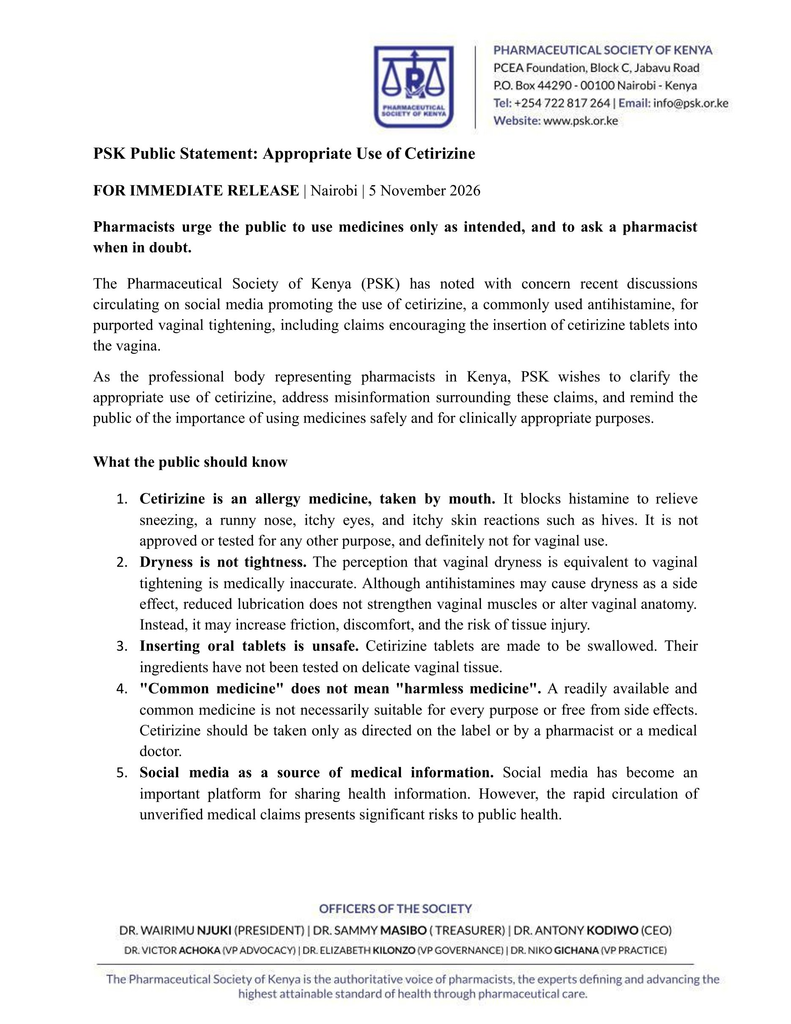
In a public statement issued in Nairobi on November 5, 2026, the professional body expressed concern over online discussions encouraging women to insert cetirizine tablets into the vagina for the supposed effect.
PSK clarified that the medication is designed to treat allergies and should only be used for its intended medical purpose.
The society urged members of the public to seek guidance from qualified pharmacists whenever they are uncertain about how a medicine should be taken.
What Is Cetirizine Actually Used For?
Cetirizine is an antihistamine taken by mouth to relieve allergy symptoms such as sneezing, a runny nose, itchy eyes and skin reactions, including hives.
According to PSK, the medicine has not been approved or tested for vaginal use.
The society also addressed the misconception that vaginal dryness is the same as vaginal tightness. It explained that reduced lubrication does not strengthen vaginal muscles or change the structure of the vagina.
Instead, inserting tablets intended for oral use into delicate vaginal tissue may increase friction, discomfort and the possibility of injury.
Why Inserting the Tablets Could Be Harmful
PSK warned that medicines formulated to be swallowed are not automatically suitable for application to other parts of the body.
The ingredients in cetirizine tablets have not been assessed for use on vaginal tissue. Using them in this way could therefore expose users to effects that have not been established as safe.
The society further reminded Kenyans that the fact that a medicine is widely available does not mean it is harmless or appropriate for every purpose.
It advised the public to follow instructions provided on medicine labels and seek professional guidance rather than experiment with treatments promoted online.
What If You Have Already Tried It?
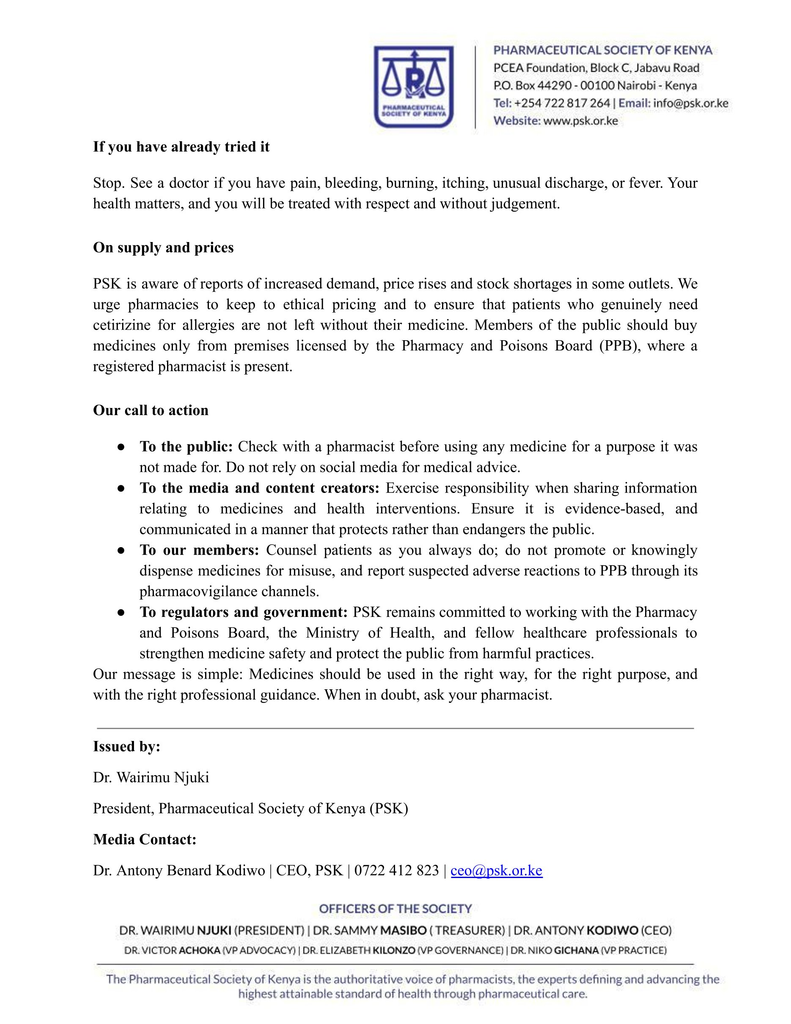
The society urged anyone who has already inserted cetirizine tablets vaginally to stop the practice.
People experiencing pain, bleeding, a burning sensation, itching, unusual discharge or fever should seek medical attention.
PSK emphasised that anyone seeking help should be treated respectfully and without judgement.
PSK Raises Concern Over Prices and Stock Shortages
The advisory also addressed reports of increased demand for cetirizine, rising prices and shortages at some pharmacies.
PSK called on pharmacies to maintain fair and ethical pricing while ensuring that patients who genuinely need the medicine for allergies can access it.
Kenyans were also encouraged to purchase medicines only from premises licensed by the Pharmacy and Poisons Board, where a registered pharmacist is available.
Message to the Public and Content Creators
The society urged social media users to be more careful when sharing health-related information, noting that unverified medical claims can create risks for the public.
Content creators were specifically encouraged to ensure that information about medicines and health interventions is evidence-based and does not expose audiences to harmful practices.
Pharmacists were also reminded to counsel patients appropriately, avoid knowingly dispensing medicines for misuse and report suspected adverse reactions through the relevant pharmacovigilance channels.
PSK said it remains committed to working with the Pharmacy and Poisons Board, the Ministry of Health and other healthcare professionals to strengthen medicine safety.
The central message from the society is that medicines should be used for their intended purposes and with appropriate professional guidance.
A viral health tip is not the same as medical evidence. Before trying a medicine for an unusual purpose, ask a qualified professional your health should never be a social media experiment.

