
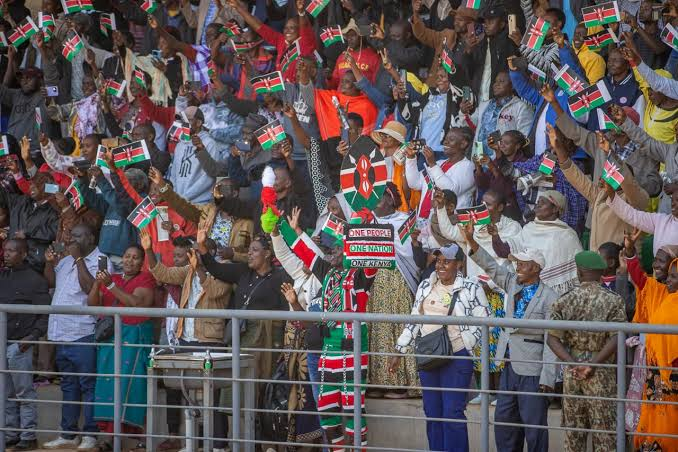
Kenya’s national celebrations have increasingly become a platform for counties to showcase their identity, culture and economic potential beyond the capital. As Uasin Gishu, Nandi and Elgeyo Marakwet jointly host Mashujaa Day at Kipchoge Keino Stadium in Eldoret, attention is turning to a policy that has gradually brought major national ceremonies closer to communities across the country.
Highlights
- Eldoret is hosting Mashujaa Day celebrations jointly with Uasin Gishu, Nandi and Elgeyo Marakwet counties.
- The rotation of national celebrations beyond Nairobi began in 2015.
- Devolution has helped counties showcase their cultural heritage and development priorities.
- Hosting national events can attract visitors and create opportunities for local businesses.
- The policy reflects efforts to make national ceremonies more inclusive and geographically representative.
Main Story
Kenya Takes National Celebrations Beyond Nairobi
Mashujaa Day celebrations in Eldoret mark another chapter in Kenya’s efforts to decentralise major national events and give counties a more prominent role in the country’s public life.
Kipchoge Keino Stadium is the centre of this year’s festivities, with Uasin Gishu, Nandi and Elgeyo Marakwet working together to host the national event.
For decades, Nairobi was the main venue for major national celebrations. However, the decision to rotate these occasions among counties has gradually changed how Kenyans experience important moments on the national calendar.
The shift reflects the principles of the 2010 Constitution, particularly devolution, which seeks to distribute political authority and development opportunities more equitably across the country.
How the Rotation Policy Began
The practice of moving national celebrations outside Nairobi was introduced under retired President Uhuru Kenyatta in 2015 and continued under President William Ruto.
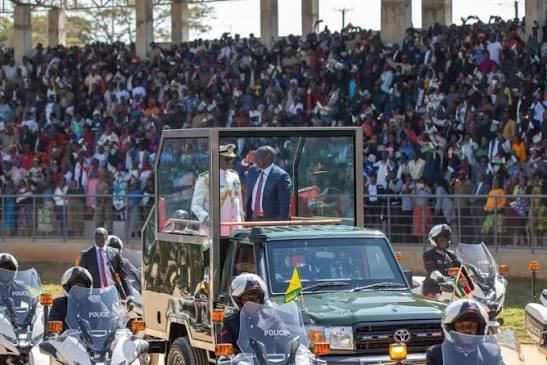
The objective was to give counties greater visibility in national affairs while creating opportunities to highlight their histories, cultures and economic activities.
Since 2016, different counties have hosted Madaraka Day and Mashujaa Day, allowing communities across the country to participate in ceremonies that were traditionally associated with the capital.
A Look at Previous Host Counties
The rotation has taken national celebrations to several parts of Kenya over the years.
In 2016, Nakuru hosted Madaraka Day, while Machakos hosted Mashujaa Day. The following year, Nyeri hosted Madaraka Day as Nairobi took charge of Mashujaa Day.
Meru and Kakamega hosted the respective celebrations in 2018, followed by Narok and Mombasa in 2019.
In 2020, Madaraka Day was held at State House in Nairobi, while Kisii hosted Mashujaa Day. Kisumu and Kirinyaga hosted the two events in 2021.
Both celebrations returned to Nairobi in 2022 before the county rotation resumed in 2023, when Embu hosted Madaraka Day and Kericho hosted Mashujaa Day.
Bungoma and Kwale hosted Madaraka Day and Mashujaa Day respectively in 2024. In 2025, Homa Bay hosted Madaraka Day, while Kitui welcomed the Mashujaa Day celebrations.
This year, Wajir hosted Madaraka Day, while the North Rift counties of Uasin Gishu, Nandi and Elgeyo Marakwet are jointly hosting Mashujaa Day in Eldoret.
What Counties Gain From Hosting National Events
Beyond the formal speeches and national ceremonies, hosting a major event can put a county in the national spotlight.
Local businesses, including hotels, restaurants, transport operators and traders, may benefit from increased visitor numbers and demand for services. The celebrations also provide an opportunity for counties to present local projects, cultural traditions and investment prospects to a wider audience.
The events can also encourage Kenyans to learn more about regions they might not otherwise visit, helping strengthen connections between communities.
However, the lasting value of hosting such celebrations depends on whether the visibility and short-term economic activity translate into sustained opportunities for local residents.
Devolution and a Shared National Identity
The movement of national celebrations beyond Nairobi has helped make devolution more visible in Kenya’s public life.
By rotating the venues, the government creates opportunities for different regions to participate in nationally significant occasions and demonstrate their contributions to the country’s development.
The Eldoret celebrations therefore represent more than a ceremonial gathering. They form part of a wider approach to recognising Kenya’s regional diversity while reinforcing a shared national identity.
As national events continue to move across counties, the bigger question is how this visibility can be matched by meaningful development, stronger local economies and opportunities that remain long after the crowds have left.
When every county gets a chance to host the nation, the true measure of devolution is whether every community also gets a fair share of the opportunities that follow.

