
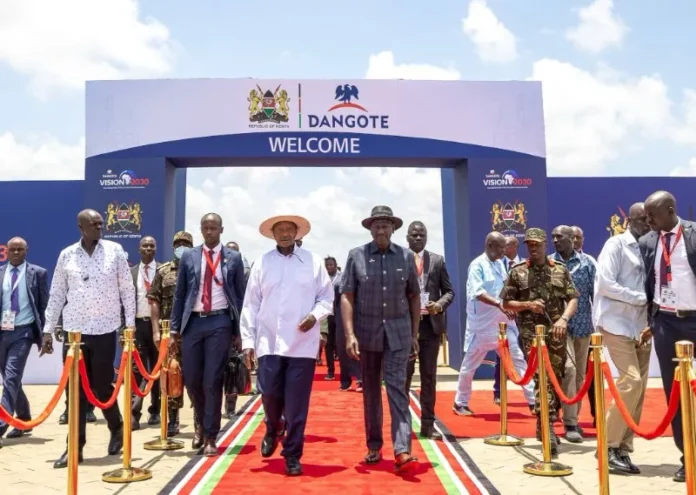
Ugandan President Yoweri Museveni has thrown his support behind Kenya’s planned Lamu oil refinery but stopped short of committing Uganda’s money to the project, saying he first wants clarity on what happened to an earlier refinery plan in Tanzania.
Speaking during the Lamu refinery groundbreaking ceremony alongside President William Ruto and businessman Aliko Dangote, Museveni said Uganda still intends to develop its own refining capacity and wants the competing regional projects coordinated.
Highlights
- Museveni expressed support for the Lamu refinery project.
- Uganda will not invest in Lamu yet, pending clarity on the Tanga refinery plan.
- Uganda has previously considered developing a smaller refinery for its domestic market.
- Museveni wants Kenya, Uganda and Tanzania to coordinate their refinery plans.
- He linked refinery development to Africa’s wider push for industrialisation and economic growth.
Main Story
Museveni Supports Lamu Project
President Yoweri Museveni has welcomed Kenya’s plans to establish an oil refinery in Lamu, describing the project as an important development for the region.
However, despite backing the initiative, the Ugandan leader said his country would wait before putting money into the project.
His hesitation is linked to an earlier proposal involving Tanzania.
Uganda Still Wants Its Own Refinery
Museveni explained that Uganda has long considered building a smaller refinery to process petroleum for its domestic market and supply neighbouring areas.
He said Uganda’s own petroleum resources make refining capacity an important part of the country’s economic plans.
According to the President, Uganda had also previously held discussions with Tanzania over the possibility of establishing a refinery in Tanga.
What Happened to the Tanga Plan?
Museveni said the Tanga proposal encountered challenges, but he did not provide details about what ultimately happened to the project.
He indicated that Uganda wants to establish the status of that plan before committing financially to the Lamu refinery.
The Ugandan President’s position does not amount to opposition to the Kenyan project. Instead, he suggested that the three East African countries should examine how their respective refinery ambitions can work alongside one another.
Push for Regional Cooperation
Museveni said he was prepared to work with President Ruto and Tanzanian President Samia Suluhu Hassan to find a way of coordinating the projects.
The broader concern is how East Africa can develop refining capacity without creating unnecessary competition between major infrastructure projects in neighbouring countries.
For Uganda, having access to reliable refining capacity could reduce dependence on imported refined petroleum while supporting its growing energy needs.
Kenya, meanwhile, is positioning Lamu as a major industrial and energy hub, adding another significant project to the country’s long-term infrastructure ambitions.
Museveni Highlights Africa’s Economic Challenge
Beyond the refinery plans, Museveni used the occasion to make a wider argument about Africa’s economic development.
He pointed to the continent’s relatively low economic output compared with other parts of the world, arguing that Africa needs more industrial activity and investment.
For him, projects such as the Lamu refinery can contribute to a broader transformation by creating industrial capacity, supporting regional trade and helping African countries make greater use of their own resources.
The President’s comments come as East African countries continue looking for ways to strengthen regional energy security and build infrastructure capable of supporting long-term economic growth.
For now, Museveni’s message is clear: Uganda supports the Lamu refinery, but it wants to understand the fate of the Tanga proposal before deciding where its investment should go.
As East Africa races to build the infrastructure needed for its next phase of growth, the real test may be whether neighbouring countries can turn competing ambitions into one regional economic strategy.

