The High Court has upheld the Independent Electoral and Boundaries Commission’s (IEBC) mandate to tally and verify presidential election results at the national level, dealing a blow to Busia Senator Okiya Omtatah’s attempt to have the process scrapped. However, the court has drawn a firm line on what the commission can do, ruling that it cannot alter figures already declared and certified at constituency level.
Highlights
- The High Court has declined to scrap national presidential tallying.
- IEBC must tally and verify presidential results at the national level.
- Constituency results remain final and cannot be altered during national tallying.
- The court ordered all IEBC commissioners to participate in national verification.
- Agents and observers should have real-time access to the data used by IEBC.
Main Story
Omtatah’s Challenge Rejected
Justice Gregory Mutai has dismissed a petition by Busia Senator Okiya Omtatah and other petitioners seeking to stop the IEBC from conducting national tallying and verification of presidential results.
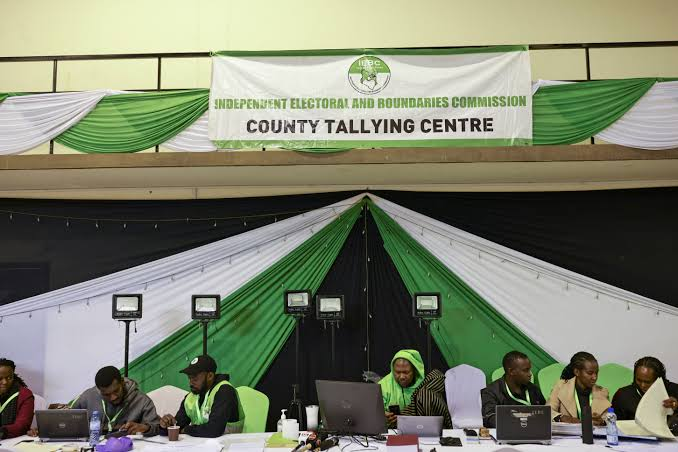
The petitioners had argued that once presidential results were tallied, verified and declared at constituency level, that stage should be considered final.
They challenged provisions of the Elections Act and election regulations that provide for the transmission, aggregation and verification of presidential results beyond the constituency level.
Their concern was that another verification process at the national tallying centre could give IEBC an opportunity to revisit figures that had already been officially declared.
IEBC Retains National Tallying Role
Justice Mutai, however, ruled that the Constitution gives IEBC the responsibility to tally and verify presidential results nationally.
The judge explained that national tallying involves mathematically combining figures from constituencies to establish county and national totals.
Verification, on the other hand, involves checking the aggregated figures against the results certified by constituency returning officers.
The process can also establish whether a presidential candidate has achieved the constitutional threshold required to win the election.
IEBC Cannot Change Constituency Figures
While the court upheld national verification, it placed strict limits on the commission’s powers.
Justice Mutai made it clear that IEBC cannot use the national process to modify results already declared at constituency level.
The commission cannot add, subtract, cancel or otherwise revise an individual constituency’s certified figures during national verification.
The court ruled that constituency results remain final and can only be challenged through an election petition before the appropriate election court.
This distinction effectively allows IEBC to check and aggregate results nationally without reopening the individual figures announced by constituency returning officers.
Forms 34A and 34B to Remain Key
The court also directed that certified Forms 34A and 34B, or any documents that replace them under future electoral arrangements, should serve as the main reference records when presidential results are aggregated nationally.
This means the figures certified at constituency tallying centres will remain the foundation upon which the national presidential result is compiled.
All Commissioners Must Participate
Justice Mutai further directed that national verification should be conducted collectively by the IEBC.
All commissioners should participate in the exercise and have access to the underlying election data.
Candidates’ agents and accredited observers should also be allowed real-time access to the same information available to the commission during the national tallying and verification process.
The move is aimed at increasing transparency around how the final presidential figures are compiled.
What Happens When Electronic and Physical Results Differ?
The court also addressed situations where electronically transmitted results do not match the physical records delivered from constituencies.
In such cases, IEBC will be required to record the discrepancy, explain how it was resolved and make that information public before the final presidential result is announced.
The requirement places an emphasis on transparency whenever there is a difference between electronic transmission and physical election documents.
What This Means for 2027
The ruling effectively preserves the existing national tallying framework ahead of the 2027 General Election while clarifying its limits.
IEBC will still be able to aggregate and verify presidential results at the national tallying centre, but it will not have the authority to rewrite certified constituency figures during that process.
The judgement therefore draws a distinction between checking results and changing results — with the latter remaining outside IEBC’s national verification powers.
Meanwhile, another election-related case is also pending before the courts.
A Nairobi court has set February 25, 2027 as the date for a ruling on a petition challenging IEBC’s failure to review constituency and ward boundaries ahead of the next General Election.
With electoral preparations already taking shape, the latest court decisions are likely to remain closely watched as Kenya moves towards 2027.
As Kenya heads towards the 2027 polls, the court’s message is clear: the national tally can check the numbers, but it cannot rewrite the results declared at the constituency level.