
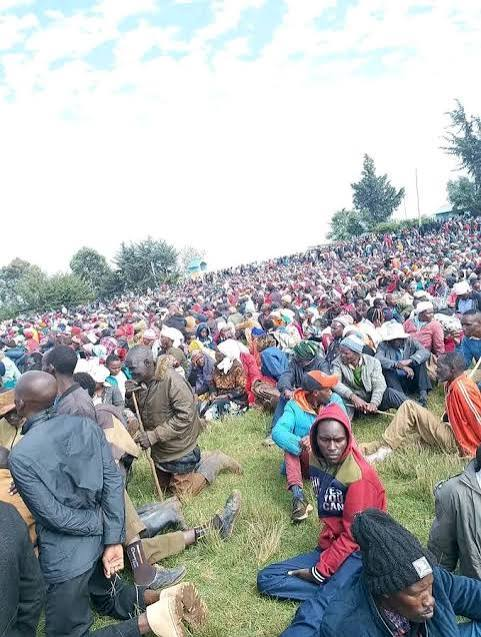
More than 2,000 people who say they were evicted from the Maasai Mau Forest have returned to the area, citing delays in receiving compensation they say the Government promised them. The return on Thursday, September 17, 2026, has renewed concerns among affected families who say they have spent years waiting for financial support while struggling away from their former homes and farms.
Highlights
- More than 2,000 people returned to the Maasai Mau Forest on September 17.
- The families say they are still waiting for promised compensation.
- Affected residents say the land dispute has continued for years.
- President William Ruto recently announced a KSh2.6 billion compensation package.
- The package is expected to cover 13,000 people affected by Mau Forest evictions.
Main Story
Evictees Return to Maasai Mau
More than 2,000 people who identify themselves as victims of the Maasai Mau Forest evictions have returned to the area, saying the Government has not fulfilled its compensation commitments.
The residents returned on Thursday, September 17, amid renewed frustration over what they describe as years of waiting for assistance.
For the affected families, the dispute is not simply about land. They say the prolonged uncertainty has disrupted their livelihoods and left many struggling to rebuild their lives elsewhere.
Community Calls for Government Intervention
David Koech, one of the community members speaking about the dispute, said residents have repeatedly appealed for Government intervention.
He said the continued uncertainty has taken a heavy toll on affected families, with some people having died while the matter remains unresolved.
Koech also claimed that the community has been dealing with the land dispute since 2005 without receiving the assistance they expected.
His remarks reflected the frustration among residents who say they have spent years seeking a lasting solution.
Families Still Waiting for Compensation
Viola Chepng’enoh said affected families had been expecting financial compensation after being informed that they would receive Government support.
According to her, residents continued waiting for confirmation that the money had been released, but the anticipated payment had not arrived.
She questioned how long families would be expected to endure the uncertainty surrounding their former homes and livelihoods.
The concerns highlight the gap between compensation announcements and what affected residents say they have actually received.
KSh2.6 Billion Compensation Package
The latest return comes weeks after President William Ruto announced a KSh2.6 billion compensation package targeting 13,000 people affected by evictions from the Mau Forest.
The announcement had raised expectations among affected families, who have long sought financial support following their removal from the forest.
However, the latest development suggests that some residents remain dissatisfied with the pace of implementation and are still waiting for payments.
The Government has yet to publicly address the latest return by the residents and the specific concerns raised over delayed compensation.
A Long-Running Land Dispute
The Mau Forest complex has for years been at the centre of debates involving conservation, settlement, land ownership and the livelihoods of communities living in and around the forest.
For those who say they were evicted, compensation remains a major part of the unresolved issue.
The return of thousands of residents has now brought the dispute back into the spotlight, raising fresh questions over whether the announced compensation programme will reach the intended beneficiaries.
As families continue to demand answers, the focus will now be on how the Government implements the compensation plan and whether it can address the grievances that have persisted for years.
For the families who say they have waited years for compensation, the return to Maasai Mau is a reminder that a Government promise only brings relief when it reaches the people expecting it.

