
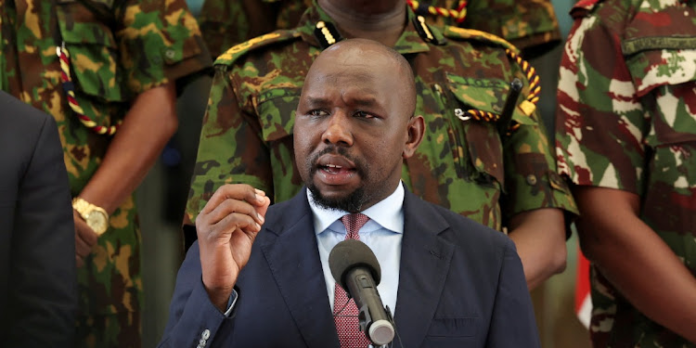
The National Police Service is set for a major boost in mobility, with 2,232 new vehicles expected within the next three months as the government moves to replace its ageing fleet. Interior Cabinet Secretary Kipchumba Murkomen announced the plans during a passing-out parade for GSU recruits in Embakasi, Nairobi, while outlining a wider package of reforms targeting policing, training and community security.
Highlights
- 2,232 police vehicles are expected to be replaced within three months.
- The government has already replaced 1,175 vehicles in the past year.
- Another 1,200 electric vehicles are expected before the end of 2026.
- More than 4,000 police officers have reportedly received merit-based promotions.
- The government is expanding community policing and strengthening anti-narcotics operations.
Main Story
Police Fleet Set for Major Upgrade
The National Police Service is set for a significant transformation of its vehicle fleet, with 2,232 vehicles scheduled for replacement over the next three months.
Interior Cabinet Secretary Kipchumba Murkomen made the announcement on Friday during the passing-out parade of GSU recruits in Embakasi, Nairobi.
He said the government had already replaced 1,175 vehicles over the past year as part of efforts to address long-standing transport and mobility challenges within the police service.
The fleet upgrade is expected to receive another boost through 1,200 electric vehicles that Murkomen said are scheduled for delivery before the end of the year.
Government Expands Community Policing
Beyond equipment, Murkomen highlighted efforts to make communities more actively involved in security management.
He pointed to the Jukwaa la Usalama initiative, which followed a government tour of all 47 counties to collect views on security and challenges affecting service delivery.
The programme has since been adopted as part of the local security management framework, with county security committees expected to work more closely with residents.
Among those being brought into the process are motorcycle taxi operators, religious leaders, business owners and young people.
Murkomen said areas that have adopted the approach have recorded improvements in security, arguing that involving residents at the grassroots level can be more effective than relying solely on directives from security officials.
A related programme has also been introduced in universities and other higher learning institutions to address security concerns affecting students.
Anti-Drug Operations Strengthened
The government has also moved to strengthen the country’s fight against drug trafficking and illicit alcohol.
Murkomen said the anti-narcotics unit had been revamped following a presidential directive and upgraded into a national bureau responsible for anti-narcotics investigations.
An additional 208 officers have reportedly been recruited, with new vehicles also being procured to support their work.
The Interior Ministry has simultaneously stepped up operations targeting drug traffickers and those involved in the production and sale of illicit alcohol.
More Support for National Police Reservists
Changes have also been introduced in the management of National Police Reservists.
Murkomen said a new human resource system has been introduced to formally account for reservists and ensure that issues such as training, supervision and payments are properly managed.
The government has recruited 700 additional reservists, who are currently undergoing training in Meru County. Their graduation is expected next week.
According to the CS, reservists are now receiving their allowances on time, while plans are underway to enrol them in the Social Health Authority (SHA).
Their uniforms and other equipment are also being prepared.
Police Training and Promotions
Murkomen further outlined changes to police training, saying the curriculum has been updated to give greater attention to human rights, constitutionalism, the rule of law and community policing.
Five regional training centres have been renovated, while additional field training campuses have been established in Isiolo and Magadi.
The National Police College in Kiganjo is also being positioned to take on a larger role in professional policing education.
On promotions, Murkomen said more than 4,000 officers had advanced through merit-based promotions.
The government has also expanded financial authority for police stations and subcounty headquarters, with 1,277 police stations and 408 subcounty headquarters covered under the new arrangements.
Regional police headquarters are also receiving authority to incur expenditure to support operations.
Government Promises Continued Support
The reforms come as the National Police Service continues to recruit and train new officers.
More than 6,000 officers completed training during the Kiganjo passing-out parade in August, with additional recruits completing their programmes at other police training campuses.
Murkomen said the government would continue investing in equipment, personnel and training as it works to improve policing and security across the country.
He also acknowledged the risks faced by police officers, particularly those deployed in remote areas, saying the government remained committed to giving them the resources required to serve Kenyans.
For a police service to deliver effectively, vehicles matter but so do the people, training and trust behind the uniform.
More on this topic: IG Douglas Kanja Found in Contempt as High Court Sets Sentencing Date. Official information: Ministry of Interior.

