
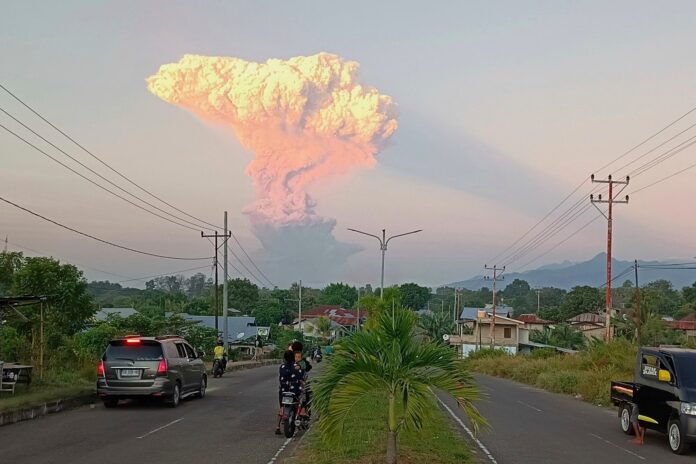
Travel plans across Indonesia have been thrown into chaos after a volcanic eruption disrupted air travel, leaving about 270,000 passengers stranded and forcing more than 2,000 flights to be cancelled or suspended. Several airports, including Jakarta’s main international gateway, remained closed as volcanic ash continued to affect nearby airspace.
Highlights
- About 270,000 passengers have been affected by the disruption.
- More than 2,000 flights have been grounded.
- Airports in Jakarta and other areas extended their closures.
- Volcanic ash spread into parts of Jakarta and Lampung.
- Schools shifted some lessons online as other transport operations were also affected.
Main Story
Volcanic Eruption Triggers Travel Chaos
A volcanic eruption in Indonesia has caused widespread disruption to air travel, leaving hundreds of thousands of passengers struggling to reach their destinations.
Anak Krakatau, situated roughly 150km from Jakarta, began erupting late on Friday. The eruption produced bursts of lava and sent ash into the atmosphere, with some of the material reaching Jakarta and Lampung province.
The volcano remained active over the weekend, raising concerns over the safety of aircraft operating in the affected airspace.
Airports Extend Closures
Jakarta’s Soekarno-Hatta International Airport and three other airports were forced to extend their shutdowns until 18:00 local time on Monday after volcanic ash was identified in surrounding airspace.
The closures have disrupted thousands of flights and created major problems for passengers trying to find alternative ways to travel.
At Soekarno-Hatta, long queues were reported in departure areas as travellers sought refunds, checked for updates and waited for information about when flights could resume.
Passengers Forced to Find Alternatives
Among those caught up in the disruption was Finna, a 46-year-old passenger who had planned to travel from Malang in East Java to Jakarta on Sunday morning.
Repeated changes to flight schedules left passengers uncertain about when they would actually be able to leave.
With the airport becoming increasingly crowded, Finna eventually abandoned her flight plans and travelled overnight by train, reaching Jakarta at around 03:00 on Monday.
She was among many travellers forced to rethink their journeys as airlines dealt with the impact of the volcanic ash.
Tourists Left Searching for New Travel Plans
International visitors have also been affected.
Jo Shaw, who was travelling in Indonesia with colleagues from conservation charity Save the Rhino International, said travellers were trying to work out alternative ways of getting around the country.
With airports affected and flight information changing, many passengers were left weighing options such as trains and other forms of transport.
Disruption Spreads Beyond Airports
The effects of the eruption have not been limited to aviation.
Schools in affected areas have moved some classes online, while shipping activities have also experienced disruptions.
For passengers, however, the immediate priority remains getting home or reaching their intended destinations as authorities continue monitoring the volcanic activity.
The incident highlights how quickly volcanic eruptions can affect transport networks, tourism and everyday life in a country where air travel plays a major role in connecting its many islands.
When nature disrupts the skies, travellers quickly learn that sometimes the journey home depends on having a plan B.

