
Embakasi East MP Babu Owino has escalated his public dispute with Nairobi Governor Johnson Sakaja, declaring that he is ready to face him in court over statements concerning the deadly Eastleigh building collapse. In a fiery response, Owino rejected pressure to withdraw his remarks and challenged the governor to answer questions about the disputed construction approvals, insisting that the tragedy demands accountability rather than silence.
Highlights
- Babu Owino has challenged Johnson Sakaja to take their dispute to court.
- Sakaja’s lawyers issued a demand letter seeking the removal of Owino’s social media posts within six hours.
- Owino’s legal team has rejected the demand and said he will continue calling for accountability.
- The dispute centres on conflicting accounts of approval documents linked to the collapsed Eastleigh building.
- The governor maintains that permission to change the property’s use did not amount to approval for the building’s construction.
Main Story
Babu Owino Challenges Sakaja to Court
Babu Owino has made it clear that he is unwilling to withdraw his criticism of Nairobi Governor Johnson Sakaja following the collapse of a multi-storey building in Eastleigh.
In a public response on Monday, October 26, 2026, the Embakasi East legislator challenged the governor to pursue legal action, saying he was prepared to question him in court over the controversy.
Owino also made it clear that he would not apologise merely because the governor had threatened legal proceedings.
The exchange follows growing disagreement over the approvals allegedly granted for the building before it collapsed, with the MP demanding answers from Nairobi City County and the authorities responsible for regulating construction.
Lawyers Reject Six-Hour Ultimatum
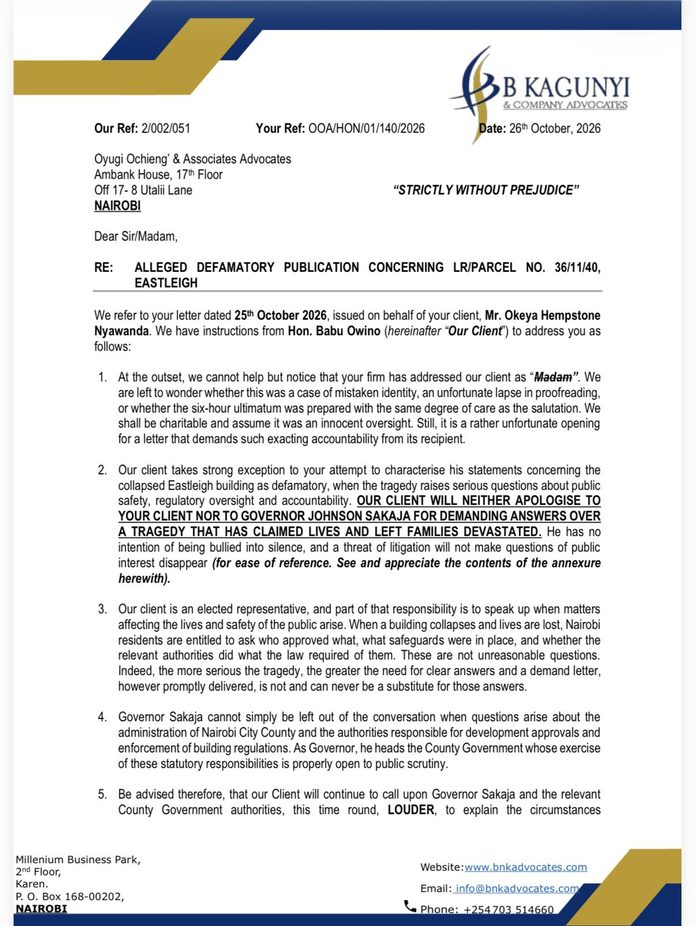
The latest confrontation followed a demand letter issued by Sakaja’s legal representatives, who accused Owino of publishing statements they considered misleading and damaging to the governor’s reputation.
The lawyers demanded that the legislator remove the disputed social media posts within six hours, warning that failure to comply could result in court proceedings.
However, a response dated October 26 from Babu Owino’s legal team rejected the demand, arguing that questions surrounding the building collapse were matters of significant public interest.
The letter, written by B. Kagunyi & Company Advocates, maintained that the MP had a responsibility to raise concerns affecting public safety and the lives of Nairobi residents.
His lawyers argued that a legal threat should not prevent legitimate questions from being asked about the circumstances surrounding a tragedy that has left families devastated.
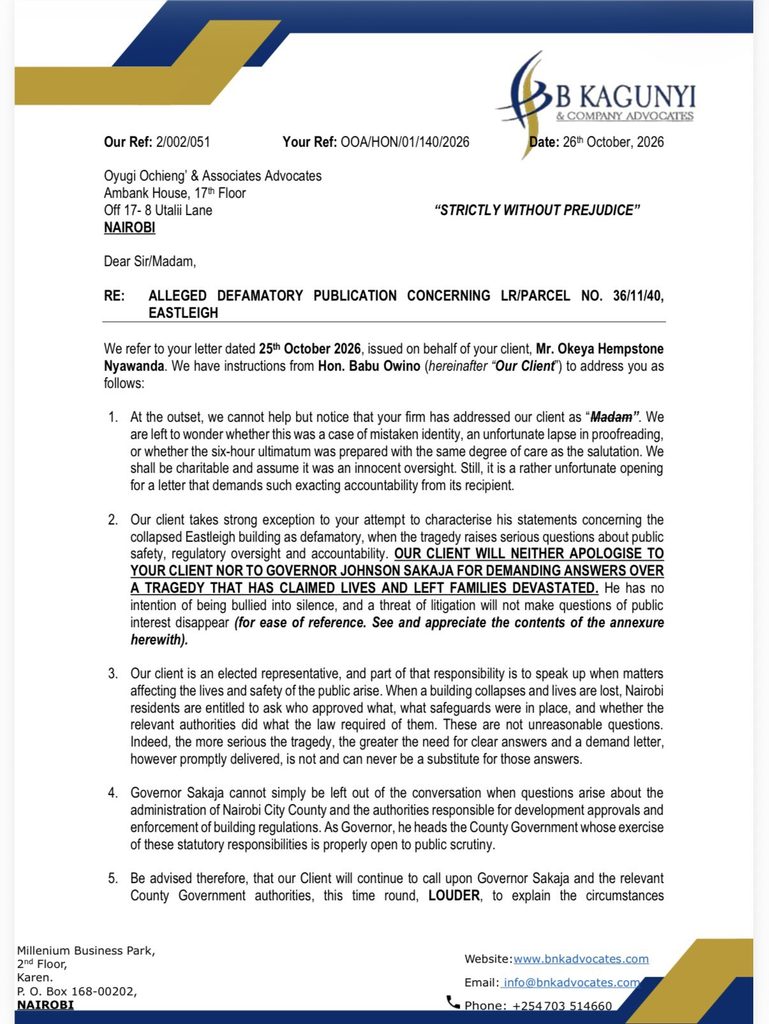
They also stated that Owino would defend his position if legal proceedings were initiated.
Dispute Centres on Building Approval Documents
At the heart of the disagreement is whether the collapsed Eastleigh building had received the necessary approvals before construction proceeded.
Owino has disputed Sakaja’s account that the building lacked development approval, citing a document he says demonstrates that the county had authorised the proposed development.
The governor, however, has challenged the authenticity and interpretation of the document circulated by the legislator.
Sakaja has maintained that approval for a change of use of the property was distinct from permission to construct the multi-storey building. He has argued that the necessary development approval was not granted.
The competing accounts have raised questions about the documentation, planning procedures and enforcement measures that applied to the project.
Neither politician’s public statements alone settle the dispute. Establishing what approvals were issued, what they authorised and whether the law was followed will require examination of the relevant records and findings from the responsible authorities.
Why Owino Says Public Accountability Must Continue
In the response sent through his lawyers, Owino’s position was that the loss of life made it necessary for the public to receive clear explanations about the events leading to the collapse.
His legal team argued that residents have a legitimate interest in understanding who authorised the development, what safeguards were in place and whether the relevant authorities fulfilled their responsibilities.
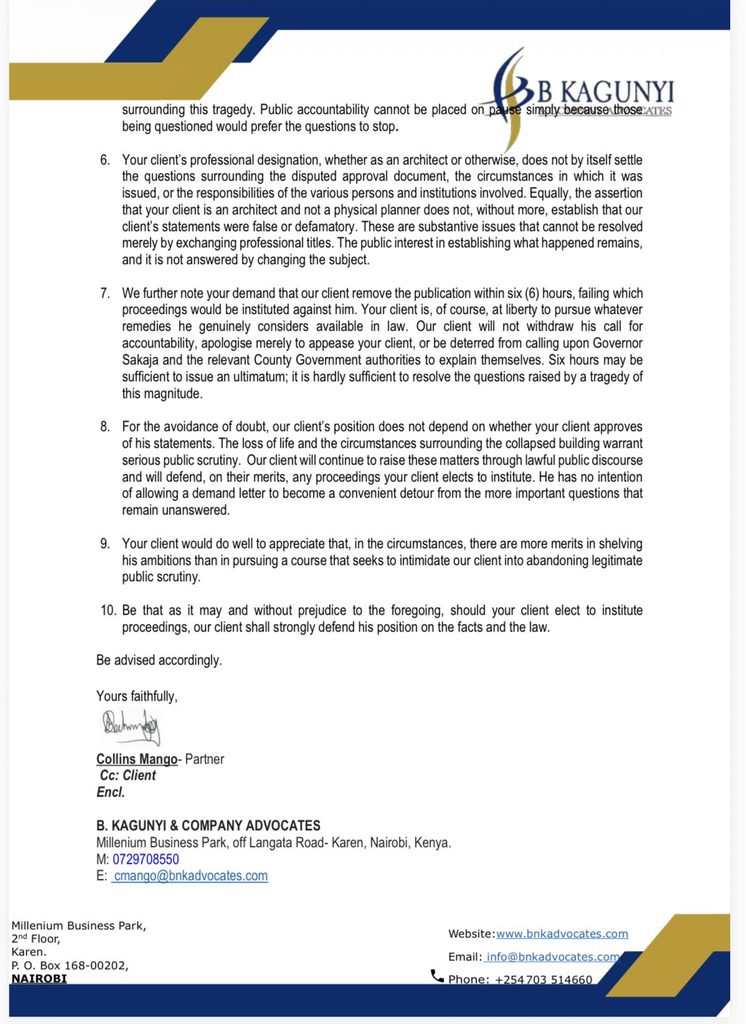
The lawyers also questioned whether demanding the removal of the publication within six hours was an appropriate way to address issues of such public importance.
They maintained that Owino would continue raising the concerns through lawful public discourse rather than abandon the matter because of a threatened lawsuit.
The letter further argued that the MP’s professional background and the titles of the individuals involved did not, by themselves, resolve the substantive questions surrounding the disputed approval documents.
What Happens if the Matter Goes to Court?
Owino’s response signals that the disagreement could move from public statements to a legal contest if Sakaja proceeds with his threatened action.
The MP has indicated that he is ready to defend his remarks, while his lawyers have maintained that they will contest any proceedings on the facts and the applicable law.
A court process could bring closer scrutiny to the statements at the centre of the dispute, the documents being cited by both sides and the legal issues surrounding the alleged defamatory publication.
However, the dispute over the publication is separate from the wider questions concerning the building collapse itself. Determining whether construction requirements were followed and whether any regulatory failures occurred would depend on the relevant evidence and official investigations.
For families affected by the tragedy, the priority remains obtaining answers about what happened and ensuring that any responsibility established through the proper processes is addressed.
A Wider Test of Public Accountability
The confrontation between Owino and Sakaja has placed renewed attention on building safety, development approvals and the responsibilities of county authorities in Nairobi.
The controversy also highlights the tension that can arise when public officials face criticism over matters involving public safety and potential administrative failures.
While the governor has disputed the claims made against him, Owino insists that questions about the tragedy should not be abandoned because legal action has been threatened.
Ultimately, the authenticity of the documents, the approvals granted and the actions taken by the relevant authorities must be established through evidence rather than political exchanges.
As the legal standoff intensifies, the most important question remains: will the dispute bring the public closer to understanding what happened in Eastleigh and who, if anyone, should be held accountable?

