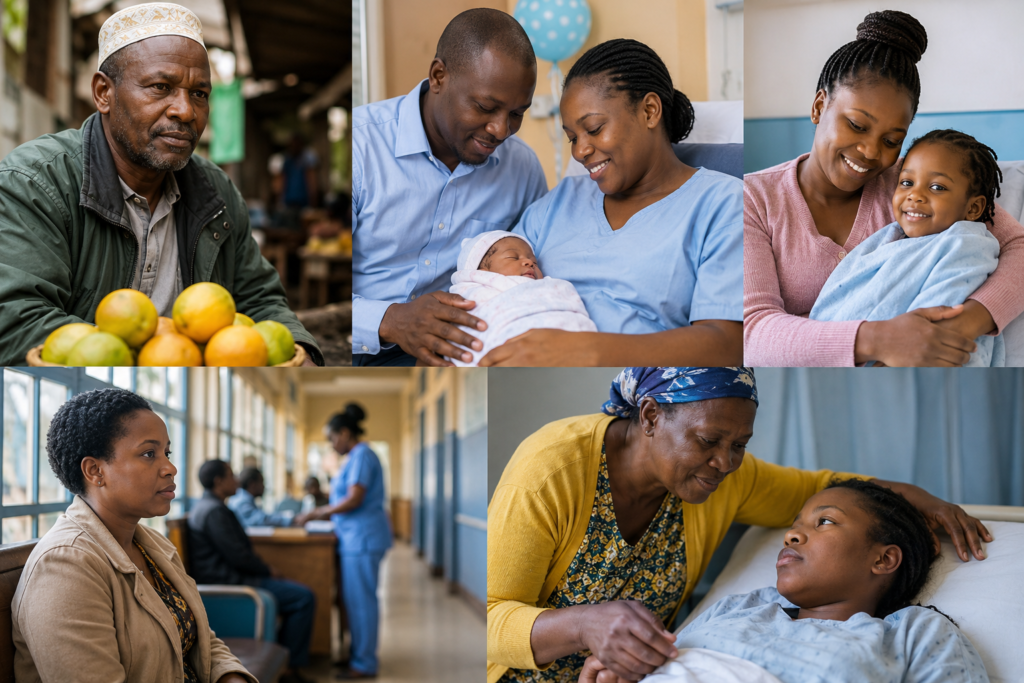
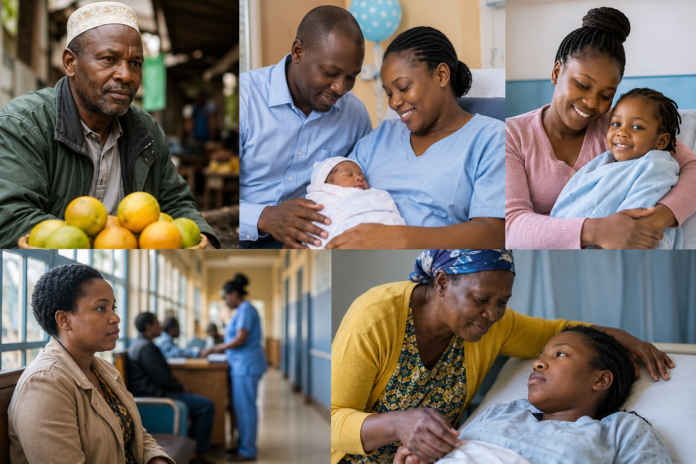
For many Kenyan families, a serious illness or hospital admission has traditionally come with a second worry: how to raise the money needed to pay the bill. But several beneficiaries from different parts of the country say the Social Health Authority (SHA) is helping reduce that pressure, allowing them to focus more on treatment and recovery than fundraising.
From emergency care following an accident to maternity services, children’s treatment and ongoing medication, the beneficiaries say SHA has helped make healthcare more manageable.
Highlights
- A Sagana fruit vendor says SHA helped his wife access treatment after an accident.
- A father from Embu says SHA covered about KSh 30,000 during his wife’s maternity care.
- A Mathira family says SHA covered roughly KSh 115,000 of their child’s hospital bill.
- An Embu resident says she received treatment and medicine without making the payments she previously expected.
- A Kieni mother says SHA is supporting her daughter’s treatment at Karatina District Hospital.
Main Story
Relief During a Difficult Accident
For Baba Fahim, a fruit seller from Sagana, the thought of paying for major medical treatment had always been daunting.
His experience became personal when his wife was struck by a vehicle whose driver allegedly fled the scene. After initially taking her to hospital, the family later returned when her condition required further attention.
Medical scans revealed that she had suffered broken ribs and needed treatment and time to recover.
The situation placed Baba Fahim under considerable pressure. Apart from earning a living through fruit vending, he had to deal with police procedures, the P3 process and repeated hospital visits while trying to figure out how the family would meet the medical expenses.
He says enrolling and completing the SHA process was relatively straightforward. After completing the required forms and making the necessary payment, he says the cover became active.
His wife was subsequently admitted and began receiving care, giving him some relief during an otherwise stressful period.
He hopes the healthcare system will continue becoming easier for ordinary Kenyans to navigate, particularly during emergencies when families are already under pressure.
SHA Helps Cover Maternity Expenses
For Embu resident Kevin Nduguta, SHA provided financial support when his wife went to hospital to deliver their second child.
Kevin says the scheme covered approximately KSh 30,000 of the maternity expenses, while he contributed another KSh 10,000.
Both his wife and newborn have since returned home safely.
The support has also continued beyond delivery, with Kevin saying SHA is helping the family manage the baby’s clinic appointments.
His experience stands in contrast to what he went through when his first child was born five years ago, when he says a lack of money made the situation much more difficult.
Kevin believes more investment in hospitals would further improve healthcare access. He would also like families to have better maternity facilities, including more private ward options.
Family Saves Thousands on Child’s Treatment
Joyce Wambui from Mathira says her family also experienced the financial difference SHA can make when their child required hospital treatment.
According to Joyce, the medical bill rose to approximately KSh 115,000, but SHA covered the bulk of the cost. The family was left to contribute about KSh 3,000.
For her, the experience highlighted how medical emergencies previously placed enormous financial demands on families.
Joyce remembers a time when relatives and neighbours would often be called upon to contribute money whenever someone needed expensive treatment.
She says SHA has provided some relief from that burden, although she believes there is still room to improve healthcare services.
Among her concerns is the availability of medicine at facilities such as Mandawa, where she hopes patients will consistently find the drugs prescribed to them.
Treatment Becomes Easier for Embu Resident
Jacqueline Nyokabi, who lives in Embu, says SHA has changed how she approaches hospital treatment.
She says she registered for SHA at a hospital in Embu last year and was subsequently able to receive medical attention and medicine without facing the kind of direct payment demands she had experienced before.
Jacqueline recalls that previously, anyone without enough money could be forced to look for cheaper alternatives, including buying medication from a chemist.
She now hopes the government will expand the number of health facilities, particularly in remote areas.
According to her, having hospitals closer to communities would save patients the time, transport costs and inconvenience associated with travelling long distances for medical care.
Support for a Daughter Receiving Hospital Care
For Anne Wanjiru from Kieni, SHA is providing support while her daughter remains admitted at Karatina District Hospital.
She says the cover has helped facilitate services including scans, medication and hospital-related expenses.
The assistance has given Anne greater confidence that her daughter can continue receiving care without the family having to shoulder every expense alone.
She says this kind of support is particularly important for families dealing with long-term and costly illnesses.
Conditions such as diabetes and cancer can require continued treatment, medication and monitoring, expenses that can quickly become overwhelming for ordinary households.
Anne hopes SHA will continue strengthening its support so that more patients can access the care they need without families being pushed into financial hardship.
A Shift From Fundraising to Healthcare Support
The experiences shared by the five beneficiaries point to a common concern among Kenyan households: the financial shock that can accompany illness.
While their circumstances differ, their stories all revolve around the same challenge finding money when a medical emergency strikes.
For Baba Fahim, the priority was his wife’s recovery after an accident. For Kevin, it was ensuring his wife and newborn received proper maternity care. Joyce’s family faced a large bill after their child became ill, while Jacqueline and Anne highlight the importance of accessible treatment and continued medical support.
Their accounts also underline areas where they believe more work is needed, including medicine availability, more health facilities in remote areas and improved hospital infrastructure.
As Kenya continues to reshape its healthcare financing system under SHA, such experiences are likely to remain an important part of the conversation about whether families are becoming better protected from the cost of illness.
For families facing illness, the real measure of a healthcare system may be how much peace of mind it can provide when life suddenly takes an unexpected turn.