
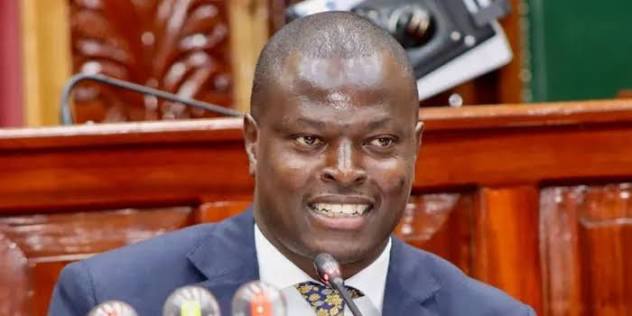
Kiharu MP Ndindi Nyoro has outlined a wide-ranging policy agenda touching on education, healthcare, employment, energy and manufacturing, saying Kenya can pursue major reforms without placing an additional tax burden on citizens. His proposals include free secondary education from 2028, changes to healthcare financing and a stronger focus on job creation.
Highlights
- Nyoro proposes free secondary education from January 2028.
- He wants ECDE teachers placed under a harmonised national framework.
- Healthcare funding could be boosted by redirecting part of NSSF contributions.
- Cabinet Secretaries would be expected to report regularly on jobs created.
- He proposes major changes to Kenya’s power and manufacturing sectors.
Main Story
Free Secondary Education Among Key Proposals
Nyoro says education should be one of the first areas addressed, proposing a plan that would make secondary education free from January 2028.
Under his proposed funding model, Ksh10 billion would come from the National Government Constituencies Development Fund, another Ksh10 billion from counties’ equitable share, while the national government would contribute Ksh15 billion.
The proposal would target approximately 9,500 senior secondary schools and 3.5 million learners. Nyoro also proposes a Ksh10,000 subsidy for boarding students.
His education agenda further includes placing ECDE teachers under a national commission similar to the Teachers Service Commission. According to the proposal, this would create uniformity in salaries and make transfers easier for teachers across counties.
He also wants teachers who have spent less than five years at their first posting to have greater opportunities to transfer.
University Funding and Debt Relief
Nyoro says the government should also address financial pressure facing public universities by writing off their existing tax arrears and helping institutions settle statutory obligations and debts.
He also points to the need for a more inclusive system that ensures qualified students are able to access university education. He estimates that an additional Ksh80 billion would be required to achieve this.
The issue of university financing remains significant for many Kenyan families, with thousands of students relying on government scholarships and loans to pursue higher education.
Healthcare Reform
On healthcare, Nyoro proposes that the system managing healthcare services should be brought under government ownership.
One of his most notable suggestions is to reduce NSSF contributions by half and redirect about Ksh40 billion towards healthcare. He argues that stronger healthcare financing would help families dealing with chronic illnesses and high medical bills.
Part of the additional resources, he says, could be used to modernise health facilities, improve supplies and develop specialised medical institutions.
Nyoro also proposes the creation of a Kenyan Doctors and Healthcare Workers Commission to oversee recruitment and placement of medical professionals nationally rather than leaving the process entirely to county governments.
The plan would also seek to increase the number of healthcare workers employed in the country.
Jobs at the Centre of Government Policy
Nyoro identifies unemployment and limited employment opportunities as one of Kenya’s biggest challenges.
He proposes that every Cabinet Secretary should have measurable employment targets within their respective ministries. Government agencies would then release monthly or quarterly data showing the number of net jobs created.
His broader economic strategy would focus on growing the economy across primary production, manufacturing and the services sector.
For young Kenyans, employment remains a major concern, with opportunities increasingly spanning traditional careers, technical skills and digital work.
Manufacturing and Cheaper Power
Nyoro argues that Kenya cannot significantly expand manufacturing without addressing the cost and reliability of electricity.
Among his proposals is a complete liberalisation of the power sector and greater use of KenGen assets to raise capital for additional electricity generation.
He has also called for a review of independent power producer arrangements, proposing that future projects should involve greater public participation.
On industrial policy, Nyoro wants Kenya to identify specific products and sectors to prioritise, with progress monitored regularly and reported to the Head of State.
Coastal Counties as Special Economic Zones
Another part of the proposal focuses on the Coast, where Nyoro wants large sections of Mombasa, Kwale, Lamu and other coastal counties designated as Special Economic Zones.
The objective would be to create large-scale export-oriented manufacturing hubs capable of serving both regional and international markets.
He compares the ambition to Shenzhen, the Chinese city that grew into a major global manufacturing and technology centre.
Political Direction
Nyoro also addressed his political plans, stating that he and his colleagues have joined the People’s Party.
He said members had agreed that the party would immediately move into the opposition.
The proposals come as Nyoro seeks to frame his political agenda around long-term planning, saying that governing requires more detailed preparation than campaigning.
For many Kenyans, the bigger question will be whether ambitious promises such as free secondary education, expanded healthcare and large-scale job creation can eventually translate into policies that are both affordable and sustainable.
Big promises can inspire hope, but the real test of any political vision is how effectively it turns plans on paper into tangible improvements in the everyday lives of Kenyans.

