
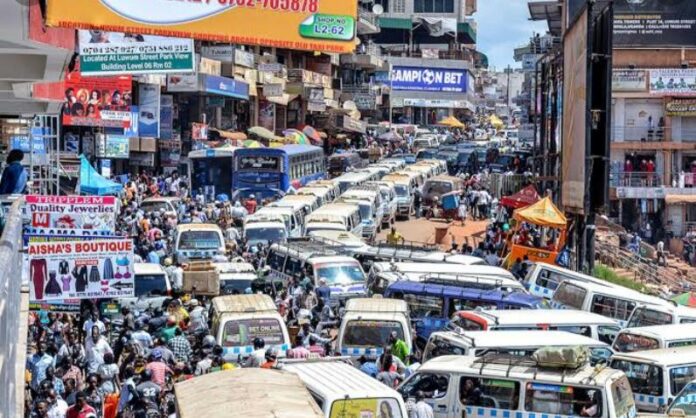
Uganda is reviving an ambitious plan to gradually move its administrative capital from Kampala to Nakasongola, with the government arguing that the country’s current capital has become too congested and difficult to properly plan. The proposed relocation would be carried out over several years, with the first major moves expected to form part of the country’s Vision 2040 agenda.
Highlights
- Uganda is considering Nakasongola as a new administrative capital.
- The government says Kampala faces serious planning and congestion challenges.
- Ministries, departments and agencies could gradually move from Kampala.
- The relocation process could extend towards 2040.
- Officials say Kampala would remain an important economic and commercial centre.
Main Story
Uganda Revives Plans for a New Capital
Uganda is once again considering a major shift in how its government is organised, with plans to gradually relocate ministries, departments and agencies from Kampala to Nakasongola.
The proposal was presented by Minister of State for Urban Development Margaret Muhanga while appearing before Members of Parliament.
Muhanga argued that Kampala has become increasingly difficult to manage because of congestion, poor urban planning and rapid population growth.
She described the city as no longer sustainable in its current form and said Uganda needs to think about developing a well-planned administrative centre for the future.
Why Nakasongola?
According to the minister, the government is not considering moving the capital to established regional cities such as Mbarara, Fort Portal or Gulu.
The concern is that some of these cities are already experiencing urban planning challenges similar to those affecting Kampala.
Nakasongola, however, presents an opportunity to develop a new city from the ground up.
The area has available land and space for long-term urban planning, allowing the government to design infrastructure, government offices, residential areas and transport networks in a more organised way.
The Move Would Take Years
The government is not proposing an immediate relocation.
Muhanga said the process would be gradual and could stretch towards 2040.
Under the proposed approach, different ministries, departments and government agencies would be moved in phases rather than attempting to shift the entire administrative system at once.
This would allow infrastructure and other services to be developed alongside the relocation.
What Happens to Kampala?
The proposal has raised concerns among property owners and businesses in Kampala, particularly those who depend on government offices and employees for customers.
Some property owners fear that moving ministries and government agencies could reduce demand for commercial buildings in the city.
Muhanga, however, sought to reassure Kampala residents and investors that the city would not lose its importance.
Kampala would continue serving as Uganda’s major commercial and economic centre even if some government functions were eventually moved elsewhere.
A Chance to Build a Planned City
One of the strongest arguments behind the proposal is the opportunity to avoid repeating the urban planning problems that have developed in Kampala.
A new administrative city could be designed with adequate roads, public transport, housing, government offices, drainage systems, green spaces and other essential infrastructure from the beginning.
Such planning could also help separate administrative functions from the country’s main commercial activities.
Parliament Wants More Details
The proposal received support from the chairperson of the parliamentary committee, Edson Rugumayo.
However, lawmakers want the government to provide more information about how the long-discussed idea would actually be implemented.
Questions are likely to focus on financing, infrastructure development, land, the timeline for relocating government institutions and the potential economic impact on both Nakasongola and Kampala.
For now, the proposal remains a long-term plan, but its revival signals that Uganda is seriously considering a different approach to managing its capital and government operations.
If Uganda succeeds in building a modern administrative city from scratch, Nakasongola could become more than a new government centre—it could offer a blueprint for how African cities can plan for generations instead of simply reacting to today’s problems.

