
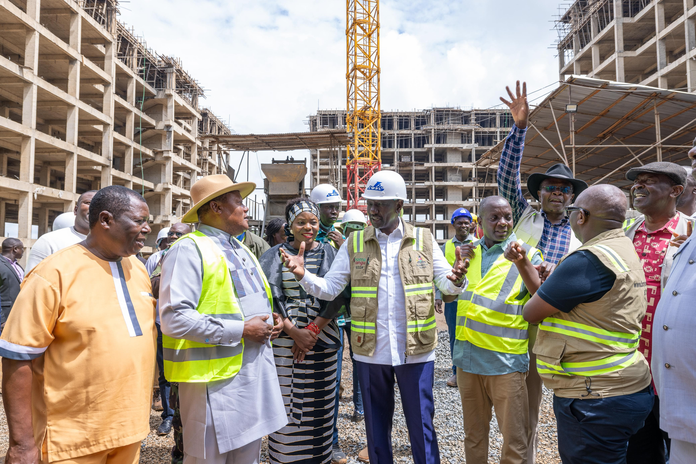
A major infrastructure drive is unfolding across Luo Nyanza, with 269 priority projects valued at approximately Sh174 billion listed across 29 constituencies in Kisumu, Homa Bay, Siaya and Migori counties. From affordable housing developments and modern sports stadiums to new bridges, upgraded healthcare facilities, electricity transmission infrastructure and investments in fisheries, the projects are being presented as part of a wider effort to address longstanding development gaps in the region. With construction progressing at several sites and other facilities already completed or operational, the programme has also sparked fresh political debate about regional inclusion, public investment and the pace of development under President William Ruto’s administration.
Highlights
- The Government Delivery Unit lists 269 priority projects worth approximately Sh174 billion across Luo Nyanza’s 29 constituencies.
- Kisumu’s project portfolio exceeds Sh49.5 billion, including approximately Sh40 billion for housing, while Homa Bay has 94 priority projects valued at more than Sh60 billion.
- Major developments include the Kisumu International Airport air traffic control tower, the Kanyakwar Affordable Housing Project, the Raila Odinga Stadium and the Dhogoye Bridge.
- Electricity infrastructure in Migori has received a boost through the energising of the Awendo–Isebania transmission line, Masaba substation and the Sondu–Homa Bay section of the South Nyanza power line.
- Political leaders, including Moses Kajwang’, Mark Nyamita, Junet Mohamed and Joshua Nyamori, have linked the investments to regional inclusion, improved public services and economic opportunities.
Main Story
269 Projects Worth Sh174 Billion Spread Across Luo Nyanza
Construction activity is becoming increasingly visible across Kisumu, Homa Bay, Siaya and Migori as the national government pursues a broad programme of infrastructure development in Luo Nyanza.
Figures attributed to the Government Delivery Unit indicate that 269 priority projects worth approximately Sh174 billion have been listed across the region’s 29 constituencies.
The projects cover a wide range of sectors, including roads, housing, healthcare, agriculture, fisheries, sports, electricity and maritime safety. While some facilities have already been completed or brought into operation, others remain under construction or are at different stages of implementation.
The investment programme is being presented by its supporters as evidence of a renewed focus on infrastructure in a region where communities have long called for improved roads, hospitals, markets, water access and other essential public services.
The projects are also generating discussion about the role of national government investment in local economic development, particularly in areas where residents depend on agriculture, fishing, small businesses and transport to earn a living.
Across the four counties, the developments are intended to improve connectivity, strengthen public services and create infrastructure that can support economic activity beyond the construction phase.
Kisumu County Records Projects Worth More Than Sh49.5 Billion
Kisumu County accounts for a project portfolio valued at more than Sh49.5 billion, with approximately Sh40 billion earmarked for housing initiatives, according to the supplied figures.
The county’s portfolio includes projects linked to aviation, fisheries, agriculture, maritime safety, healthcare and residential development.
At Kisumu International Airport, construction is underway on a new air traffic control tower. The facility is intended to support airport operations and strengthen the infrastructure required for air traffic management.
The airport is an important transport facility for western Kenya and the wider Lake Victoria region, connecting Kisumu with other destinations and supporting passenger and commercial movement.
Along the shores of Lake Victoria, a new Lake Victoria Regional Office and Maritime Rescue Coordination Centre is also taking shape.
The centre is intended to strengthen coordination in maritime safety and emergency response on the lake. For communities that depend on fishing, passenger boats and other water-based activities, effective emergency coordination can be an important part of improving safety.
Lake Victoria supports a substantial network of livelihoods, but its waters also present risks to people travelling or working on the lake. A dedicated rescue coordination facility is therefore expected to contribute to the organisation of responses when emergencies occur.
Kibos Rice Mill Supports Kano Plains Farmers
In Kibos, a new rice mill is already processing produce from farmers in the Kano Plains.
The facility represents an investment in agricultural processing, helping connect farm production with the stages required to prepare rice for commercial distribution.
Agriculture remains an important source of income in the area, and processing infrastructure can play a role in strengthening the value chain by providing facilities closer to producers.
The performance of the mill will depend on factors such as the volume of rice supplied, processing capacity, market access and the ability of farmers to obtain fair returns for their produce.
For farming communities, the broader objective is to ensure that investments in agricultural infrastructure translate into more reliable markets and stronger opportunities for local producers.
Fisheries Centre Under Construction at Kabonyo
At Kabonyo, construction is underway on a Regional Fisheries and Aquaculture Centre of Excellence.
The centre is expected to support the fisheries and aquaculture sectors, which are important to the economy of Kisumu and neighbouring communities around Lake Victoria.
Investment in fisheries infrastructure is particularly relevant in a region where fishing supports livelihoods across multiple stages of the supply chain, from harvesting and handling to transportation, processing and sales.
The development complements other investments associated with the blue economy, including fish landing facilities and market infrastructure.
Kanyakwar Affordable Housing Project Adds to Construction Activity
Housing is another major component of Kisumu’s development portfolio.
The Affordable Housing Project at Kanyakwar, on the outskirts of Kisumu, is among the developments currently taking shape in the county.
The project forms part of the national affordable housing programme, which aims to expand the supply of housing and provide opportunities for people seeking more accessible homeownership options.
Beyond the residential units themselves, housing developments can create demand for building materials, transport, skilled labour and other services during construction.
The long-term impact, however, will depend on the availability of completed homes, their affordability to intended beneficiaries and access to supporting infrastructure and services.
Nyabondo Trauma Centre Expected to Improve Emergency Care
In Nyakach, the Nyabondo Trauma Centre is bringing attention to the need for accessible emergency medical services, particularly for communities around the escarpment.
The facility is intended to bring trauma care closer to residents who may otherwise face challenges reaching specialised treatment during emergencies.
Access to timely medical attention can be critical in cases involving road accidents, serious injuries and other emergencies requiring urgent intervention.
The development forms part of the wider health infrastructure investments being highlighted across Luo Nyanza, where improved access to medical services remains a key concern for many communities.
Taken together, the Kisumu projects cover several essential sectors, combining housing and transport infrastructure with agricultural processing, fisheries development, maritime safety and healthcare.
Homa Bay Has the Region’s Largest Listed Project Portfolio
Homa Bay County has the largest project portfolio among the four counties, with 94 priority projects valued at more than Sh60 billion, according to the Government Delivery Unit figures provided.
Among the major developments highlighted in the county are the rebuilt Homa Bay Pier, the completed fish market at Koginga Beach and the 12,000-seater Raila Odinga Stadium.
The projects cover transport, fisheries, commercial infrastructure and sports, sectors that have the potential to support different parts of the local economy.
Rebuilt Homa Bay Pier Strengthens Transport Infrastructure
The rebuilt Homa Bay Pier is among the developments being cited as part of the county’s changing infrastructure landscape.
Piers and related lake transport facilities can support movement across Lake Victoria and provide infrastructure for activities connected to fishing, passenger transport and trade.
Their wider economic value depends on how effectively they are used, the reliability of services and the connections available between lake transport points and communities on land.
For Homa Bay, whose economy is closely linked to Lake Victoria, improved lakeside infrastructure is relevant to both commercial activity and the movement of people.
Koginga Beach Fish Market Supports the Fisheries Sector
The completed fish market at Koginga Beach is another project highlighted in the county.
Fish markets are an important part of the fisheries value chain because they provide spaces for the buying, selling and handling of catches before the products move to consumers and other markets.
For fishermen, traders and other people working in the sector, market facilities can help organise commercial activity and improve access to buyers.
The extent of the benefits will depend on the market’s operating arrangements, the facilities available to traders and the demand for fish from local and external markets.
The project also aligns with the broader focus on the blue economy, which seeks to strengthen economic activity linked to water resources.
Raila Odinga Stadium Adds Major Sports Infrastructure
Homa Bay’s 12,000-seat Raila Odinga Stadium is among the most prominent developments in the county’s project portfolio.
Modern sports facilities can provide venues for football matches, athletics, community events and other gatherings, while creating opportunities for businesses involved in catering, transport, accommodation and event services.
The stadium is also a major public facility bearing the name of the late former Prime Minister Raila Odinga, whose political influence and connection to the region remain significant.
The project’s broader contribution will depend on how the facility is managed, maintained and used to support sports development and community activities.
Together, the pier, fish market and stadium illustrate the range of infrastructure investments being highlighted in Homa Bay, from facilities linked to the lake economy to public amenities intended to serve wider community needs.
Dhogoye Bridge Brings Hope to Residents in Siaya
In Siaya County, the Dhogoye Bridge is taking shape as a 200-metre crossing intended to connect the Bondo area towards Busia.
The bridge is among the infrastructure projects attracting attention because of the challenges residents have faced when moving through the area.
For Albina Ochola, the development carries a personal meaning linked to the difficulties of crossing the water before the bridge was available.
She recalled how people sometimes had to leave their motorcycles behind, walk through fast-moving water or pay boat operators to cross.
Such conditions can complicate everyday journeys, particularly for people travelling to markets, schools, healthcare facilities and other essential destinations.
Ochola said the expected completion of the bridge would make movement safer and had given her confidence that she would not have to leave her home because of the difficulties associated with crossing the area.
Her account illustrates the practical importance of transport infrastructure for residents whose daily activities depend on reliable connections between communities.
Once completed and opened for use, the bridge is expected to improve the crossing and make movement easier for people and goods travelling along the route.
Roadworks Progress Towards Usenge
Road construction is also progressing in Siaya, including works along the route from Kodiaga through Rabango, Awelo and Dominion towards Usenge.
Road connectivity is important for communities that rely on agriculture, trade and local transport, as it affects the movement of produce, access to services and the cost of travelling between settlements.
Improved roads can also strengthen links between rural areas and larger commercial centres, although the benefits depend on the quality of construction, maintenance and the extent of the road network completed.
The Dhogoye Bridge and the ongoing roadworks are therefore being highlighted alongside housing, stadium and hospital developments as part of a broader programme of infrastructure expansion in the county.
Residents Point to Faster Implementation of National Projects
Some residents in Siaya have expressed optimism about the pace at which national government projects are progressing.
They have pointed to Affordable Housing developments, the stadium and ongoing hospital works as examples of investments moving from plans to construction.
Residents have also compared the progress of national government projects with some county-led developments, saying they have observed differences in the pace of implementation.
Mark Nyamita, the MP for Uriri, said the presence of national government projects in constituencies represented a significant change from what residents had experienced in previous decades.
He argued that government infrastructure should have been delivered much earlier, questioning why communities had not seen a similar level of national project activity during the preceding 60 years.
His remarks reflect a wider political debate about historical investment patterns, the responsibilities of different levels of government and whether development resources have been distributed equitably across Kenya.
While the comments express the views of the political leaders involved, the overall impact of the Siaya projects will ultimately be assessed through their completion, accessibility and the services they provide to residents.
Migori County Strengthens Electricity Transmission Network
In Migori County, the development programme includes major electricity infrastructure intended to support the transmission network.
The Awendo–Isebania transmission line and Masaba substation were energised in June 2025, according to the information provided.
In a separate development, the Sondu–Homa Bay section of the South Nyanza power line became operational in January 2026.
These milestones form part of the electricity infrastructure being highlighted in the wider regional development programme.
Transmission lines move electricity across the network, while substations help manage the distribution of power between different sections of the system.
Reliable electricity is important for households, businesses, healthcare facilities, schools, agricultural processors and other institutions that depend on consistent power.
For commercial operations, power infrastructure can support production, refrigeration, equipment use and the provision of services. In the fisheries sector, reliable electricity can also be important for cold storage, helping preserve fish and reduce losses before products reach buyers.
However, the benefits of transmission infrastructure depend on more than the energising of a line or substation. Consumers also need suitable connections, dependable supply and the ability to meet the cost of electricity.
The projects in Migori therefore represent an important part of the region’s wider infrastructure picture, complementing investments in roads, housing, healthcare and productive sectors.
Moses Kajwang’ Says Infrastructure Is Addressing Historical Gaps
The scale of the projects has also become part of the political discussion about Nyanza’s place in national development planning.
Siaya Senator Moses Kajwang’ said the region was experiencing substantial infrastructure investment, including new roads, modern stadiums, upgraded medical facilities and markets.
He argued that these projects demonstrated the national government’s commitment to ensuring Nyanza was recognised and included as an important part of Kenya.
Kajwang’ said major capital investments were helping address development needs that communities in the region had awaited for years.
He also described the infrastructure programme as an example of an inclusive approach to national growth, with investment intended to reduce longstanding gaps in public facilities.
His remarks place the ongoing construction within a broader conversation about regional equity and the distribution of government resources.
For residents, the central question remains whether the projects will deliver the promised improvements in transport, healthcare, housing and economic opportunity.
Mark Nyamita Questions Why Major Projects Took So Long
Mark Nyamita, the MP for Uriri, also praised the scale of national government construction activity while questioning why similar investment had not been experienced earlier.
He said that constituencies across Nyanza were now seeing two or three national government projects underway.
Nyamita argued that the presence of these developments represented a change from previous years, when many residents primarily associated constituency-level development with projects supported through the Constituency Development Fund.
He questioned why such infrastructure had not been delivered consistently over the previous six decades, given that providing public facilities is among the responsibilities of government.
His comments underscore the political significance of the projects as leaders and residents assess whether the current investment programme represents a sustained shift in regional development.
The remarks also raise a broader question about how successive administrations have allocated public resources and how communities can assess progress beyond political announcements.
Junet Mohamed Links Development to Constitutional Rights
Minority Leader Junet Mohamed framed the projects within the broader principle of equitable development and the practical enjoyment of constitutional rights.
He argued that rights become meaningful when people experience them through everyday improvements in their living conditions.
Mohamed pointed to the need for clean water, tarmac roads, highways, modern sports stadiums and upgraded hospitals, saying communities had paid taxes for decades without seeing all these facilities adequately developed in their areas.
He maintained that the expansion of infrastructure was helping address historical imbalances and that access to public services should not be determined by political affiliation or geographical location.
His remarks emphasise the connection between public investment and the responsibilities of government to provide services and infrastructure for citizens across the country.
The argument also places the Nyanza projects within a national discussion about whether development opportunities are reaching communities equitably.
Assessing that claim requires looking not only at the number and value of projects but also at their geographical distribution, completion rates, quality and the number of people who ultimately benefit.
Joshua Nyamori Highlights Blue Economy and Healthcare Investments
Joshua Nyamori also praised the infrastructure investments being undertaken across Luo Nyanza, particularly projects linked to roads, healthcare and the blue economy.
He said President William Ruto’s administration had created opportunities for members of the Luo community to serve at senior levels of government while also pursuing investments intended to address development gaps in the region.
Nyamori pointed to major road networks designed to open up previously isolated areas and the establishment of what he described as the region’s first Level 6 hospital, which would provide advanced medical services.
The hospital reference highlights the importance of specialised healthcare infrastructure, particularly for patients who may otherwise need to travel long distances to access advanced treatment.
The precise facility and its operational status should be confirmed before publication to establish whether the reference concerns a completed, ongoing or planned project.
Nyamori also highlighted investment in fish landing sites equipped with refrigeration facilities.
He said these investments were intended to help fishermen avoid selling their catches at a loss because of spoilage, particularly where access to reliable cold storage has been limited.
Fish is a perishable product, and inadequate preservation can reduce its value before it reaches markets. Refrigeration facilities can help maintain quality and extend the time available for handling and transporting catches.
Nyamori further pointed to feeder roads connecting fish landing sites directly to market centres, arguing that the combination of better roads and modern fisheries facilities could strengthen local trade and improve economic opportunities.
His remarks place the blue economy at the centre of the regional development debate, particularly for lakeside communities whose livelihoods depend on fishing and related businesses.
Blue Economy Investments Could Support Fishing Communities
Lake Victoria is a major economic resource for communities across Kisumu, Homa Bay and neighbouring counties.
Fishing supports not only those who go out onto the lake but also traders, processors, transport operators, market vendors and other businesses connected to the supply chain.
Infrastructure investments such as modern landing sites, refrigeration facilities, fish markets and feeder roads can help address some of the challenges experienced by fishing communities.
When fish cannot be stored properly or transported quickly, fishermen and traders risk losing part of the value of their catch. Better facilities can improve handling and create more time to move products to buyers.
The developments highlighted in Kisumu and Homa Bay, including the Kabonyo fisheries centre and Koginga Beach fish market, are relevant to this broader effort to improve facilities supporting the sector.
However, their long-term contribution will depend on maintenance, access to electricity, operating costs, market demand and whether local fishing communities can use the facilities effectively.
Investment in the blue economy also needs to be accompanied by sustainable fishing practices and effective management of lake resources to ensure that economic benefits can continue over time.
Affordable Housing and Stadiums Feature in Regional Investment Drive
Housing and sports infrastructure are among the most visible categories of development highlighted across Luo Nyanza.
In Kisumu, the Kanyakwar Affordable Housing Project is adding to the county’s substantial housing portfolio. In Siaya, residents have also pointed to affordable housing developments and stadium works as signs of increased construction activity.
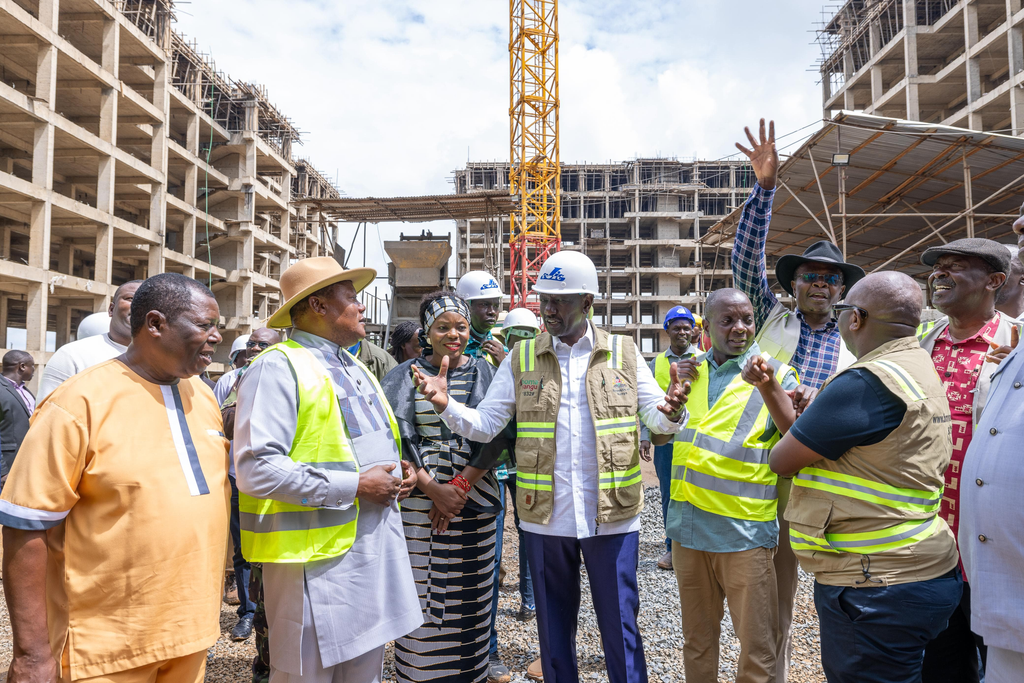
Meanwhile, Homa Bay’s 12,000-seat Raila Odinga Stadium stands among the major projects in the county.
Affordable housing initiatives are intended to expand access to residential units for eligible households, while large sports facilities can provide spaces for sporting competitions and community events.
Both categories can also create demand for local services during construction, although the extent of employment and business opportunities varies by project.
For housing, the key measures will include affordability, quality, access to utilities and the ability of intended beneficiaries to secure homes.
For stadiums, long-term value will depend on management, maintenance, regular use and the availability of programmes that support local sports and community activities.
These considerations will be important in determining whether the projects provide lasting benefits after construction is completed.
Roads and Public Facilities Expected to Improve Connectivity
Road networks remain a central part of the regional development programme because they connect communities to markets, schools, hospitals and other services.
In Siaya, the Kodiaga–Rabango–Awelo–Dominion route towards Usenge is among the roads where works are progressing.
The Dhogoye Bridge is also expected to improve movement in an area where residents have described difficulties crossing water safely.
Across the region, better road connectivity could reduce travel challenges, make it easier to move agricultural produce and support businesses that depend on transport.
Road infrastructure can also improve access to public facilities, particularly where residents have previously faced difficult journeys to reach healthcare services or commercial centres.
However, the impact will depend on the sections completed, the condition of connecting roads and continued maintenance after projects are opened for use.
For communities, a road or bridge delivers its greatest value when it remains safe and accessible and provides a reliable link to essential destinations.
A Broader Political Debate About Development in Nyanza
The projects have also taken on political significance because of the historical debate over regional development and the relationship between Nyanza and successive national administrations.
Supporters of the current programme argue that the investments demonstrate a stronger commitment to including the region in major national infrastructure plans.
Kajwang’, Nyamita, Mohamed and Nyamori have each highlighted different aspects of this argument, from the construction of roads and hospitals to fisheries infrastructure and the distribution of public services.
Their comments reflect a view that infrastructure should be assessed in practical terms: whether it improves access to essential services, supports economic activity and reaches communities that have previously lacked adequate facilities.
At the same time, the value of a project portfolio cannot by itself establish whether all historical development gaps have been resolved.
The figures supplied describe projects at different stages, including construction, completion and operation. Each project therefore needs to be assessed according to its actual status and the services it provides.
The wider question is whether the investments will be completed on schedule, remain within their approved budgets, meet quality standards and deliver benefits that can be sustained over time.
From Construction Sites to Lasting Community Benefits
The 269 projects listed across Luo Nyanza represent a broad infrastructure programme covering four counties and multiple sectors.
Kisumu’s portfolio includes housing, aviation, fisheries, agriculture, maritime safety and healthcare. Homa Bay’s projects feature the rebuilt pier, Koginga Beach fish market and Raila Odinga Stadium. Siaya’s developments include the Dhogoye Bridge, roadworks, housing, stadium and hospital projects, while Migori has recorded milestones in electricity transmission infrastructure.
The projects also reflect the importance of investing in the region’s productive sectors. Rice processing can support farmers, fisheries facilities can help reduce losses, electricity infrastructure can serve businesses and public institutions, and better roads can strengthen connections between communities and markets.
For residents, however, the most important results will be visible in their daily lives: safer journeys, reliable electricity, accessible healthcare, more effective markets, better housing opportunities and improved access to public services.
The programme’s long-term success will depend on transparent implementation, effective management and whether completed facilities remain accessible to the people they are intended to serve.
As construction continues across Luo Nyanza, the challenge is to ensure that the value represented by the project portfolio translates into practical, measurable and lasting improvements for communities throughout the region.
From the Dhogoye Bridge and Kisumu’s expanding infrastructure to Homa Bay’s stadium and the electricity projects serving the wider region, Luo Nyanza’s development programme is taking shape across several sectors. The ultimate measure of its success will be whether these investments move beyond construction milestones to deliver safer communities, stronger livelihoods and better public services for generations to come.

