
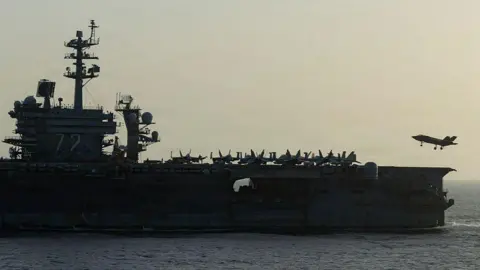
Thousands of US military personnel aboard the USS Abraham Lincoln are reportedly facing mounting challenges after spending more than 250 days at sea, including alleged shortages of basic supplies, plumbing problems and growing fatigue. The reports have prompted US lawmakers to demand answers from the Pentagon as the carrier’s extended deployment continues amid the conflict involving Iran.
Highlights
- About 5,000 personnel are reportedly aboard the USS Abraham Lincoln.
- The carrier has been deployed for more than 250 days.
- Lawmakers raised concerns over food supplies, plumbing, water and mental health.
- Reports have emerged of severe exhaustion among some sailors.
- The Pentagon has disputed claims about the conditions aboard the vessel.
- The US Navy may soon rotate the carrier with the USS George Washington.
Main Story
A Long Deployment Raises Concerns
The USS Abraham Lincoln has spent more than eight months away from its home port, leaving thousands of sailors facing an unusually prolonged deployment.
The aircraft carrier departed California in November and initially operated in the South China Sea before being redirected towards the Middle East ahead of US military action against Iran in February.
Its deployment was originally expected to end in May, but the return has been repeatedly pushed back.
The prolonged mission has now sparked concerns about whether the US Navy can maintain such an intense operational schedule while protecting the welfare of its personnel.
Reports of Shortages and Broken Facilities
US military news outlets have reported difficult conditions aboard the carrier, including alleged shortages of food and other basic supplies.
Other concerns reportedly include plumbing problems, water-related issues, deck safety and disruptions to mail deliveries.
Connecticut Senator Richard Blumenthal highlighted several of these allegations in a letter to Defence Secretary Pete Hegseth, calling for immediate attention to the situation.
He also questioned whether the Navy has the capacity to sustain the current pace of carrier deployments.
Mental Health Concerns
The reports have also raised concerns about the mental wellbeing of sailors who have spent months away from their families.
Military news outlets have reported that some sailors allegedly attempted to jump overboard, while families have expressed concern about the psychological strain of the prolonged deployment.
The combination of extended time at sea, limited contact with loved ones and operational pressure has intensified calls for greater attention to the welfare of the crew.
Pentagon Pushes Back
Defence Secretary Pete Hegseth has rejected the reports, describing claims about conditions aboard the carrier as “completely misrepresented.”
The disagreement has nevertheless prompted lawmakers to seek more information and greater oversight of the situation.
Senator Ruben Gallego has called for a congressional delegation to be allowed to visit the ship and independently assess the conditions facing the crew.
Possible Change in Deployment
The USS Abraham Lincoln has not yet been given a confirmed return date.
However, several reports indicate that the US is preparing to replace the carrier with the USS George Washington as part of a planned rotation.
Such a move could eventually provide relief to personnel who have spent months operating far from home.
Beyond the conditions aboard one aircraft carrier, the controversy has raised a wider question about the demands being placed on America’s carrier fleet.
Aircraft carriers require thousands of personnel to operate and maintain them, meaning prolonged deployments can place significant pressure on sailors, their families and the Navy’s support systems.
As the US continues to manage military commitments in the Middle East and elsewhere, the debate over how long personnel can remain deployed without adequate relief is likely to continue.
Behind every military operation are people who spend months away from home—raising an important question: how much pressure can those on the front line endure before the human cost becomes too high?

