
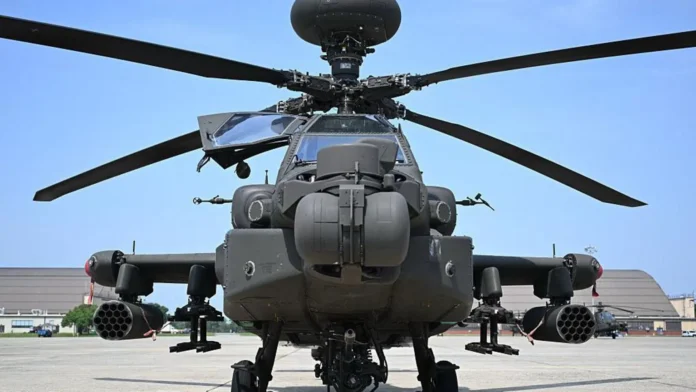
An autonomous sea drone has demonstrated the future of maritime rescue operations after helping save a US Army helicopter crew that was forced to make an emergency landing in waters near the Strait of Hormuz. The incident has drawn attention to how uncrewed technology is transforming military and civilian search-and-rescue missions.
Highlights
- An autonomous surface drone assisted in rescuing a US Army helicopter crew.
- The helicopter reportedly made an emergency landing after experiencing technical difficulties.
- The drone provided flotation equipment and relayed the crew’s location to rescue teams.
- All crew members were recovered safely without serious injuries.
- Defence experts say autonomous systems could revolutionize maritime rescue operations.
Main Story
Autonomous Technology Steps In
A maritime drone played a crucial role in a successful rescue operation after a US Army helicopter encountered technical problems and was forced to ditch into waters near the Strait of Hormuz during a routine mission.
Operating as part of a regional maritime surveillance network, the uncrewed surface vessel rapidly reached the location and supported the stranded crew while larger rescue assets were mobilized.
Fast Response Saves Lives
Military officials said the autonomous craft supplied flotation equipment and transmitted precise location information to nearby naval rescue teams, allowing responders to quickly reach the crew.
The helicopter personnel were safely recovered without major injuries, while authorities began efforts to secure the aircraft and determine what caused the emergency landing.
New Era for Maritime Rescue
Security and defence analysts say the incident illustrates the growing importance of autonomous maritime systems in modern operations.
By reaching emergency scenes faster and providing real-time situational awareness, sea drones can significantly improve search-and-rescue missions while reducing risks to human responders in challenging environments.
Strategic Waterway Under Constant Watch
The Strait of Hormuz remains one of the world’s most strategically important maritime corridors, carrying a large share of global energy shipments and regularly hosting military patrols from several nations.
Officials have launched an investigation into the helicopter incident while praising the effective coordination between autonomous technology and conventional rescue forces that contributed to the successful operation.
Read Also
- Ariana Grande and Ethan Slater Call It Quits in Quiet Split
- Kenya Power Urges Customers to Go Digital as Bank Hall Counters Are Phased Out
- Ruto Announces 1,000 Seafarer Jobs for Kenyans Through New Norway Deal

