
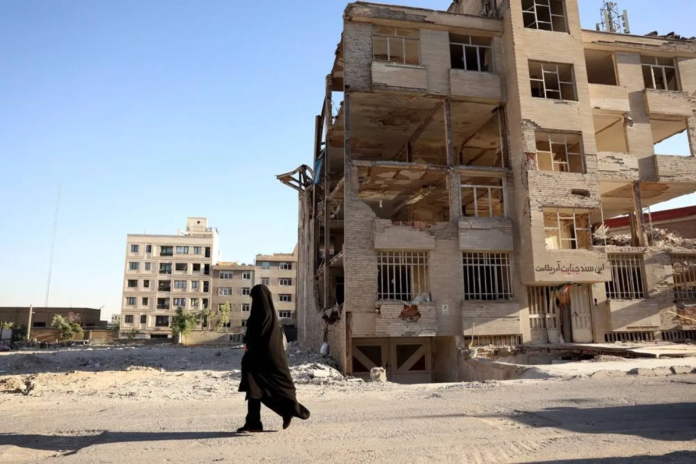
Fresh military confrontations between the United States and Iran have heightened tensions across the Middle East, with Kuwait reporting damage and casualties after drones struck its international airport. The latest exchange of attacks comes at a critical moment, as diplomatic efforts aimed at ending months of conflict remain stalled, raising fears of a wider regional escalation.
Highlights
- US forces launched strikes targeting Iranian military assets on Qeshm Island.
- Iran responded with missile and drone attacks aimed at US-linked targets in the Gulf.
- Kuwait International Airport suffered significant damage following a drone strike.
- Bahrain intercepted several incoming missiles with support from US forces.
- Ongoing ceasefire negotiations have failed to produce a breakthrough.
Main Story
Fresh Hostilities Deepen Regional Crisis
The conflict between the United States and Iran intensified overnight after both sides carried out new military operations across the Gulf region.
The US military said it launched what it described as defensive strikes against an Iranian military command facility on Qeshm Island, located near the strategic Strait of Hormuz. According to US Central Command (CENTCOM), the operation was conducted in response to attempted Iranian attacks targeting regional countries and commercial maritime traffic.
American forces also reported intercepting several drones allegedly launched by Iran toward vessels navigating international waters.
Kuwait Airport Among Targets
In one of the most significant developments, Kuwaiti authorities confirmed that Iranian drones struck Kuwait International Airport, causing extensive damage to airport infrastructure and injuring several people.
The attack temporarily halted air traffic as emergency responders rushed to the scene. Kuwaiti military officials condemned the strike, describing it as a direct attack on the country’s security and civilian facilities.
The incident marks a serious escalation in a region already on edge following months of military confrontations between Washington and Tehran.
Missiles Intercepted Over Bahrain
CENTCOM further stated that multiple missiles were launched toward Gulf nations hosting US military installations.
According to the US military, two missiles aimed at Kuwait failed before reaching their targets, while three others headed toward Bahrain were intercepted by Bahraini and American air defence systems.
Iran has frequently viewed military facilities in Bahrain and Kuwait as strategic targets because of their close security ties with the United States.
Strait of Hormuz Remains a Key Battleground
The Strait of Hormuz continues to play a central role in the conflict.
The narrow waterway serves as one of the world’s most important energy corridors, handling a significant portion of global oil shipments. Any disruption to traffic through the strait has the potential to impact international energy markets.
Iran’s Revolutionary Guard warned that attempts to undermine security in the area would carry consequences, while US forces maintained that their operations were aimed at protecting regional stability and freedom of navigation.
Earlier, American forces also disabled a commercial oil tanker heading toward Iran after alleging that the vessel ignored repeated warnings during enforcement operations linked to Washington’s naval blockade.
Diplomatic Efforts Face New Setback
The latest military exchanges come just days after ceasefire talks between Washington and Tehran failed to make meaningful progress.
While US President Donald Trump has expressed optimism about the possibility of a future agreement, disagreements remain over key issues, including maritime security, sanctions, and Iran’s nuclear programme.
Iranian officials have accused Washington of frequently altering its negotiating positions, making it difficult to move discussions forward.
With fresh attacks unfolding across the Gulf and diplomatic channels showing little momentum, concerns are growing that the conflict could enter a more dangerous phase.
As military activity intensifies and peace talks remain deadlocked, the Gulf region finds itself at a crossroads where every strike risks pushing the conflict beyond its current borders.

