
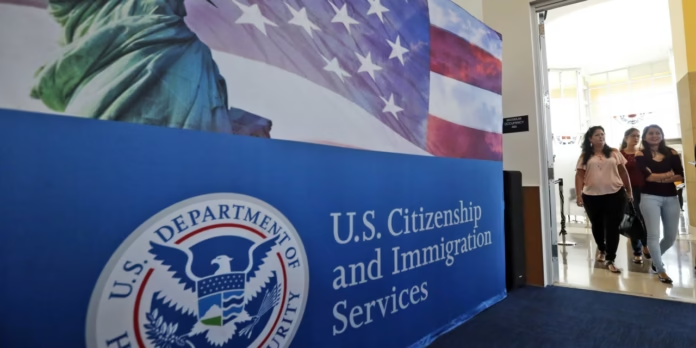
A new policy by the United States Department of Homeland Security (DHS) has sparked heated debate after revealing plans to screen immigrants applying for green cards and citizenship for what it describes as “extremist views.” The move, which includes reviewing social media activity and public statements, has raised serious concerns over free speech, political expression, and how far governments should go in security vetting.
Highlights
- DHS to screen immigrants for alleged “extremist views” during visa and citizenship processing
- Social media posts and public statements will now be part of background checks
- Critics warn the policy could blur the line between security and free speech
- Civil liberties groups fear subjective interpretation of political expression
- Government insists the move is aimed at strengthening national security
Main Story
New Vetting Measures Introduced
The United States Department of Homeland Security has rolled out updated immigration screening guidelines targeting applicants for permanent residency and citizenship.
Under the new approach, immigration officers are expected to assess an applicant’s online presence, past public statements, and general behavior to determine whether they may hold views considered extremist or supportive of violence.
The policy also extends scrutiny to political expression, including participation in protests or criticism of governments, depending on how such actions are interpreted by officials handling applications.
The United States Citizenship and Immigration Services (USCIS) will be central in implementing the checks during background verification processes.
Free Speech Concerns Grow
The announcement has triggered strong reactions from civil rights organizations and legal experts who argue the policy could open the door to subjective decision-making.
Critics warn that labeling certain political opinions as “extreme” risks punishing individuals for expressing views rather than engaging in any criminal activity.
Concerns have also been raised that the policy could conflict with free speech protections, especially if criticism of governments or participation in demonstrations is used against applicants.
Government Defends the Policy
Authorities in the US government have defended the move, stating that the updated vetting system is designed to strengthen national security.
Officials argue that immigration systems must ensure individuals granted residency or citizenship do not support violence, terrorism, or extremist ideologies that could threaten public safety.
They maintain that the expanded screening is part of broader efforts to modernize background checks and close gaps in existing security processes.
Bigger Debate on Security vs Freedom
The development has reignited a long-standing global debate: how to balance national security with individual freedoms.
Supporters of stricter vetting say governments must adapt to modern threats, especially in the digital age where online activity can signal potential risks.
However, critics caution that expanding ideological screening could lead to discrimination, inconsistent decisions, and the policing of political beliefs rather than actions.
As discussions continue, legal challenges and further political debate are expected around how far immigration screening should go.
Read Also
- Sh22 Million Meth Seized at JKIA in Major Blow to Drug Traffickers
- Prada Turns Controversy Into Collaboration With New Indian-Made Sandals
- Inside Uhuru’s Growing Influence in Africa’s Peace and Security Agenda

