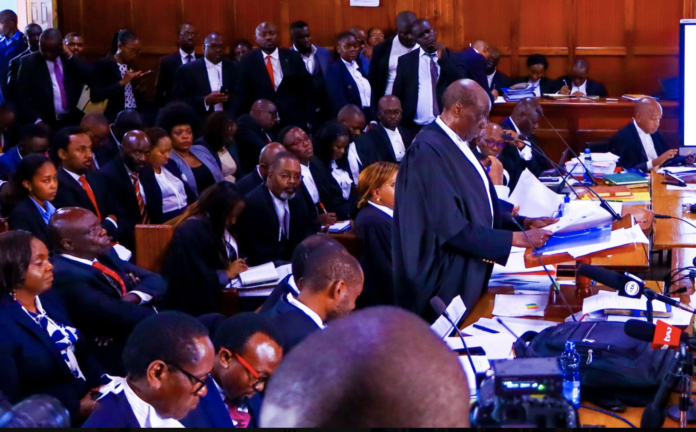
Former Deputy President Rigathi Gachagua has taken a dramatic turn in his impeachment challenge, abandoning efforts to reclaim office and instead pursuing compensation for what he argues was an unconstitutional ouster. The shift could reshape the case into a landmark legal test on how impeachment is handled in Kenya.
Highlights
- Gachagua has dropped his push to be reinstated as Deputy President.
- His case now focuses on compensation and declaring the impeachment unlawful.
- He is seeking salary, benefits and emoluments tied to the remainder of his term.
- The petition could set a major precedent on impeachment procedures in Kenya.
- Attention now shifts from political restoration to constitutional accountability.
Main Story
Strategy Shift in Court Battle
Rigathi Gachagua’s impeachment case has taken a new direction after his legal team informed the High Court he is no longer seeking to be returned to office.
Instead, the former Deputy President is now concentrating on challenging the legality of the process that removed him and pursuing financial compensation if the court finds his rights were violated.
The move signals a major recalibration in a case that has carried heavy political and constitutional weight.
What Gachagua Wants
In revised court prayers, Gachagua is asking judges to declare the impeachment process unconstitutional and unlawful, while also seeking orders to nullify the process.
He is also pursuing damages over what he describes as wrongful removal, alongside salary, benefits and other entitlements he says he would have earned had he completed his full term.
There is also a push to safeguard benefits associated with the office of a former Deputy President.
Why the Reinstatement Bid Was Dropped
The decision to abandon reinstatement is being viewed as both legal and strategic.
Returning to office would have opened a politically fraught and complicated path, especially given events since the impeachment unfolded. By shifting focus to compensation and constitutional declarations, the case becomes less about immediate political comeback and more about whether due process was followed.
It also raises the possibility of a precedent-setting judgment on how future impeachments are conducted in Kenya.
Bigger Constitutional Questions
With reinstatement off the table, the spotlight is now on whether the impeachment process met constitutional thresholds.
Legal observers say that could be the more consequential battle.
If the court finds procedural or constitutional breaches, the ruling could shape how Parliament and other institutions handle future removal proceedings involving senior state officers. (Parliament of Kenya)
What Happens Next
The matter remains before a three-judge High Court bench, with attention now turning to whether Gachagua can secure damages and whether the court could redefine limits around impeachment power.
Beyond compensation, the outcome may carry political and legal consequences that stretch far beyond one case.
Read Also
- How Ukraine Is Using Drones to Stretch Russia Beyond the Battlefield
- The Silent Killer: Why Hypertension Is a Growing Threat to Young People
- How Going Viral Can Put You In Trouble

