
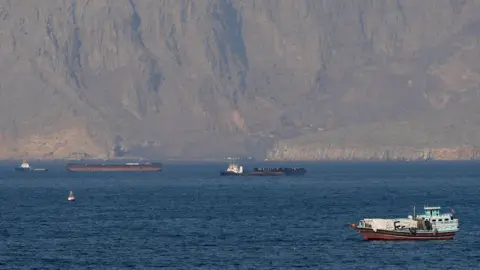
A narrow stretch of water in the Middle East continues to hold massive influence over global energy, trade, and politics. The Strait of Hormuz may look small on the map, but it plays an outsized role in how oil and gas move across the world making it one of the most closely watched waterways on the planet.
Highlights:
- It carries about a quarter of the world’s seaborne oil supply
- Key Gulf countries rely on it as their only export route
- Asia depends heavily on energy passing through the strait
- Tensions in the region can quickly impact global markets
- Despite threats, it has never been fully shut down long-term
Main Story:
What Exactly Is the Strait of Hormuz?
The Strait of Hormuz is a strategic sea passage linking the Persian Gulf to the open ocean through the Gulf of Oman. On one side lies Iran, while the opposite coast is controlled by Oman and partly the United Arab Emirates.
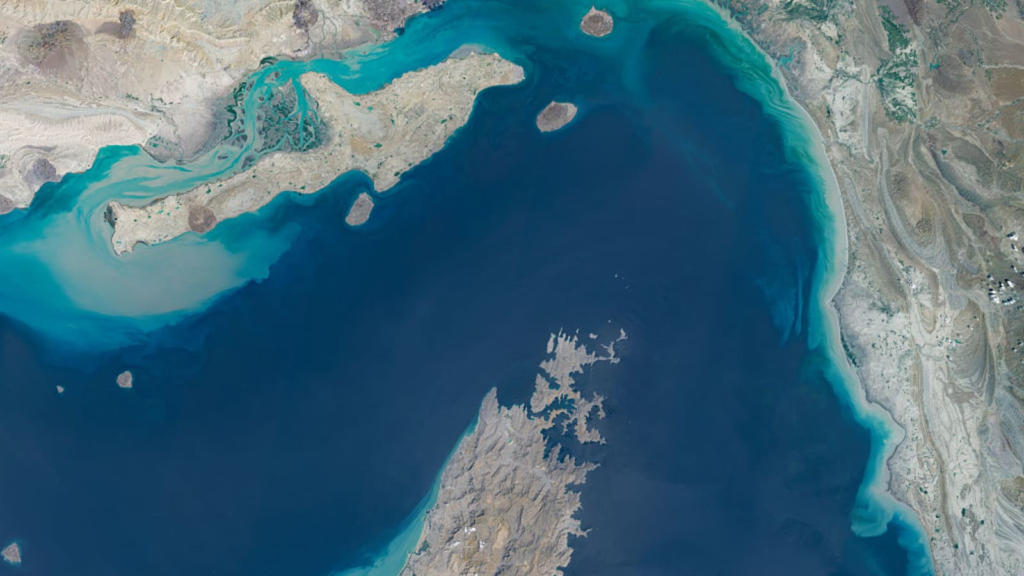
Though it stretches roughly 167 kilometres in length, the strait narrows significantly at certain points, forcing ships into tight navigation channels.
To avoid chaos on the water, vessels follow a structured system similar to a highway. Ships entering and leaving the Persian Gulf travel in separate lanes, each just a few kilometres wide, with a buffer zone in between.
This organized flow allows massive oil tankers and cargo ships to pass through safely despite the limited space.
Why It Matters to the World
The Strait of Hormuz is one of the most important energy routes globally. A significant share of the world’s oil and liquefied natural gas passes through this single corridor every year.
Countries like Saudi Arabia, Qatar, Iraq, Kuwait, and the UAE depend on it to export their energy. Without it, their access to international markets would be severely limited.
At the same time, major economies in Asia including China, India, Japan, and South Korea rely heavily on these energy supplies. China alone takes in the majority of Iran’s oil exports, highlighting just how interconnected the system is.
A Global Chokepoint
Because of its narrow size and massive traffic, the strait is often described as a “chokepoint.” Any disruption whether from conflict, accidents, or political tension could send shockwaves through global markets.
Oil prices could spike, supply chains could stall, and economies could feel the pressure almost instantly.
Can It Be Closed?
Over the years, Iran has repeatedly threatened to block the strait, especially during periods of heightened conflict. While it has the capability to disrupt traffic temporarily using naval tactics, fully shutting it down for a long time would be extremely difficult.
That’s largely because global powers, especially the United States, maintain a strong military presence in the region to ensure the route remains open.
A History of Tension
The strait has been at the center of several major incidents. During the Iran-Iraq War in the 1980s, oil tankers were targeted in what became known as the “Tanker War.”
There have also been ship seizures, military standoffs, and tragic accidents, including the downing of a civilian aircraft in 1988. More recently, rising tensions in the Middle East have once again brought global attention back to the waterway.
The Hidden Economy
Beyond official trade, the strait also supports a lesser-known informal economy. Small boats frequently move goods between Iran and nearby regions, often bypassing restrictions and sanctions.
This cross-border activity includes everything from electronics to livestock, showing how the strait also shapes everyday livelihoods in the region.
From fueling economies to shaping global politics, the Strait of Hormuz proves that sometimes the smallest places can carry the biggest weight.

