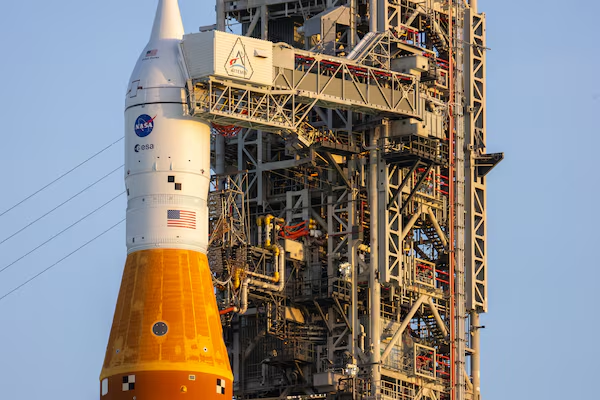
History roared back to life as NASA’s Artemis II mission launched into the evening sky, marking humanity’s long-awaited return to deep space exploration. With a thunderous liftoff and millions watching in awe, four astronauts are now on a groundbreaking journey that will take them farther from Earth than any human has ever traveled.
Highlights:
- Artemis II is the first crewed mission toward the moon since 1972
- Four astronauts are on a 10-day journey around the lunar far side
- The Space Launch System produced 8.8 million pounds of thrust at liftoff
- The mission will test the Orion spacecraft for future moon landings
- It sets the stage for upcoming lunar missions, including Artemis III and beyond
Main Story:
A Powerful Return to Deep Space
As the sun dipped below the horizon in Florida, anticipation built around NASA’s Kennedy Space Center. At exactly 6:35 p.m. ET, the Space Launch System ignited with an intense burst of energy, lighting up the sky and shaking the ground with unmatched force.
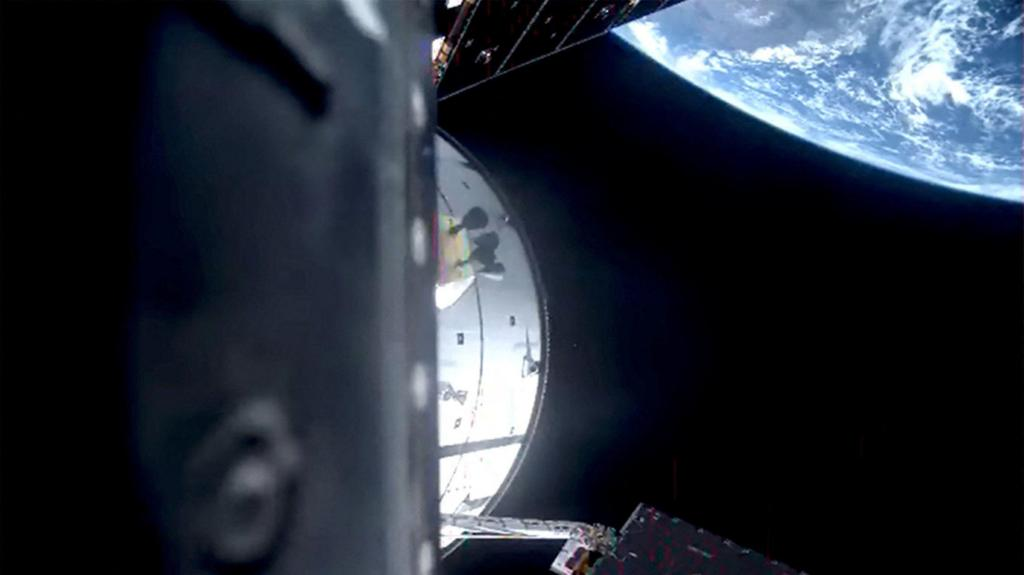
The launch was nothing short of dramatic. The rocket surged upward with incredible power, reminiscent of the historic Saturn V launches during the Apollo era. Spectators along the coast erupted into cheers, fully immersed in the moment as humanity once again reached for the moon.
Meet the Crew on Board
On this historic mission are four astronauts: Reid Wiseman, Victor Glover, and Christina Koch from NASA, alongside Jeremy Hansen of the Canadian Space Agency. While most of the crew are seasoned space travelers, Hansen is experiencing his first journey beyond Earth.
Together, they are embarking on a 10-day mission that will take them around the far side of the moon a region never visible from Earth.
Not a Landing—But a Crucial Step
Although Artemis II won’t land on the moon, its purpose is critical. The mission is designed to test NASA’s Orion spacecraft in deep space conditions, ensuring it’s ready for future missions that will include actual lunar landings.
Five days into the journey, the spacecraft will swing around the moon before heading back home, completing a path that pushes the boundaries of human space travel.
A Mission Decades in the Making
The last time humans traveled toward the moon was during the Apollo 17 mission in 1972. This new mission signals a major comeback, reigniting ambitions for long-term lunar exploration.
NASA plans to build on this momentum. Future missions aim to include a lunar landing, followed by sustained human presence on the moon in the coming years.
After the intense launch phase, the crew has begun settling into their journey. Their schedule includes rest periods and key orbital adjustments as they prepare for the next stages of the mission.
As Artemis II journeys into the unknown, it’s a reminder that the human spirit will always chase what lies beyond the horizon.

