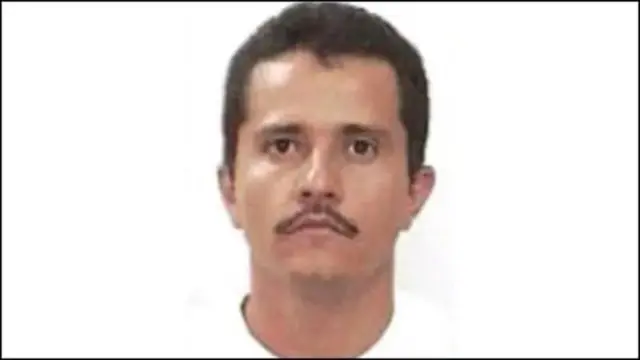
The confirmation of the death of Nemesio ‘El Mencho’ Oseguera Cervantes during a joint tactical operation in the Jalisco highlands marks the end of an era for the Cartel de Jalisco Nueva Generación (CJNG). For over a decade, El Mencho was the most hunted man in the Western Hemisphere, a shadowy figure who transformed a splinter group into a multi-billion dollar paramilitary organization.
However, security analysts warned today that the elimination of the CJNG’s undisputed patriarch is not a victory for the Mexican state. It is a catalyst for chaos. As the news ripples through the underworld, Mexico prepares for a “fragmentation explosion,” where the removal of a top-tier leader triggers a multi-front civil war within the cartel itself.
The power vacuum left by Oseguera Cervantes is not merely a local concern. It threatens to destabilize global supply chains of fentanyl, methamphetamines, and cocaine, stretching from the ports of Manzanillo to the streets of Chicago and the markets of Western Europe.
—
## The Internal Schism: The Line of Succession
The CJNG is not a traditional corporate hierarchy; it is a loose federation of “plaza bosses” held together by El Mencho’s terrifying reputation and absolute authority. With that anchor gone, the organization is expected to split along ideological and familial lines.
Intelligence sources point to three primary factions now vying for control of the CJNG’s assets, which include a private army equipped with drone bombers and rocket-propelled grenades:
– **The ‘Los Cuinis’ Faction:** Led by the Gonzalez Valencia family (El Mencho’s in-laws), this group controls the financial backbone and money laundering networks. They favor a “business-first” approach but lack the grassroots military loyalty of the gunmen.
– **The Heirs:** Remaining members of the Oseguera family who claim a bloodright to the throne. While many are incarcerated, their proxies on the outside represent a significant threat to any “usurper.”
– **The Regional Warlords:** High-ranking lieutenants who command thousands of “sicarios” in states like Guanajuato and Michoacán. These commanders have little interest in taking orders from a central figure in Guadalajara and may choose to form independent criminal fiefdoms.
> “When you cut off the head of a hydra like the CJNG, you don’t kill the beast; you create ten smaller, hungrier beasts,” says Dr. Elena Ramirez, a senior fellow at the Center for hemispheric Security. “El Mencho kept a lid on internal rivalries through extreme violence. Without him, those lieutenants will turn those weapons on each other.”
—
## The External Threat: The Sinaloa Cartel Strikes Back
The death of El Mencho provides a rare strategic window for the Sinaloa Cartel—the CJNG’s arch-nemesis. For years, the two organizations have been locked in a stalemate, fighting a war of attrition over the lucrative “tierra caliente” regions.
Leaked intelligence reports suggest that Ismael ‘El Mayo’ Zambada’s faction and the sons of ‘El Chapo’ (Los Chapitos) have already mobilized “convoy units” toward Jalisco and Colima. Their objective is clear: reclaim the strategic shipping ports and border crossings that the CJNG seized during its rapid expansion between 2015 and 2020.
If Sinaloa attempts a full-scale invasion of CJNG territories, Mexico will experience a surge in homicides that could dwarf the record-breaking numbers of the last five years. This isn’t just a gang war; it is a battle for the control of a shadow economy that represents roughly 2% of Mexico’s GDP.
—
## Why the ‘Kingpin Strategy’ Fails
The execution of El Mencho is a textbook example of the “Kingpin Strategy”—the pursuit and elimination of high-value targets. While a symbolic victory for the Mexican administration and the U.S. Drug Enforcement Administration (DEA), history suggests this strategy is fundamentally flawed.
Data from the last two decades of the Mexican Drug War indicates a direct correlation between the arrest or killing of a cartel leader and a subsequent 15% to 25% spike in local homicide rates. This “fragmentation effect” leads to:
– **Anarchy on the Ground:** Smaller groups, lacking the resources of a large cartel, often turn to kidnapping, extortion, and fuel theft to survive.
– **Paramilitary Escalation:** To establish dominance, successor groups use increasingly public and gruesome displays of violence to intimidate rivals and the civilian population.
– **Institutional Corrosion:** Local mayors and police chiefs, previously under the “protection” of one cartel, are now caught between multiple warring factions, leading to a total breakdown of civil order.
**”The Mexican government has celebrated the death of a monster, but they have failed to prepare for the swarm that follows,”** an anonymous security consultant told SPM BUZZ. **”There is no plan for the day after. The vacuum will be filled with blood.”**
—
## Global Impact: The Fentanyl Flow
The U.S. State Department is reportedly on high alert. The CJNG manages a sophisticated logistics network that spans four continents. A disruption in the leadership of this network could lead to several scenarios:
1. **Supply Volatility:** A temporary dip in supply as factions fight over production labs, followed by a surge as new leaders try to liquidate inventory to fund their private wars.
2. **Expansion of Territory:** To gain leverage, factions may attempt to push further into South America or establish new routes through the Caribbean, dragging more nations into the conflict.
3. **Technological Escalation:** The CJNG pioneered the use of weaponized drones. Analysts fear that in a desperate bid for power, factions may deploy more advanced weaponry against civilian infrastructure.
—
## The Verdict: A Pyrrhic Victory
As the body of Nemesio Oseguera Cervantes is processed under heavy military guard, the reality on the ground in Mexico remains grim. The “Reign of Terror” attributed to El Mencho may simply be the prologue to a more chaotic and decentralized era of violence.
The Mexican government must now move beyond symbolic killings and address the structural issues—corruption, poverty, and impunity—that allowed the CJNG to become a paramilitary state-within-a-state. Until the infrastructure of the drug trade is dismantled, the death of a kingpin is merely a promotion opportunity for the next generation of narcos.
The coming months will determine if Mexico can contain the fallout, or if the ghost of El Mencho will continue to haunt the country through a never-ending succession of wars.

