
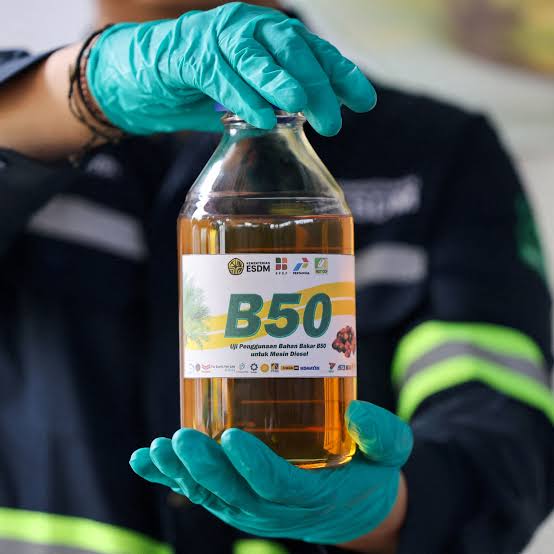
Indonesia has made global energy history by becoming the first country to officially launch B50 diesel fuel, a blend containing 50 per cent palm oil-based biodiesel. President Prabowo Subianto unveiled the programme in West Java, describing it as a major step toward reducing fuel imports, cutting emissions and strengthening the country’s energy independence.
Highlights
- Indonesia is the first country to introduce B50 diesel fuel.
- The fuel contains 50 per cent palm oil-based biodiesel.
- The government expects to cut carbon emissions by about 44 million tonnes annually.
- The programme aims to reduce dependence on imported diesel fuel.
- Indonesia also announced plans for 100 GW of solar power capacity.
Main Story
Indonesia Launches Historic B50 Fuel
President Prabowo Subianto officially launched Indonesia’s B50 biodiesel programme in West Java, marking a major milestone in the country’s renewable energy journey.
The new B50 fuel contains 50 per cent biodiesel derived from palm oil, making Indonesia the first nation in the world to implement such a high biodiesel blend on a national scale.
Prabowo said the programme demonstrates Indonesia’s ability to produce diesel fuel from plant-based sources, particularly palm oil, which is one of the country’s largest agricultural commodities.
Reducing Emissions and Fuel Imports
The Indonesian government forecasts that the B50 programme will reduce carbon dioxide emissions by approximately 44 million tonnes per year.
According to Prabowo, the initiative is also designed to reduce Indonesia’s dependence on imported diesel fuel, helping the country strengthen its energy security and achieve greater self-sufficiency.
Major Investment in Infrastructure
During the launch, the president also announced the opening of five new dams, built with government investment of around US$542 million.
He said the dams are part of a broader strategy to improve national infrastructure and support economic growth.
Ambitious Solar Power Plans
In addition to the biodiesel programme, Indonesia revealed plans to build solar power stations with a total capacity of 100 gigawatts (GW).
The state-owned energy company is expected to begin construction of facilities with a combined capacity of 17 GW this year, while the full 100 GW solar programme is scheduled for completion within two years.
A Step Toward Energy Self-Sufficiency
Prabowo described the combined investment in biodiesel, dams and solar power as part of Indonesia’s long-term policy to strengthen national self-sufficiency in energy and infrastructure.

