
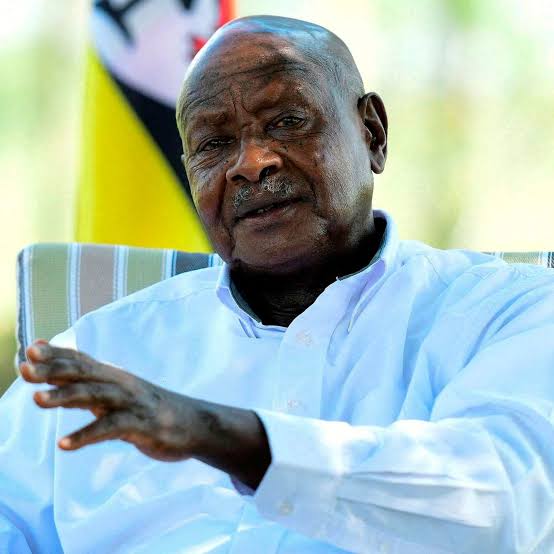
Ugandan President Yoweri Museveni has praised President William Ruto for helping his country secure a new petroleum supply arrangement that has significantly lowered the cost of importing fuel through Kenya.
Museveni said the shift away from Kenyan middlemen, combined with access to Kenya’s oil infrastructure, has delivered major savings for Uganda while strengthening energy cooperation between the two neighbouring countries.
Highlights
- Museveni credited Ruto with supporting Uganda’s new fuel import arrangement.
- Uganda moved away from relying on Kenyan intermediaries to source petroleum.
- Diesel import costs reportedly fell from $118 to $83 per metric tonne.
- Petrol costs dropped from $97.50 to $61.50 per metric tonne.
- Uganda owns a 20.15 per cent stake in the Kenya Pipeline Company.
Main Story
Museveni Praises Ruto Over Fuel Deal
Ugandan President Yoweri Museveni has acknowledged President William Ruto’s role in helping Uganda establish a cheaper way of importing petroleum products.
The Ugandan leader made the remarks while reflecting on his 82nd birthday, saying the new arrangement had helped reduce the amount Uganda spends on fuel imports.
Museveni said Ruto intervened when some interests in Kenya opposed the changes, eventually allowing Uganda to use Kenya’s petroleum infrastructure to move its imported products.
He expressed appreciation for the Kenyan Government, describing the arrangement as an important development for Uganda.
Uganda Moves Away From Middlemen
According to Museveni, Uganda’s decision to change its petroleum procurement system came after he discovered that the country was obtaining fuel through intermediaries in Kenya.
He said the issue was brought to his attention around 2019 by a Kenyan senator, after which he instructed the then Energy Minister Irene Muloni to investigate and address the matter.
The problem, however, remained unresolved for several years.
A major change came in 2023 when Uganda began working with a global energy trader capable of supplying petroleum products in bulk from different markets.
Fuel Import Costs Drop
Museveni said the new arrangement, formalised through an agreement signed on August 18, 2023, resulted in substantial reductions in the cost of petroleum products.
The price Uganda paid for diesel reportedly declined from $118 to $83 per metric tonne.
Petrol costs fell from $97.50 to $61.50 per metric tonne, while aviation fuel dropped from $114.25 to $79.25 per metric tonne.
The reductions have allowed Uganda to access petroleum products at more competitive rates while reducing its dependence on intermediaries.
Kenya Pipeline Supports Uganda’s Imports
The new procurement model has also relied on Kenya’s petroleum infrastructure.
Uganda has been allowed to transport its imported fuel through the Kenya oil pipeline, while the country holds a 20.15 per cent stake in the Kenya Pipeline Company.
In 2024, Kenya and Uganda formalised an arrangement allowing Uganda National Oil Company (UNOC) to purchase refined petroleum products directly from producer countries and use Kenyan infrastructure to move the fuel to Uganda.
Uganda has continued sourcing supplies through global markets, including West Africa, Europe, India and the Americas, particularly when disruptions affect traditional supply routes.
Strengthening Regional Energy Cooperation
The arrangement comes as Uganda seeks to improve its energy security while reducing the cost of importing fuel.
Ugandan officials have also pointed to the partnership with the global energy trader as a way of keeping fuel supplies available during international disruptions, including those linked to instability in the Middle East.
For Kenya, allowing Uganda to use its pipeline and other logistics infrastructure reinforces the country’s position as a key transport corridor for petroleum products destined for the wider East African region.
Museveni Calls for Greater African Integration
Museveni’s comments on the fuel deal formed part of a wider birthday message in which he advocated for deeper economic and political integration across Africa.
He argued that stronger continental cooperation and a more integrated common market would help African countries improve their economic prospects while strengthening their strategic position.
The Uganda-Kenya petroleum arrangement is therefore being presented not only as a commercial agreement but also as an example of how regional cooperation can help neighbouring countries address shared economic challenges.
As East Africa looks for ways to cut the cost of doing business, the Uganda-Kenya fuel deal shows how regional infrastructure can become a powerful tool for economic cooperation.

