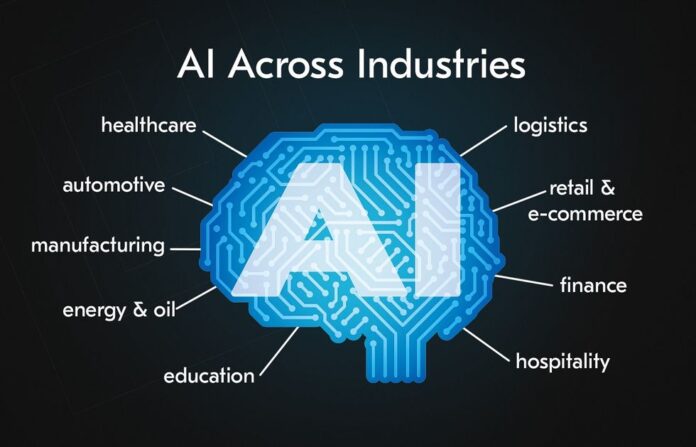
The high-gloss marketing of Silicon Valley presents the AI revolution as an unstoppable force of nature. For two years, **corporate boards** have leveraged the “inevitability” of generative AI to slash headcount and suppress wage growth.
That narrative is now hitting a brick wall. A coordinated “**botlash**” is taking hold across global markets as workers move from anxiety to active resistance.
From the film sets of Hollywood to the design studios of Lagos and the newsrooms of London, labor collectives are securing historic concessions. These are not mere protest movements; they are legally binding victories that prove automation is a choice, not a destiny.
## The Creative Front: Intellectual Property as a Fortress
The entertainment and creative arts sector has become the primary theater of war. What began as a defensive posture against “**deepfakes**” has evolved into a sophisticated legal offensive.
In the United States, the **SAG-AFTRA** and **WGA** strikes of last year were the first major tremor. The resulting contracts established that AI cannot be credited as a writer and that any use of a performer’s **digital likeness** requires explicit consent and compensation.
> “The myth that AI creates value out of thin air was debunked the moment we looked at the training data,” says Marcus Thorne, a senior labor strategist. “The victory here wasn’t just about jobs; it was about re-establishing that human input is the only legally defensible source of intellectual property.”
This ripple effect is hitting the digital art space. Platforms that once attempted to integrate AI-generated imagery without disclosure are facing a mass exodus of creators and mounting lawsuits.
– **Legal Precedent**: Courts in multiple jurisdictions are now ruling that AI-generated content lacks the “**human authorship**” required for copyright protection.
– **Economic Impact**: Companies that automated their design departments are finding their output cannot be legally protected, opening them up to rampant piracy.
– **The Win**: Creative agencies are now marketing “**100% Human Made**” as a premium certification, driving up rates for bespoke human work.
—
## High-Stakes Tech: The Coder’s Rebellion
The narrative that AI would replace entry-level software engineers has met a harsh reality: **technical debt** and **security vulnerabilities**. In the tech hubs of Nairobi and Bangalore, senior developers are successfully lobbying against the “auto-pilot” culture.
Recent audits from internal software quality firms suggest that codebases heavily reliant on AI-generation have a **35% higher rate of critical security flaws**. This has given unions and engineering collectives the leverage they needed to demand restricted use of **LLMs** in production environments.
> “Management tried to treat AI like a 10x developer that doesn’t sleep,” says a lead engineer at a major Pan-African fintech firm. “What they got was a 0.5x developer that lies confidently. We have now negotiated a ‘**Human-in-the-Loop**’ (HITL) mandate that ensures no AI code goes live without a tripartite human sign-off.”
This pushback has forced tech giants to pivot. Instead of replacing engineers, companies are being forced to invest in “**De-skilling Prevention**” programs—training designed to ensure workers don’t lose the core competencies that AI mimics but does not understand.
—
## Manufacturing and Logistics: The Safety Card
While white-collar workers fight over copyright, blue-collar unions are winning the AI war through the lens of **Occupational Health and Safety (OHS)**. In the European Union and parts of South Africa, logistics workers are blocking the implementation of AI-driven surveillance and pacing algorithms.
The argument is simple and legally potent: AI productivity trackers create “**unsafe psychological and physical pressure**.”
Recent rulings in Germany have mandated that any AI implementation in the workplace must undergo a “**Social Impact Audit**” before deployment. This has effectively stalled the rollout of biometric monitoring in some of the world’s largest warehouse networks.
**Key Victories in Logistics**:
– **Pacing Caps**: Agreements that forbid AI from setting the “**quota**” or speed of a production line.
– **Right to Disconnect**: Legislation that prevents AI-managed scheduling from contacting workers outside of contracted hours.
– **Algorithmic Transparency**: Workers now have a legal right to see the data points an AI uses to evaluate their performance.
—
## Analysis: The End of the ‘Integration’ Era
The “**move fast and break things**” era of AI implementation is being replaced by an era of “**justified deployment**.” The botlash is not about neo-Luddism or a hatred of technology; it is a sophisticated defense of the **human monopoly on judgment and accountability**.
Economists are beginning to see a “**bifurcation**” of the labor market. On one side are companies that rushed into total automation, now struggling with **quality control** and **legal liability**. On the other are firms that yielded to union demands for “**Augmentation over Replacement**,” seeing higher retention and superior output.
> “The corporate bluff has been called,” says Thorne. “The threat was always: ‘Accept AI or lose your job.’ The response from organized labor has been: ‘Give us AI that works for us, or your entire business model will face a legal and quality-control meltdown.'”
## The Impact: What Happens Next
The next twelve months will see the rise of **Collective Bargaining for Data**. Unions are now looking at “**data dividends**”—demanding that if a company uses an employee’s work to train an internal AI model, that employee must receive a residual royalty.
This shift moves the conversation from “How do we stop AI?” to “How do we tax the machines to pay the humans?”
– **Legislative Wave**: Expect more countries to adopt “**Human Supremacy**” laws in sensitive sectors like healthcare and criminal justice.
– **Market Correction**: The valuation of “**AI-first**” companies is expected to cool as the hidden costs of human oversight and legal compliance are factored in.
– **Education Shift**: Vocational training is pivoting back to foundational “**deep work**” skills that AI cannot replicate.
The “inevitability” of AI was a management strategy designed to demoralize workers. As the botlash grows, it’s becoming clear that the future of work is still very much a human decision.

