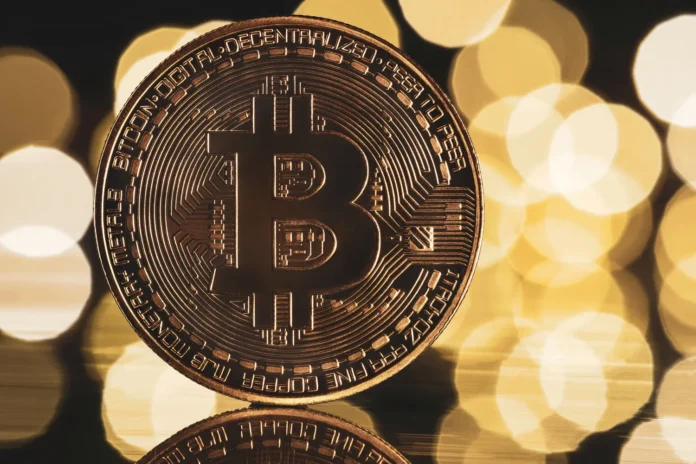
The specter of global conflict is no longer a fringe theory. As tensions between the United States and Iran reach a boiling point, the global financial system is bracing for a shockwave that could redefine the concept of value.
For decades, the standard operating procedure for investors during wartime was simple: buy gold. Today, that manual is being rewritten by the emergence of decentralized digital assets.
The question facing high-net-worth individuals across Africa and the globe is no longer just about profit. It is about survival.
—
## The Gold Standard: A Fortress Under Siege
Gold remains the ultimate hedge against total systemic collapse. It has no counterparty risk, requires no internet connection to exist, and has maintained purchasing power for five millennia.
When the first missiles fly, the knee-jerk reaction of the market is to seek physical certainty. Analysts expect gold to shatter its all-time highs as the “fear trade” accelerates.
> “Gold is the only financial asset that is not someone else’s liability,” says Dr. Arishe Olumide, a senior macro-economist. “In a scenario where traditional banking systems are frozen or sanctioned, physical bullion is the only universal language left.”
However, gold faces a logistical nightmare in modern warfare. It is heavy, difficult to transport across borders, and prone to seizure by desperate governments.
### The Limitations of Physical Bullion
– **Liquidity Issues:** Converting large amounts of physical gold into spendable currency during a crisis is slow and attracts predatory fees.
– **Custody Risk:** Most “paper gold” (ETFs) is held by banks. If the banking system suffers a cyberattack or a freeze, your gold certificate is a worthless piece of paper.
– **Portability:** You cannot flee a conflict zone with 50 kilograms of gold in your luggage without becoming a target.
—
## Bitcoin: The ‘Digital Gold’ Experiment
Bitcoin was born in the aftermath of the 2008 financial crisis, but it has never been tested by a world war. Its proponents argue that it is superior to gold because it is weightless, borderless, and impossible for a state to confiscate if properly secured.
As Iran-US tensions flared recently, localized “war premiums” were observed. In regions where fiat currencies collapsed due to sanctions or instability, Bitcoin traded at a 10% to 15% premium on peer-to-peer markets.
The “Smart Money” is beginning to view Bitcoin as a “portable offshore bank account.” If a citizen has to flee their country, they can carry their entire wealth in a 12-word seed phrase memorized in their head.
### The Volatility Trap
Critics argue that Bitcoin behaves more like a high-risk tech stock than a safe haven. During the initial hours of a geopolitical shock, Bitcoin often drops as investors dump liquid assets to cover margin calls in the stock market.
> “Bitcoin’s greatest strength is its greatest weakness,” notes a Brussels-based trade analyst. “Its 24/7 liquidity means it’s the first thing people sell when they need cash fast. It is a haven for the brave, but a nightmare for the faint of heart.”
—
## The “Shattered Internet” Scenario
The most significant threat to the Bitcoin thesis in World War III is a total internet blackout or the fragmentation of the web (splinternets). If the global grid goes down, the blockchain stops moving.
Gold requires no electricity. Bitcoin requires a functioning telecommunications infrastructure. While satellite internet (Starlink) and mesh networks offer a workaround, the barrier to entry increases significantly during wartime.
For investors in Africa, where infrastructure is already fragile, the reliance on digital connectivity represents a critical single point of failure.
—
## Where the Smart Money is Moving
Institutional players are not choosing one or the other. They are “barbcelling” their portfolios—holding both assets to mitigate specific risks.
Current data suggests a 70/30 split. The majority remains in gold for foundational stability, while 30% is moved into Bitcoin for its high-velocity portability and upside potential in a post-war inflationary environment.
### The Strategy for Survival
– **Self-Custody is Mandatory:** Whether it is physical gold in a private safe or Bitcoin on a cold-storage hardware wallet, the “smart money” is moving away from exchanges and banks.
– **Geographic Diversification:** Holding assets in jurisdictions unlikely to be directly involved in the kinetic conflict (e.g., parts of the Global South).
– **Hard Asset Integration:** Moving out of “paper wealth” (stocks and bonds) and into tangible assets that the world will need during reconstruction, such as energy and commodities.
—
## Impact: The Permanent Shift in Wealth
The looming conflict is accelerating the “Great Debasement.” Governments will print unprecedented amounts of fiat currency to fund military operations, leading to hyper-inflation.
In this environment, both gold and Bitcoin will likely outperform the US Dollar and the Euro. The real loser will be the middle-class saver holding cash in a commercial bank.
As the war drums beat louder, the choice between gold and Bitcoin becomes a question of your specific threat model. If you fear a bank freeze, buy Bitcoin. If you fear a power outage, buy Gold.
The age of “passive investing” is dead. In a World War III economy, your survival depends on your ability to hold assets that exist outside the reach of the state.

