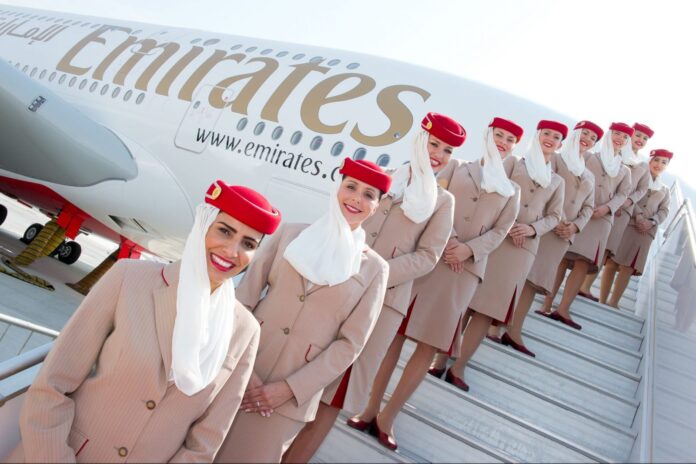
The glamourous promise of a tax-free salary and a global lifestyle has thousands of Kenyan youth lining up at recruitment centers this week as Emirates resumes its aggressive cabin crew hiring drive in Nairobi. For many Form 4 leavers, the allure of the Dubai-based carrier represents an escape from Kenya’s 12.7% unemployment rate.
However, beneath the polished “fly better” marketing lies a high-stakes corporate machine with a selection filter so narrow it borders on the clinical. While the PR machinery emphasizes luxury, an investigation into the recruitment process reveals a grueling reality of contractual bonds, psychological pressure, and a high attrition rate that often sends young recruits back to Jomo Kenyatta International Airport within months.
## The ‘Golden Birdcage’ Effect
For a 19-year-old Kenyan high school graduate, a starting salary of roughly KES 350,000 (inclusive of housing and flying allowances) sounds like a lottery win. In reality, industry analysts describe the Emirates contract as a “golden birdcage.”
The recruitment process is designed to filter for specific biological and psychological traits that align with the brand’s aesthetic. Candidates are subjected to “reach tests,” skin inspections, and personality assessments that prioritize total docility and aesthetic conformity over deep technical skill.
> “They aren’t just looking for flight attendants; they are looking for brand ambassadors who can handle 14-hour shifts without a hair out of place,” says James Omondi, a former regional aviation consultant. “The psychological toll on a teenager who has never left Kiambu or Kisumu is immense.”
—
## The Hidden Financial and Legal Bonds
What the glossy recruitment posters omit are the stringent “training bonds” and the financial implications of resignation. New recruits undergo an intensive eight-week training program at the Emirates Aviation College in Dubai.
If a recruit leaves the company within the first year—whether due to homesickness, mental health struggles, or disciplinary issues—they are often required to pay back a pro-rated portion of their training and recruitment costs. For many Kenyans, this figure can run into thousands of dollars, effectively trapping them in the role until the debt is cleared.
### Key Pressure Points for Kenyan Recruits:
– **Accommodation Controls:** While housing is provided, it is strictly monitored. Recruits live in company towers where visitors are regulated and “illegal” overnight stays can lead to immediate termination.
– **The Probation Gauntlet:** The first six months are a period of high surveillance. Any minor infraction, from a late arrival to a uniform violation, can result in being “grounded” or dismissed without a return ticket.
– **Health and Weight Clauses:** Personnel are subjected to periodic health checks. Significant weight gain or skin issues can lead to being placed on “unfit for duty” status without pay.
## The Attrition Reality
Data from aviation labor groups suggests that while thousands apply, the turnover rate for junior cabin crew remains one of the highest in the global industry. The “lifestyle” often involves irregular sleep patterns, chronic dehydration, and social isolation.
For Kenyan youth, the transition is particularly jarring. The cultural shift from a communal Kenyan upbringing to the sterile, high-rules environment of the UAE can lead to rapid burnout.
“The first three months are the ‘honeymoon’ phase,” notes a former Kenyan cabin crew member who requested anonymity. “By month nine, you realize you are a glorified waitress in a high-pressure tube, 40,000 feet in the air, with no support system. Many of my Kenyan colleagues quit because the mental cost outweighed the dirhams.”
—
## A Selection Filter Based on ‘Clean Slate’ Preference
Why does Emirates target Form 4 leavers instead of experienced hospitality professionals? Industry insiders suggest it is a deliberate strategy to recruit “clean slates.”
Younger recruits are less likely to have family obligations, are more physically resilient to jet lag, and—most importantly—are less likely to challenge corporate authority or unionize. In Dubai, labor unions are non-existent, and the employer holds total control over a worker’s residency visa (the Kafala system).
## The Impact: What Happens Next?
Despite these hidden costs, the recruitment drives will remain packed. The economic disparity between Nairobi and Dubai is too vast for the warnings to deter many.
However, labor experts urge Kenyan applicants to look past the Instagram-friendly photos and prepare for a rigorous corporate environment.
> “If you go in thinking it’s a holiday, you will fail,” warns Omondi. “You must treat it as a two-year stint in a high-security corporate facility. If you can survive that, you win. If you can’t, the return home is often paved with debt and a sense of failure.”
As the next cohort of Kenyans prepares to board flights for training in Dubai, the message is clear: the uniform is free, but the cost of wearing it is paid in absolute compliance and the loss of personal autonomy. The “Dream Job” is a business transaction where the recruit is the product.

