
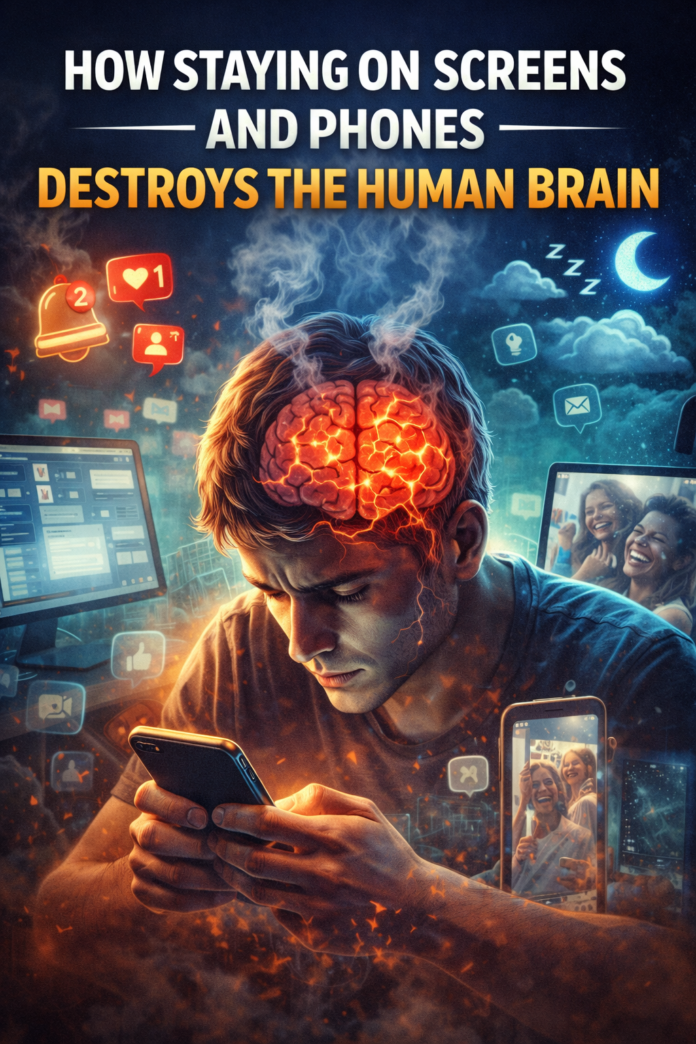
Phones are everywhere, and children often spend hours on social media, games, or videos. But experts warn that more than two hours of daily phone use can seriously affect the developing brain. The effects go beyond just tired eyes they can reshape attention, memory, learning, and emotional health.
Structural Brain Changes
Excessive screen time can lead to “brain rot,” a reduction in cognitive function caused by structural brain changes. Studies show that overuse can thin the cerebral cortex, reduce gray matter, and weaken brain regions responsible for focus, planning, and problem-solving. This means children may struggle with complex thinking, learning, and retaining information.
Dopamine Dependency and Addiction
Constant notifications, likes, and video feeds trigger frequent dopamine releases in the brain, the chemical linked to pleasure and reward. Over time, children can develop addiction-like behaviors, craving constant stimulation and losing patience for slower or more demanding tasks like homework, reading, or creative play.
Memory and Learning Impairment
Heavy phone use reduces the brain’s ability to store and recall information naturally, as children increasingly rely on devices to remember everything from directions to facts. This can weaken long-term memory and problem-solving skills, making learning slower and more frustrating.
Sleep Disruption
Blue light from screens suppresses melatonin, disrupting sleep cycles. Poor sleep affects cognitive development, attention span, and emotional regulation, leaving children more prone to irritability, mood swings, and poor academic performance.
Mental Health Risks
Excessive phone use is linked to increased anxiety, depression, and stress in children. Social media can amplify comparison, fear of missing out (FOMO), and feelings of inadequacy. Over time, this can lead to long-term emotional and behavioral challenges.
Attention and Focus Problems
Frequent screen use trains the brain to seek quick rewards, reducing the ability to focus on tasks requiring patience and sustained attention. Children may struggle with reading, homework, or group activities, finding it hard to concentrate for even short periods.
Additional Risks:
- Reduced Physical Activity: Children spending hours on phones are less likely to engage in exercise, which affects brain health and overall well-being.
- Impaired Social Skills: Too much screen time can limit face-to-face interactions, affecting empathy, communication, and conflict-resolution skills.
- Increased Risk of Obesity: Sedentary screen habits combined with snacking can increase weight gain, indirectly affecting brain health.
- Behavioral Issues: Impulsive behavior, irritability, and difficulty handling frustration are linked to prolonged screen exposure.
Strong Takeaways:
- 2 hours daily on phones can reshape the brain’s structure.
- Children may develop dopamine dependency, addiction-like behaviors, and poor focus.
- Memory, learning, and problem-solving skills are weakened.
- Sleep disruption harms brain recovery, mood, and attention.
- Mental health, social skills, and physical well-being are negatively impacted.
Phones can be powerful learning tools, but too much screen time can silently harm your child’s brain. Setting limits, encouraging offline activities, and teaching balanced digital habits can help protect memory, focus, and emotional growth.

