
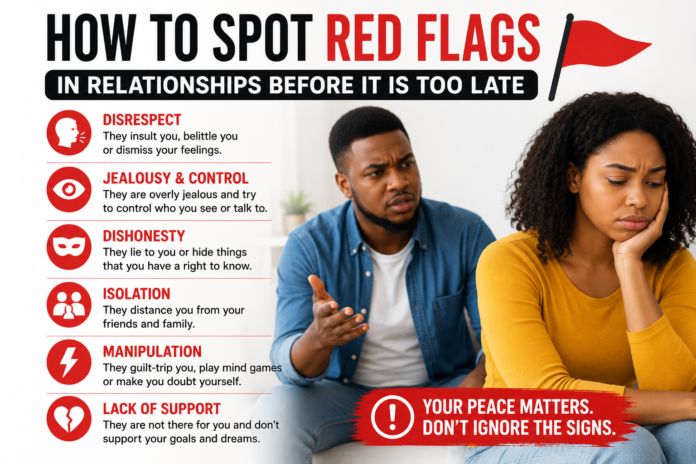
Not every relationship problem starts with a major betrayal. Sometimes, the warning signs appear gradually through controlling behaviour, disrespect, dishonesty or a lack of emotional support. Learning to recognise these red flags early can help you protect your peace, set healthy boundaries and make better decisions about your relationship.
Highlights
- Constant disrespect can be a serious warning sign.
- Excessive jealousy and controlling behaviour can become unhealthy.
- Repeated lying can gradually destroy trust.
- Isolation from friends and family should not be ignored.
- Healthy relationships require communication, respect and mutual trust.
Main Story
Not Every Red Flag Looks Obvious
When people talk about unhealthy relationships, they often think of dramatic arguments or major betrayals.
However, some warning signs can be much more subtle.
A partner may gradually become controlling, dismiss your opinions, constantly question where you are or make you feel guilty for spending time with other people.
One incident does not necessarily define an entire relationship, but repeated patterns deserve attention.
1. Your Partner Constantly Controls You
A healthy relationship allows both people to maintain their individuality.
If your partner regularly decides who you can talk to, where you can go, what you can wear or how you should spend your money, that may indicate an unhealthy level of control.
Love should not require you to surrender your independence.
2. Excessive Jealousy
A little jealousy can happen in relationships, but constant suspicion can become exhausting.
If your partner repeatedly checks your phone, demands passwords, questions every interaction or accuses you of cheating without evidence, it can create an environment built around mistrust.
3. They Disrespect Your Boundaries
Everyone has personal limits.
A partner who repeatedly ignores boundaries after you have clearly communicated them may not be respecting your needs.
Healthy relationships involve listening, compromise and understanding that saying “no” is acceptable.
4. Constant Lying
Trust is difficult to maintain when dishonesty becomes a pattern.
Small lies may seem insignificant at first, but repeated deception about money, friendships, communication or other important matters can gradually undermine the foundation of a relationship.
5. They Try to Isolate You
Be cautious if your partner constantly tries to distance you from your friends, relatives or other people who support you.
Statements such as “your friends are bad for you” may sometimes come from genuine concern, but persistent attempts to cut you off from your support network can become a form of control.
6. You Are Always Being Blamed
Relationships involve disagreements, and both partners can make mistakes.
However, constantly being blamed for every problem while your partner refuses to take responsibility can create an unhealthy dynamic.
A mature relationship allows both people to acknowledge their mistakes and work towards solutions.
7. They Make You Feel Small
Your partner should not regularly insult you, mock your ambitions or make you feel worthless.
Constant criticism can gradually affect your confidence and make you question your own abilities.
Someone who loves you should be able to disagree with you without deliberately destroying your self-esteem.
8. Communication Always Becomes a Fight
Disagreements are normal.
The problem begins when every attempt to discuss an issue results in shouting, intimidation, threats or deliberate punishment through prolonged silence.
Healthy communication allows couples to discuss difficult subjects without making each other feel unsafe.
9. You Are Constantly Walking on Eggshells
If you regularly find yourself carefully choosing your words or actions because you are afraid of how your partner will react, that is worth taking seriously.
A relationship should provide a sense of emotional safety rather than constant fear of triggering anger.
10. There Is Abuse or Threatening Behaviour
Physical violence, sexual coercion, threats, intimidation and deliberate destruction of property are serious warning signs.
These behaviours should never be dismissed as simply “relationship problems.”

