
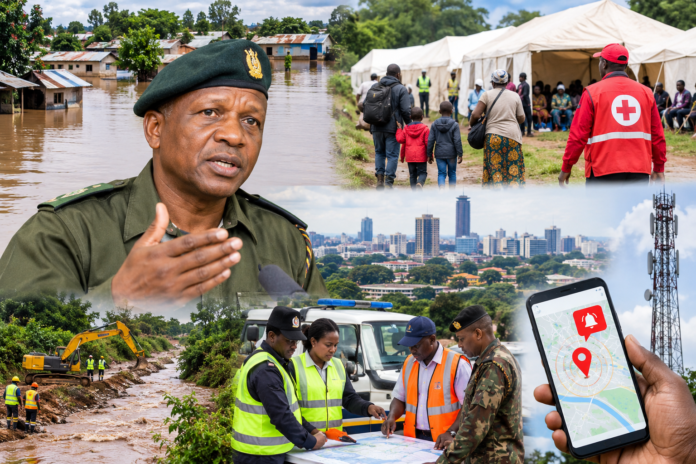
Kenya is stepping up preparations for the expected El Niño rains, with counties being directed to identify safe locations where families displaced by flooding can seek temporary shelter. Nairobi has already mapped potential sites, while authorities are working to ensure the camps have essential services without disrupting learning in schools.
Highlights
- Counties have been asked to identify safe land for people displaced by floods.
- Nairobi has mapped locations that could be used as temporary shelters.
- Authorities say schools should not be turned into IDP camps.
- Nairobi and the Red Cross are preparing to coordinate camp management.
- New communication systems are being developed to send emergency alerts directly to affected residents.
Main Story
Counties Told to Prepare Safe Shelter
Counties across Kenya are being urged to prepare in advance for communities that could be displaced by flooding during the expected El Niño rains.
Speaking during an interview with NTV, Col (Rtd) David Samoei said counties should identify and reserve suitable land as close as possible to areas likely to experience flooding.
The proposed sites are expected to have essential services such as sanitation, water, electricity, accessible roads and adequate space for temporary shelters.
Samoei said county disaster committees, chaired by governors and co-chaired with county commissioners, will play a key role in coordinating the preparations.
Schools Should Not Be Used as Camps
Authorities have also cautioned against using schools as temporary displacement centres.
Samoei said children affected by flooding should be able to continue with their education even when their families are forced to leave their homes.
Where an IDP camp is established, he said, arrangements should be made to ensure displaced school-going children have access to learning facilities.
The approach is intended to prevent flooding emergencies from creating a second crisis by disrupting children’s education.
Nairobi Maps Potential Hosting Areas
Nairobi has already identified locations where people displaced by floods could be hosted, according to Samoei.
The city is divided into approximately six boroughs, with each area involved in preparations for potential displacement.
Authorities are also planning exercises to test how the proposed camps would be managed. The Kenya Red Cross and Nairobi County are expected to take part in the camp-management arrangements.
Other counties, including Kisumu, Busia and Mandera, are also being monitored because they are considered among the areas that could experience significant impacts.
National Disaster Authority Yet to Be Established
Samoei also revealed that the National Disaster Operations Centre authority has not yet been fully established.
He said the process followed the enactment of the relevant law on May 29, after which human resource structures were submitted to the Public Service Commission.
The process will then involve the Salaries and Remuneration Commission and the National Treasury before the authority can be formally established and recruitment begins.
For now, he said, disaster-response activities continue under the existing directorate structure.
Disaster Response Remains a Shared Responsibility
Disaster management remains a joint responsibility between the national and county governments.
While the national government provides guidance on the minimum requirements, counties have responsibility for determining how they will implement preparedness measures within their jurisdictions.
Samoei said proposed shelters should have basic necessities including water, sanitation and hygiene facilities, electricity, access roads and tents.
The objective is to ensure that people displaced by flooding are moved into safe and functional locations rather than facilities such as schools.
Authorities Work on Faster Emergency Communication
Authorities are also working to improve how emergency information reaches the public.
Samoei said communication between disaster-management agencies and traffic police has been strengthened, with officials planning both a command-post exercise in Nairobi and a field exercise at Uhuru Park.
The exercises are intended to improve coordination between agencies, particularly during emergencies where road access and movement of people can quickly become major challenges.
Direct Alerts Planned for Affected Residents
The government is also working with Safaricom on a system that could allow emergency messages to be sent directly to people in specific geographical locations.
According to Samoei, the system is geo-referenced and is expected to allow authorities to target residents in affected areas.
The system could also be useful during major traffic disruptions, with emergency information potentially shared quickly with media houses so that families can alert relatives who may be stuck on roads or expressways.
Kisumu Repairs Underway Before Camps Are Set Up
In Kisumu, authorities are working with the National Youth Service to prepare areas along the Nyando River.
Samoei said NYS personnel have already been deployed to the area, with repair work expected to begin during the week.
The repairs are considered important before any potential displacement site is designated as a shelter.
Authorities want to avoid placing flood victims in an area that could itself be affected by rising water.
“This ground is safe” – that is the level of assurance authorities want to have before using any site as an emergency camp.
As Kenya prepares for potentially disruptive rains, the focus is increasingly shifting from reacting to floods after they occur to identifying shelters, strengthening communication and coordinating emergency agencies before the worst conditions arrive.
For communities living in flood-prone areas, the strongest disaster response may be the one that is already in place before the first heavy rains arrive.

