## **Nyayo House Immigration Scandal: Biometric Safeguards Sold to Highest Bidder**
A multi-agency investigation has blown the lid off a sophisticated criminal enterprise operating within the heart of Nyayo House, revealing how high-ranking officials at the Directorate of Immigration systematically dismantled **biometric safeguards** to sell Kenyan identity documents to the highest bidder.
Internal audit reports and whistleblower testimonies obtained by SPM BUZZ indicate that the very systems installed to prevent identity theft—specifically the **Automated Fingerprint Identification System (AFIS)**—were manually bypassed or placed in “maintenance mode” to allow foreign nationals to acquire Kenyan passports without providing verifiable biometric data.
### The Biometric Bypass
The breach of national security protocols was not a technical failure, but a deliberate administrative intervention. Investigators found that senior technical staff created “**backdoor**” accounts that allowed passport applications to skip the mandatory **facial recognition** and **fingerprint verification** stages.
By marking certain applications as “**Diplomatic**” or “**Emergency Exempt**,” officials were able to push through dossiers that lacked the requisite biological markers required by international aviation and security standards. This loophole effectively turned the Kenyan passport into a commodity available for purchase by international fugitives and undocumented migrants.
> “What we are looking at is not just corruption; it is a coordinated sabotage of the national security infrastructure. When you disable biometrics, you are essentially blinding the state,” an investigator attached to the Ethics and Anti-Corruption Commission (EACC) told SPM BUZZ under condition of anonymity.
### A Syndicate of “Gatekeepers”
The investigation points toward a tightly knit circle of “**gatekeepers**” within the Directorate who managed the workflow. These officials reportedly received payments ranging from **KSh 500,000 to KSh 2 million** per document, depending on the speed of delivery and the profile of the applicant.
Data traffic analysis suggests that the majority of these illegal bypasses occurred during late-night shifts or on weekends when oversight was at its lowest. In a single three-month window, over **1,200 passports** were allegedly flagged as having “**incomplete or forced**” biometric profiles, yet all were printed and dispatched.
### The Price of Identity
– Standard Kenyan Passport (Bypassed): **KSh 150,000 – KSh 300,000**
– Fast-Tracked Diplomatic Document: **KSh 1,000,000+**
– Deletion of Digital Footprint: **KSh 500,000**
The Directorate, currently under the leadership of Director General **Evelyn Cheluget**, has faced mounting pressure to explain how such a massive breach could persist undetected for over 18 months. While the Ministry of Interior has initiated a “**clean-out**” of Nyayo House, analysts argue the rot is deeply structural.
## National Security Implications
The ramifications of this syndicate extend far beyond common bribery. Intelligence sources suggest that individuals linked to transnational organized crime and regional terror cells may have exploited this vulnerability to acquire genuine Kenyan documents, allowing them to travel through international airports undetected.
**Interpol** has reportedly been notified of a specific batch of serial numbers belonging to passports issued through the “**bypass**” protocol. The fear is that Kenyan travel documents, once esteemed for their security features, could be downgraded in international trust rankings, leading to stricter visa requirements for law-abiding citizens.
> “The Kenyan passport is a key to the world. When you auction that key to criminals, you compromise every citizen’s right to unhindered movement,” says Dr. Silas Mwangi, a regional security analyst. “This isn’t just about stolen money; it’s about the integrity of our borders.”
## The Paper Trail and The Cleanup
The **EACC** has reportedly frozen the bank accounts of **nine senior officers** suspected of facilitating the syndicate. These officers, some of whom earned a monthly salary of less than **KSh 150,000**, were found to be in possession of luxury real estate portfolios and high-end vehicles that far exceeded their legitimate income.
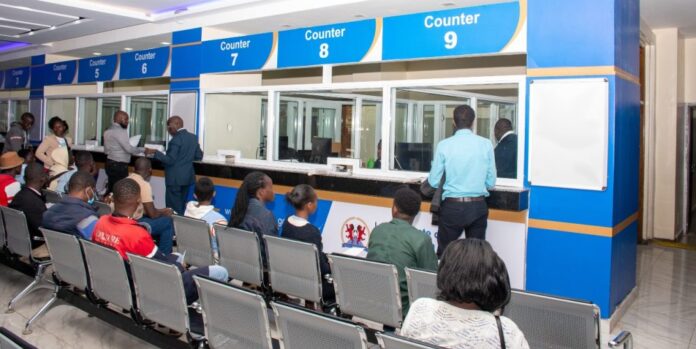
Furthermore, the investigation has revealed that the “**system downtime**” frequently cited by the department as the reason for passport delays was often a **smokescreen**. During these periods of “failure,” the syndicate would prioritize their high-paying “**private clients**” while the general public languished in endless queues.
Director General **Evelyn Cheluget** has vowed to implement a “**zero-trust**” architecture in the next phase of system upgrades. This would involve multi-factor authentication for all immigration officers and real-time auditing of every bypass override by an independent security firm.
## Impact: What Happens Next?
The Interior Ministry is expected to announce a **mass recall** of passports issued under suspicious circumstances. Holders of these documents will be required to present themselves for fresh biometric enrollment at regional offices.
As the investigation widens, there are growing calls for a **complete overhaul** of the Kenyan Identitity Management System. The government faces a dual challenge: restoring the credibility of the Kenyan passport on the global stage while dismantling a “**deep state**” network of bureaucrats who have made a fortune selling out the nation’s security.
For the thousands of Kenyans waiting in line at Nyayo House, the revelation is a bitter pill. While they struggle to obtain legal documents for education or healthcare abroad, a parallel system allowed those with enough cash to skip the line—and the law—entirely.

