
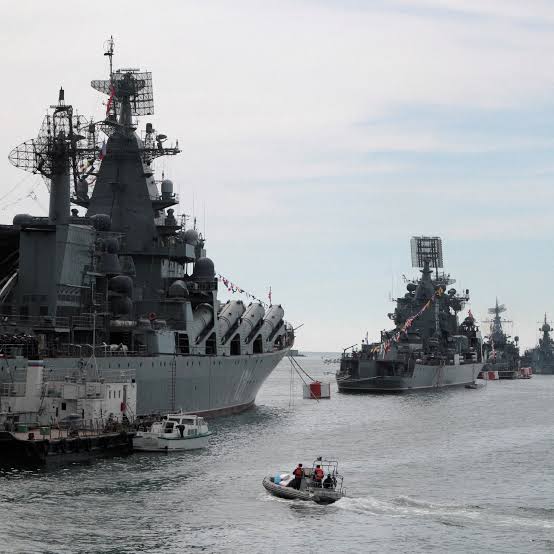
Ukraine has claimed responsibility for a drone strike targeting a Russian warship in the Gulf of Finland, marking an unusual development in the ongoing conflict between the two countries.
Finnish officials have confirmed that a Russian naval vessel was hit on Wednesday, November 11, 2026, although the extent of the damage remains unknown. The incident, which reportedly happened alongside a wider Ukrainian drone operation against Russia’s Ust-Luga oil export facility, has drawn attention to the security of one of Europe’s important maritime routes.
Highlights
- Finland confirmed that a Russian warship was struck in the Gulf of Finland.
- Ukraine’s SBU security service claimed responsibility for targeting the vessel.
- Estonia reported that smoke was seen coming from the ship before it headed towards St Petersburg.
- The operation also targeted Russia’s Ust-Luga oil export terminal.
- Finnish officials maintained that civilian maritime traffic remained safe despite the incident.
Main Story
Ukraine Claims Responsibility for Russian Warship Attack
Ukraine’s security service, the SBU, has claimed it carried out a drone operation targeting the Russian warship Naro-Fominsk in the Gulf of Finland.
The strike reportedly happened on Wednesday as Ukrainian forces launched a wider operation against Russia’s Ust-Luga oil export terminal along the Baltic coast.
The incident is particularly notable because it is believed to be the first reported Ukrainian drone attack against a Russian naval vessel in this section of the Baltic Sea, which is also used by civilian ships.
The Russian vessel was identified by Ukraine’s SBU as a Buyan-M class corvette equipped with Kalibr and Oniks cruise missiles.
However, details about the attack, including the extent of the damage and whether anyone was injured, remain unclear.
Estonia Confirms Explosion Aboard Russian Vessel
Estonian Defence Minister Martin Herem provided further details about the incident while speaking to public broadcaster ERR.
Herem said the explosion occurred at approximately 5:30 a.m. local time. He noted that smoke was subsequently observed coming from the vessel before it began moving back towards St Petersburg.
Although the Estonian official confirmed the explosion, he did not independently establish what caused it or who was responsible.
The condition of the crew and the extent of the damage have also not been officially established.
Reports suggesting that Russian combat helicopters were destroyed during the wider operation have similarly not been independently confirmed. Yle+2
Ust-Luga Oil Terminal Also Targeted
The attack on the warship reportedly formed part of a larger Ukrainian operation targeting Russia’s Ust-Luga port in the Leningrad region.
The facility is an important export centre for Russian oil, petroleum products, grain and other commodities.
According to regional governor Aleksandr Drozdenko, Ukrainian drones triggered a fire at the port, leaving three workers injured.
Ukraine’s military also claimed that five fuel storage tanks were damaged during the operation.
The incident highlights the continued use of long-range drones by Ukraine to target Russian infrastructure beyond the immediate battlefield.
NATO Countries Monitor Drone Activity
The overnight operation also raised concerns among countries bordering the Baltic Sea after drones were reported in the airspace of several NATO members.
Estonia, Latvia and Lithuania issued temporary shelter warnings as unidentified drones entered or approached their airspace.
NATO aircraft were subsequently deployed to monitor the situation.
Estonian Defence Minister Herem said one drone briefly entered Estonian airspace from Latvia before heading towards Russia.
Ukraine’s Foreign Ministry spokesperson Heorhiy Tykhyy rejected allegations that Kyiv deliberately used Baltic countries’ airspace to launch attacks against Russia.
He suggested that electronic warfare operations by Russia could potentially divert drones away from their intended flight paths.
The incidents have renewed discussions about the risks posed by the expanding use of drones in a conflict involving countries that share borders and airspace with Russia.
Finland Assures Public Over Baltic Sea Security
Despite the incident, Finnish officials have maintained that the situation in the Gulf of Finland remains stable.
Foreign Minister Elina Valtonen said there was no immediate danger to civilian maritime traffic.
The waterway is particularly important because it connects the Baltic Sea to St Petersburg and is regularly used by commercial vessels, including oil tankers.
It also contains important underwater communication infrastructure, including data cables.
Finnish military officials have monitored the developments while maintaining that the country faces no immediate military threat.
Could Ukraine Expand Its Naval Drone Operations?
The attack has attracted attention because the Gulf of Finland is a busy maritime corridor rather than an established frontline like the Black Sea.
Military analyst Emil Kastehelmi, co-founder of the Black Bird monitoring group, suggested that Ukraine may have identified an opportunity to target Russian naval assets in the region.
However, he did not consider the incident a major escalation, despite its unusual location.
Russia and Ukraine have repeatedly targeted each other’s naval vessels in the Black Sea since Moscow launched its full-scale invasion in February 2022.
Whether similar operations will become more frequent in the Baltic remains uncertain.
For now, the reported strike has demonstrated how the geographical reach of the conflict could create additional security challenges for countries surrounding the Baltic Sea.
As drone warfare continues to reshape modern conflicts, the latest incident in the Gulf of Finland raises an important question: could waters previously considered distant from the battlefield become the next major arena in the Russia-Ukraine war?

