
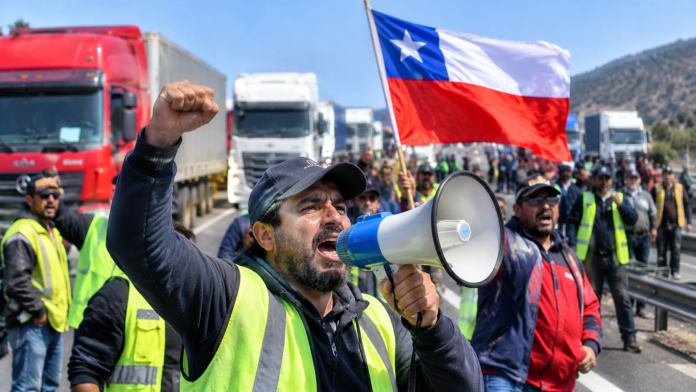
Transport operations in Chile have been thrown into disruption after hundreds of truck and bus drivers took to major highways, blocking traffic in protest against soaring diesel prices linked to the ongoing war in Iran.
The demonstrations, which began on Tuesday, have seen transport operators organise road convoys and bring movement along key routes to a standstill as they demand government intervention to ease the rising cost of fuel. Negotiations between representatives of the drivers and government officials have so far failed to produce an agreement, raising fears that the industrial action could continue disrupting economic activities.
Highlights
- Hundreds of truck and bus drivers have blocked major highways across Chile.
- Protesters are demanding relief from rapidly increasing diesel prices.
- Diesel costs have reportedly increased by 74% since March.
- Negotiations between the government and protest organisers have failed to reach an agreement.
- President José Antonio Kast’s administration has warned that blocked highways may eventually have to be cleared.
Main Story
Chile Transport Workers Bring Highways to a Standstill
Major transport routes across Chile have experienced significant disruptions following demonstrations by hundreds of truck and bus drivers protesting against escalating fuel costs.
The industrial action started on Tuesday, with drivers forming large convoys and positioning their vehicles along important highways to disrupt traffic.
The protesters are demanding government intervention to address the rising cost of diesel, which has become increasingly expensive amid international oil market disruptions associated with the war in Iran.
The demonstrations have been organised by the Fuerza del Norte trade union, which represents approximately 80% of Chile’s truck drivers, alongside the No+TAG civic protest movement.
Negotiations Collapse as Drivers Insist on Continuing Strike
Efforts by government officials to negotiate with representatives of the transport workers have so far failed to produce a breakthrough.
Following unsuccessful discussions on Tuesday, No+TAG spokesperson Andrés Alarcón indicated that the protesters were not prepared to suspend their industrial action without meaningful commitments from the authorities.
He maintained that the discussions had failed to establish a workable path towards resolving the concerns raised by transport operators.
Another meeting between the two sides was expected to take place on Wednesday in an attempt to find common ground.
Government Warns Against Continued Highway Blockades
Chile’s Economy Minister Daniel Mas has urged the protesters to reconsider their approach and allow further discussions to take place.
However, he warned that authorities might eventually be forced to remove the vehicles blocking major highways if the situation continues.
The minister expressed concern that the demonstrations were affecting commercial activities and the movement of exports, warning that prolonged disruptions could further damage the country’s economy.
President José Antonio Kast’s administration has faced mounting public dissatisfaction over fuel prices, with transport operators among the groups bearing the greatest financial pressure.
Diesel Prices Rise 74% Since March
Industry groups estimate that the average cost of diesel in Chile has increased by approximately 74% since March, placing additional pressure on businesses that depend heavily on road transportation.
Juan Cornejo, president of the Association of Intercity Bus Owners, which represents 14 medium-sized companies, said operators had reached a point where continuing normal services was becoming increasingly difficult.
He explained that some businesses had been recording financial losses for more than a month because of the growing operational expenses.
The situation has also affected individual truck drivers, many of whom say their earnings are no longer sufficient to cover fuel and other business costs.
Truck Drivers Say Business Is No Longer Profitable
Among those participating in the demonstrations was 47-year-old truck driver Claudio Elguezabal, who joined protesters near the capital, Santiago, on Tuesday morning.
Speaking to AFP, Elguezabal described the financial pressure facing independent transport operators, explaining that some drivers were now using their personal savings to meet expenses associated with delivering goods.
He said the current operating environment had become financially unsustainable, with some assignments leaving drivers without any meaningful profit.
For many operators, the rising cost of diesel has made it increasingly difficult to maintain transport services while meeting their financial obligations.
What Happens Next?
With negotiations yet to produce an agreement, attention is now turning to the next round of discussions between the government and protest organisers.
Authorities are under pressure to restore normal movement along major highways while addressing the concerns of transport businesses.
The demonstrations also highlight how international conflicts can have economic consequences far beyond the countries directly involved, particularly when disruptions affect global energy markets.
For Chile’s transport industry, the immediate challenge remains finding a solution that allows drivers to resume operations without continuing to absorb unsustainable fuel expenses.
As fuel prices continue to rise and transport workers struggle to keep their businesses afloat, Chile’s unfolding crisis raises an important question: how much longer can ordinary businesses survive when the cost of keeping the economy moving becomes too expensive?

