
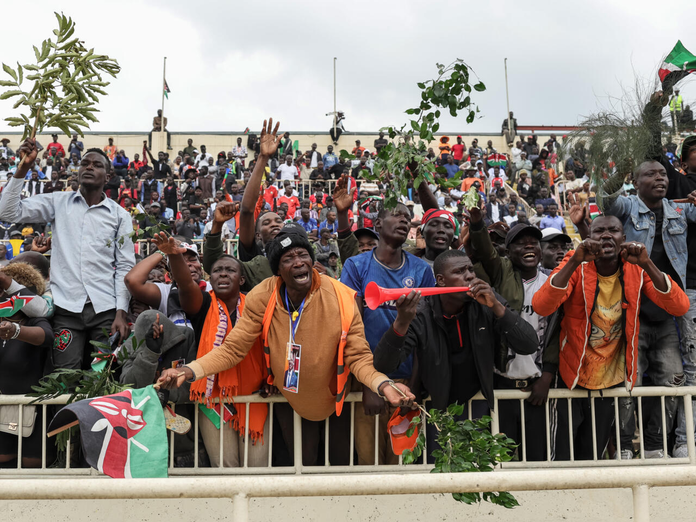
A ceremony meant to honour the life of former Prime Minister Raila Odinga ended in tragedy after three mourners were shot dead at Nairobi’s Kasarani Stadium in October 2025. A BBC Africa Eye investigation has now raised serious questions about the circumstances surrounding their deaths, finding that the victims were far from the confrontation that preceded the gunfire. Nearly a year later, their families are still waiting for answers as investigations into the incident continue.
Highlights
- Three people were killed by gunfire during Raila Odinga’s national farewell at Kasarani Stadium on October 16, 2025.
- BBC analysis found that the victims were between approximately 60 and 160 metres from the confrontation near the VIP pavilion.
- Forensic examination suggests that officers from an elite unit associated with presidential protection may have fired during the incident.
- Interior Cabinet Secretary Kipchumba Murkomen defended the police response, citing difficult working conditions and pressure on officers.
- The Independent Policing Oversight Authority (IPOA) was still investigating the deaths, with no one held accountable at the time of the report.
Main Story
BBC Investigation Questions Circumstances of Fatal Shooting
A new investigation by BBC Africa Eye has raised fresh concerns about the deaths of three Kenyans who were shot during the national farewell ceremony for Raila Odinga at Kasarani Stadium in Nairobi.
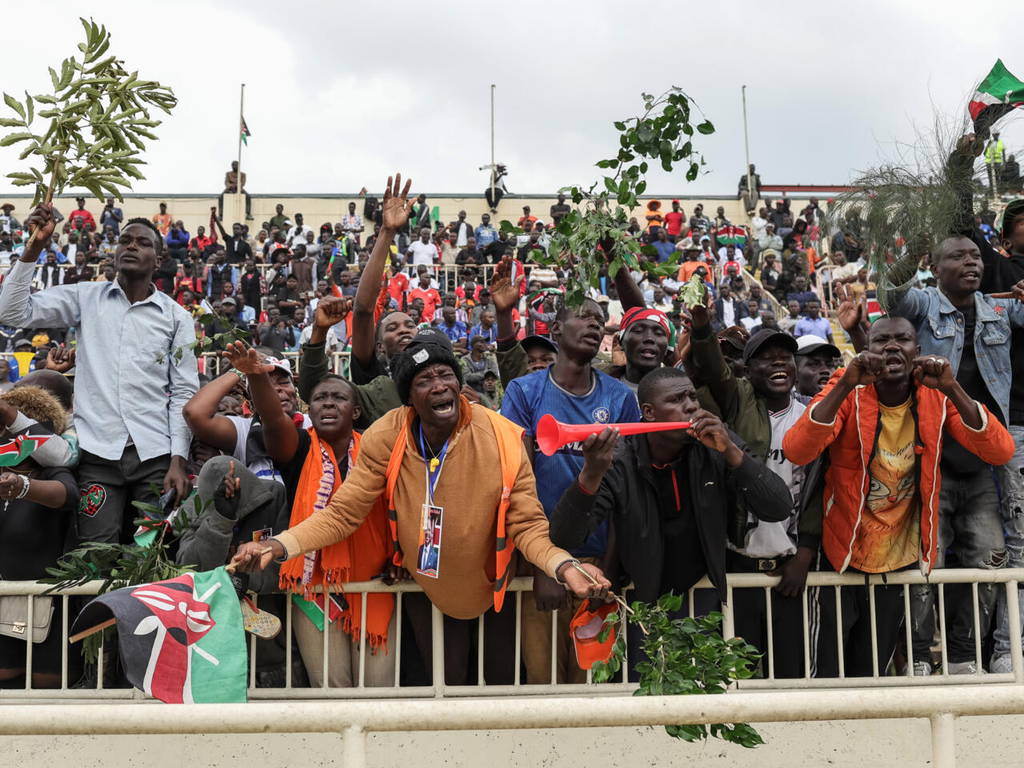
The incident occurred on October 16, 2025, as thousands of people gathered to pay their final respects to the veteran opposition leader, who had died the previous day while receiving medical treatment in India.
According to the BBC’s analysis of more than 1,500 photographs and videos, the three victims were not close to the confrontation between some mourners and officers guarding the VIP pavilion when police opened fire.
The investigation placed one victim approximately 60 metres from the scuffle, while the other two were at least 160 metres away, on the opposite side of the stadium.
These findings have intensified questions about the use of live ammunition during an event organised to honour one of Kenya’s most influential political figures.
What Happened at Kasarani Stadium?
Odinga’s death at the age of 80 triggered an outpouring of grief across the country, with large crowds gathering at Jomo Kenyatta International Airport as his body returned home.
The government initially planned to have his body lie in state at Parliament. However, the enormous turnout and concerns over security forced officials to move the ceremony to Kasarani Stadium at short notice.
The venue, which can accommodate approximately 48,000 people, quickly filled with mourners. Thousands reportedly made their way into the stands and onto the pitch as officials struggled to manage the crowds.
People waited for hours in temperatures reaching 30°C, with limited public announcements to keep them informed about the proceedings.
Tensions eventually rose near the VIP pavilion, where a section of mourners attempted to force its way through. Video footage reviewed by the BBC shows objects, including plastic chairs, being thrown towards officers.
However, the investigation found no evidence confirming the Interior Ministry’s claim that stones were among the objects thrown.
Police subsequently fired live rounds. Footage from other sections of the stadium showed that much of the crowd remained peaceful.
Three Families Left With Irreplaceable Losses
The three people killed were Evans Kiche, Vincent Ogutu and Jidah Burka.
Kiche, a 40-year-old chef and father of seven, sustained a fatal gunshot wound to the head. The BBC’s analysis placed him roughly 60 metres from the confrontation.
Ogutu, aged 36, was a father of three who had not originally planned to attend the ceremony.
His wife told the BBC that he had been in central Nairobi with friends when they noticed people heading towards Kasarani and decided to join the gathering.
Within hours, Ogutu was dead after being shot in the chest, according to his autopsy report.
Burka, 42, also died from a gunshot wound to the head. She was reportedly positioned in the opposite stands, at least 160 metres from the confrontation.
The BBC said it could not determine which specific bullets killed each victim or rule out the possibility that other officers had also fired inside the stadium.
Elite Police Unit Under Scrutiny
The investigation reconstructed the events by examining footage showing the movements of officers around the stadium.
At least eight armed officers were identified operating together in tactical clothing and military-style camouflage. Their faces were covered, and they carried assault rifles without clearly visible insignia.
According to the BBC’s forensic analysis, their clothing and movements were consistent with those of a security unit tasked with protecting President William Ruto and other high-profile officials.
At least three officers in the group appeared to fire their weapons during the incident.
However, the investigation did not establish conclusively which officers fired the fatal shots.
The findings have placed renewed attention on the conduct of security personnel during the ceremony and the need to establish individual responsibility for the deaths.
Murkomen Defends Police Response
Interior Cabinet Secretary Kipchumba Murkomen defended the officers, arguing that they had been working under demanding circumstances.
He said the officers had spent many hours on duty without a break and had been assigned to a different venue at the last minute.
Murkomen also maintained that the police had exercised restraint before the situation escalated, citing pressure on officers as mourners attempted to push towards the VIP area.
He dismissed the suggestion that the shooting necessarily followed a deliberate order, arguing that decisions could have been made by officers reacting to events as they unfolded.
The Interior CS said the government would rely on the findings of the Independent Policing Oversight Authority to determine what legal action might be appropriate.
Meanwhile, the National Police Service acknowledged that lessons had been drawn from the incident, describing it as an opportunity to improve professional policing in future operations.
IPOA had not responded to the BBC’s request for comment at the time of the investigation.
Widows and Children Still Searching for Answers
Beyond the forensic findings, the tragedy has left families struggling to rebuild their lives after losing their loved ones.
Yvonne Akinyi, Ogutu’s widow, described the pain of losing her husband at an event where people had gathered to mourn another person’s death.
She told the BBC that the loss had left her raising their children without their father and had fundamentally changed the family’s future.
As the anniversary of the shooting approached, she said she was trying to remain strong despite the emotional burden.
Akinyi also questioned why her husband had become one of the victims when so many other people had attended the same ceremony.
Her account highlights the lasting impact of the incident on families who are still seeking clarity over what happened and why their loved ones never returned home.
IPOA Investigation Yet to Deliver Accountability
Nearly a year after the shooting, the deaths remained under investigation by IPOA, the independent body mandated to oversee police conduct in Kenya.
No one had been held accountable at the time of the BBC report.
The delay has left the families waiting for answers while the investigation continues to examine the police response and the circumstances surrounding the fatal gunfire.
The BBC’s findings have brought fresh attention to the distance between the victims and the confrontation, the apparent involvement of armed officers and the questions surrounding the use of live ammunition in a crowded public venue.
For the families of Kiche, Ogutu and Burka, the central issue remains unresolved: understanding how a day of mourning became a tragedy that permanently altered their lives.
As Kenya remembers Raila Odinga’s legacy, the families of the three mourners killed at Kasarani are still seeking answers. For them, justice means more than establishing what happened that day; it means ensuring that those responsible are identified and held accountable.

