
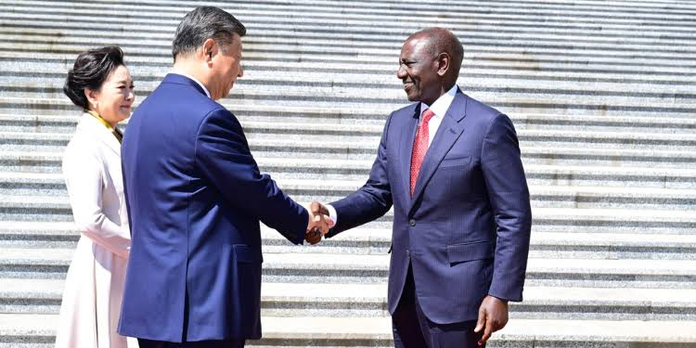
China has extended KSh260 million in financial support to Kenya, with half of the funding earmarked for drought mitigation and the other half set aside to strengthen the country’s preparedness for potential Ebola cases. The assistance comes as Kenya continues to monitor an imported Ebola case while addressing drought-related challenges.
Highlights
- China has provided Kenya with a KSh260 million grant.
- KSh130 million will support drought mitigation, while another KSh130 million will strengthen Ebola preparedness.
- Kenya has trained 4,971 healthcare workers in Ebola prevention and response.
- More than 652,000 travellers had been screened by October 6, 2026.
- Health officials are tracing people who may have been exposed to the confirmed imported case.
Main Story
China Allocates KSh260 Million to Kenya
Kenya has received a KSh260 million grant from China to support drought mitigation efforts and strengthen the country’s ability to respond to possible Ebola cases.
The funding was handed over on Thursday, October 8, 2026, at the National Treasury during discussions between Treasury Principal Secretary Chris Kiptoo and Chinese Ambassador to Kenya Guo Haiyan.
The grant will be divided equally between the two priorities, with KSh130 million allocated to drought mitigation and the remaining KSh130 million dedicated to Ebola preparedness and response.
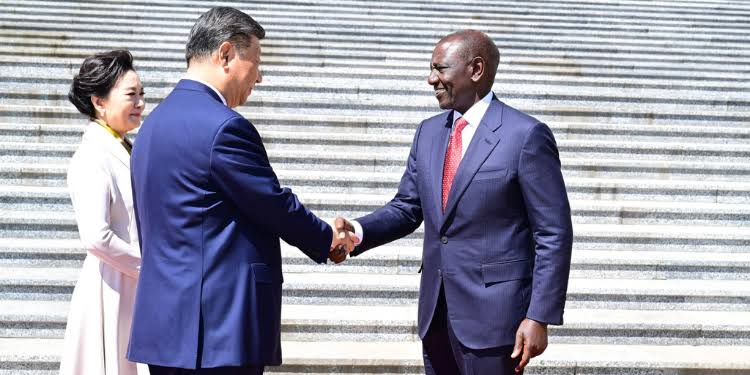
The meeting also provided an opportunity for Kiptoo to brief the Chinese ambassador on his recent official visit to China and subsequent engagements aimed at advancing projects and areas of cooperation discussed during the trip.
The Principal Secretary for Public Health and Professional Standards also attended the meeting.
Kenya Strengthens Ebola Preparedness
The financial support comes as Kenya intensifies its public health response following confirmation of an imported case of Bundibugyo Ebola Virus Disease.
Health Cabinet Secretary Aden Duale has said that 4,971 healthcare workers have received training on Ebola prevention, detection and management.
Authorities have also been screening travellers at 15 points of entry across the country. By October 6, more than 652,000 travellers had undergone screening, while surveillance teams had investigated 263 alerts reported across 17 counties.
The Ministry of Health confirmed the imported case on October 6, 2026.
According to the information provided by health authorities, the patient was a Kenyan citizen who had been living in the Democratic Republic of Congo. He travelled by road to Kampala, Uganda, before boarding a flight to Nairobi on October 3.
After developing symptoms, he was admitted to Nairobi Hospital and isolated. Laboratory tests conducted by the National Virology Reference Laboratory and the Kenya Medical Research Institute confirmed the infection. He died on October 5, 2026.
Authorities Trace Potential Contacts
Following confirmation of the case, health officials began tracing people who may have come into contact with the deceased.
The government has reported 28 identified contacts, including family members and healthcare workers who attended to the patient. Authorities are also tracing 23 passengers and four crew members who travelled on the same flight.
As of October 6, Kenya had tested 267 samples, with only one returning a positive result.
The government has described the case as imported and said it does not constitute an Ebola outbreak in Kenya. Surveillance and contact tracing efforts are continuing to identify and manage any potential exposure.
Five Facilities Designated for Ebola Care
Kenya has designated five hospitals to manage suspected and confirmed Ebola cases. These are Kenyatta National Hospital, Moi Teaching and Referral Hospital, National Police Service Hospital, Port Reitz Hospital and Nairobi Hospital.
Duale has urged members of the public to remain vigilant, practise good hygiene and wash their hands regularly. Anyone who develops symptoms associated with Ebola, particularly after possible exposure, should seek medical attention promptly.
The Chinese grant is expected to support these preparedness efforts while also providing resources for drought mitigation, reinforcing the two countries’ ongoing cooperation.
As Kenya confronts both public health and climate challenges, how effectively resources are deployed will be crucial in protecting communities and strengthening national preparedness.

