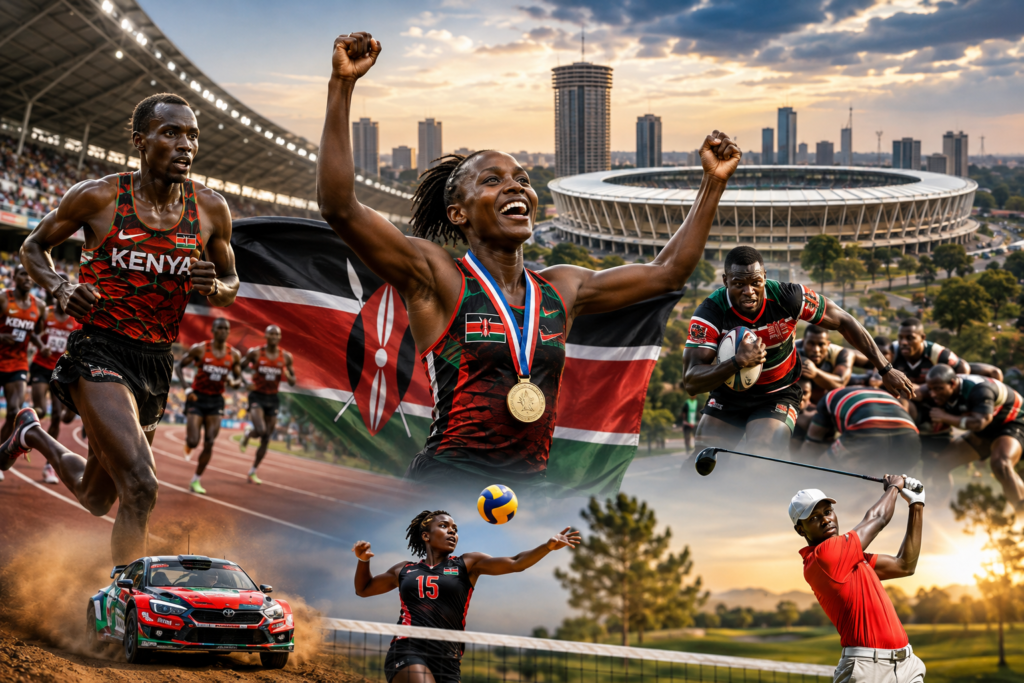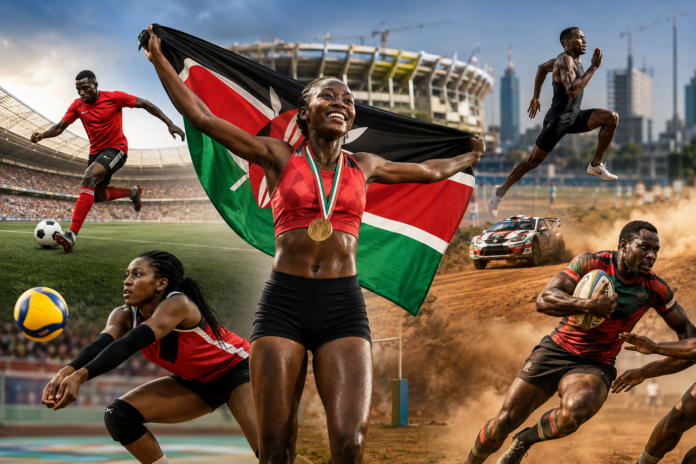
Kenya is steadily positioning itself as one of Africa’s leading destinations for major sporting events, while a growing investment in stadiums, training facilities and athlete welfare is reshaping opportunities for young people. From international tournaments and world-class athletics meetings to new county stadiums and talent academies, the country is increasingly treating sports as an industry capable of creating jobs, careers and global opportunities.
Highlights
- Kenya is preparing to co-host AFCON 2027 with Uganda and Tanzania.
- The country is pursuing the right to host the 2029 World Athletics Championships.
- At least 32 stadium projects are being developed or upgraded across the country.
- Government programmes are expanding athlete rewards, scholarships and grassroots talent identification.
- Athletes are calling for more affordable training facilities and stronger welfare support.
Main Story
Kenya’s Sporting Profile Continues to Grow
Kenya has long been associated with elite athletics, but its ambitions in sports are now extending far beyond the track.
Events such as the Kip Keino Classic, Safari Rally and Magical Kenya Open have strengthened Kenya’s reputation as a destination for major international competitions. The country has also taken steps towards hosting bigger football tournaments, with Kenya set to co-host the 2027 Africa Cup of Nations alongside Uganda and Tanzania.
The successful staging of CHAN 2025 provided an opportunity for the three East African hosts to assess their readiness ahead of AFCON.
Kenya is also seeking to host the 2029 World Athletics Championships, with Nairobi at the centre of the country’s bid. President William Ruto has repeatedly expressed government support for bringing the global athletics competition to Kenya.
Stadium Projects Taking Shape
The push to host major competitions has gone hand in hand with investment in sporting infrastructure.
The Raila Odinga Talanta City Stadium in Nairobi is among the flagship projects. The planned 60,000-capacity facility is expected to play a major role during AFCON 2027 and forms part of a wider strategy to develop a sports economy around events, training and the production of sports-related equipment.
The government has also embarked on stadium projects and upgrades in several counties.
Gusii Stadium is undergoing a major transformation, while new or upgraded facilities are also planned in places such as Nyamira, Thika, Mombasa, Vihiga, Murang’a, Wajir and Kitui.
The Thika project, for example, is expected to include a modern playing surface, changing rooms, swimming facilities, basketball courts, improved terraces and floodlights.
These developments are not only intended for elite competitions. They could also give young athletes closer access to proper training and competition facilities without having to travel to established sporting centres.
Turning Talent Into Careers
For athletes such as Malkia Strikers captain Meldina Sande, sports investment is about much more than winning medals.
Sande has built a career that has taken her beyond Kenya, including spending the past two seasons playing for Rwanda Police in Kigali. Her experience illustrates how sporting talent can create professional opportunities, international exposure and a source of income.
She believes government backing has made a difference for athletes, although she maintains that more support is still needed.
The same sentiment is shared by Kenya Pipeline and Malkia Strikers middle blocker Marian Sokoiyo, who views sporting opportunities as a way of giving young people a chance to turn their abilities into meaningful careers.
For athletes growing up in less prominent sporting regions, access to facilities, scholarships and development programmes can be especially important.
Grassroots Talent Gets More Attention
Athletics remains one of the strongest examples of Kenya’s sporting potential.
Athletics Kenya has been working with the education sector to identify promising young athletes through school competitions and connect them with regional training opportunities.
The approach is intended to widen the talent pool beyond the traditional athletics powerhouses.
Young athletes from areas such as Amboseli, Kilifi and Turkana can potentially benefit from a system that identifies talent earlier and provides a pathway for development.
The broader message is simple: sporting potential should not be determined by where a young person is born.
Rugby and Other Sports Could Benefit
The expansion of infrastructure could also change the fortunes of sports that have historically operated with fewer resources.
Kenya Rugby Union vice-chairman Moses Ndale has welcomed the development of Talanta Stadium, saying a modern facility could give Kenyan rugby a stronger platform for hosting international competitions.
Nyayo Stadium has already hosted major rugby events, while discussions have continued around using newer facilities for future tournaments.
However, access remains a concern. Sporting federations need facilities that are not only modern but also affordable enough to use regularly.
Government assistance has also extended to national teams preparing for international competitions, including accommodation, technical support and funding through sports programmes.
Better Rewards for Elite Athletes
Financial incentives have also become an important part of Kenya’s sports ecosystem.
According to Athletics Kenya Youth Development Committee chairman Barbara Korir, daily allowances for athletes competing at international championships have increased significantly.
There are also substantial rewards for record-breaking performances and medal-winning athletes, while some world-record holders have received additional support such as housing.
Prize money at major local events has also grown through increased sponsorship.
Competitions including the Kip Keino Classic, Sirikwa Classic, Great Chepsaita Cross Country Run and Nairobi City Marathon have become important platforms for athletes to compete while earning income.
For young people considering sports as a career, such opportunities can make the difference between treating talent as a hobby and pursuing it professionally.
Investment Must Reach Every Athlete
Despite the progress, athletes say Kenya still has work to do.
Sande has pointed to the difference in training environments between Kenya and countries such as Rwanda, noting that some Kenyan athletes continue to train in facilities that do not match the quality of venues where they compete internationally.
She also highlights the challenges faced by athletes outside established institutional clubs such as Kenya Prisons, Kenya Pipeline and the Kenya Defence Forces.
For these athletes, consistent income, training facilities and access to support can remain difficult.
The next stage of sports development, therefore, will require more than impressive stadiums. It will also mean ensuring that athletes have the facilities, coaching, financial support and career guidance needed throughout their sporting journeys.
Sports as an Economic Opportunity
National Olympic Committee of Kenya president Shadrack Maluki has linked the growth of sporting facilities and county-based academies to a broader effort to expand Kenya’s sporting base.
The ambition is increasingly to build an ecosystem where talent identification, training, competitions, employment and international exposure work together.
For Kenya’s first female Olympic judoka, Teddy Cherotich, sports should be viewed as an investment capable of creating jobs, improving lives and giving young people a constructive path.
That perspective is becoming increasingly important as Kenya prepares to host more international competitions.
With major events on the horizon and dozens of stadium projects underway, the country is attempting to build a sports industry that can benefit not only established champions but also the next generation waiting for their opportunity.
Kenya has the talent and the passion the bigger question now is whether every young athlete will have the opportunity and support needed to turn that potential into a career.