
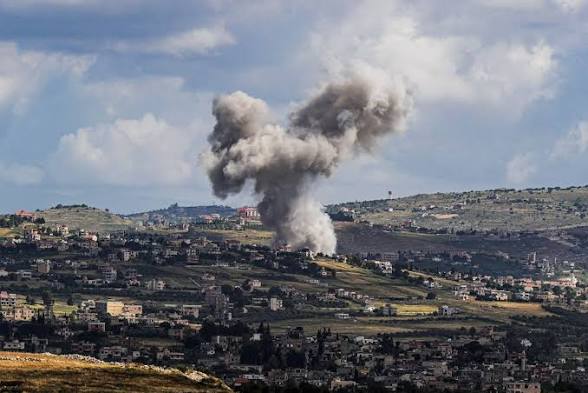
Tensions between Israel and Hezbollah have sharply escalated after Israeli strikes in southern Lebanon killed 11 people, including three children, in what Lebanese authorities described as the deadliest attacks since a June agreement helped reduce hostilities. The strikes have also raised fresh questions over upcoming US-backed negotiations between Israel and Lebanon.
Highlights
- 11 people were killed in Israeli strikes across southern Lebanon.
- Three children and two women were among those killed in Ansar.
- Israel said the attacks followed an assault by Hezbollah on its troops.
- Hezbollah warned that the strikes would receive a response.
- Fresh violence has cast uncertainty over upcoming peace negotiations.
Main Story
Deadly Strikes Hit Southern Lebanon
Southern Lebanon has witnessed a major escalation after Israeli forces carried out a series of early-morning strikes that left at least 11 people dead.
Lebanon’s Health Ministry reported that seven people, including three children and two women, died in an attack on a home in Ansar.
A separate strike in Deir Zahrani killed four more people and injured 17 others, including a child and 11 women.
The attacks have been described as the deadliest since an agreement reached in June helped bring down the level of fighting between Israel and Hezbollah.
Israel Says Strikes Were Retaliation
Israel’s military said the operation was carried out after Hezbollah targeted Israeli troops operating in southern Lebanon.
The Israeli army claimed Hezbollah had attacked its forces within a designated security area and described the incident as a breach of the existing arrangement.
Israeli forces said they targeted what they described as Hezbollah infrastructure in areas around Nabatieh and Ansar.
The strikes, however, have drawn strong condemnation from Lebanese officials, particularly because civilians were among those killed.
Families Caught in the Destruction
The scale of the damage was visible in Ansar, where rescuers searched through the remains of a destroyed building.
Residents described scenes of shock and devastation following the strike, with debris covering nearby properties.
In Deir Zahrani, heavy damage was also reported as residents began moving away from affected areas, with some families heading north carrying belongings in their vehicles.
Lebanese officials said the civilian casualties demonstrated the seriousness of the latest escalation.
Lebanese Leaders Warn of Dangerous Escalation
Lebanese Prime Minister Nawaf Salam condemned the attacks, arguing that women and children killed in the strikes could not be considered military targets.
President Joseph Aoun also criticised the latest developments, saying the attacks threatened efforts aimed at advancing negotiations between Lebanon and Israel.
Parliament Speaker Nabih Berri, a political ally of Hezbollah, called on countries sponsoring the ceasefire and negotiations to intervene before the situation deteriorates further.
Hezbollah Threatens Response
Hezbollah has rejected the Israeli justification for the attacks and warned that the latest strikes would not go unanswered.
The group accused Israel of widening the conflict and targeting civilians, while also criticising Lebanese authorities for pursuing direct negotiations.
Hezbollah’s leadership has previously opposed aspects of the framework agreement, particularly measures linked to its disarmament and the future deployment of Lebanese forces in the south.
Peace Talks Under Pressure
The latest violence comes as Lebanon and Israel prepare for another round of US-sponsored direct negotiations expected to take place in Rome early next month.
The two sides reached a framework agreement in Washington in June that included proposals for Hezbollah’s disarmament, the gradual withdrawal of Israeli troops from southern Lebanon and an expanded role for the Lebanese army in the region.
However, disagreements remain.
Israel has maintained that its forces will continue operating within a designated security zone in southern Lebanon, while a US State Department official has said a permanent Israeli military presence there would not align with commitments under the framework.
The renewed fighting could therefore test whether the diplomatic process can survive another major escalation.
A Fragile Calm
Although the intensity of fighting has fallen since the June agreements, Lebanon continues to report Israeli strikes and demolitions in southern communities.
The latest deaths have renewed fears that the fragile calm could unravel and that the region could once again slide into a broader confrontation.
For civilians living near the conflict zone, the latest escalation is another reminder that a political agreement means little if violence continues on the ground.
As diplomatic efforts struggle to keep pace with events on the ground, the latest deaths raise one difficult question:

