The family of Irish United Nations worker Michael “Mick” Ryan, who was among 157 people killed in the 2019 Ethiopian Airlines Boeing 737 Max crash, has been awarded $29 million in damages by a jury in Chicago. The award follows a civil case brought by his widow, Naoise Connolly Ryan, against Boeing.
Highlights
- Michael Ryan died in the Ethiopian Airlines crash in March 2019.
- A Chicago jury awarded his family $29 million in damages.
- Ryan was a United Nations World Food Programme engineer.
- The crash killed all 157 people aboard Flight ET302.
- Investigators linked the crash to an automated flight-control system responding to conflicting sensor readings.
Main Story
Family Receives $29 Million Award
More than six years after Michael Ryan lost his life in one of the world’s most significant aviation disasters, his family has received a $29 million damages award.
A jury in Chicago reached the decision after Ryan’s widow, Naoise Connolly Ryan, pursued a civil case against Boeing over the loss of her husband.
Ryan’s legal team described the verdict as an important step towards accountability, while acknowledging that no financial compensation could undo the loss suffered by his family.
Boeing said it was deeply sorry to the families who lost loved ones in the crash and acknowledged their right to pursue legal claims.
Who Was Michael Ryan?
Ryan was a father of two who lived in Cork and had family roots in County Clare.
He worked as an engineer for the United Nations World Food Programme and was travelling aboard Ethiopian Airlines Flight ET302 when the aircraft crashed.
He was among all 157 passengers and crew members who died in the disaster.
What Happened to Flight ET302?
The Boeing 737 Max departed Addis Ababa at about 08:38 local time on March 10, 2019, bound for Nairobi.
The flight was expected to take approximately two hours.
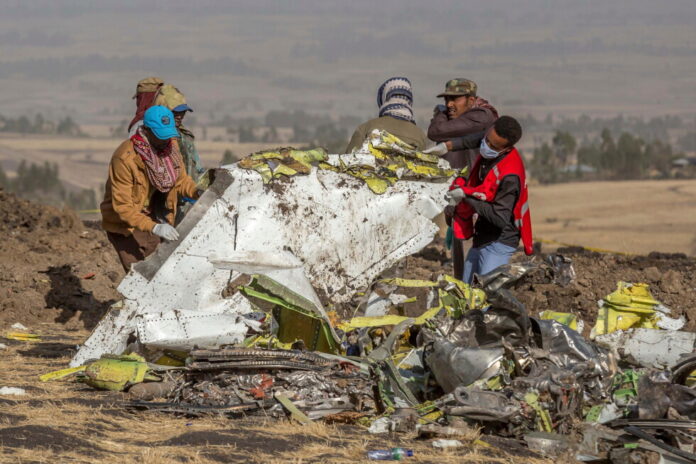
Just six minutes after take-off, the aircraft crashed southeast of the Ethiopian capital near Bishoftu.
The impact was catastrophic, with the aircraft striking the ground at such force that both engines were buried deep beneath the surface.
Problems Emerged Shortly After Take-Off
Initial findings indicated that the aircraft’s departure appeared normal.
The situation changed shortly afterwards when two sensors responsible for measuring the aircraft’s angle of attack began producing conflicting readings.
The disagreement triggered an automated safety feature known as the Maneuvering Characteristics Augmentation System, or MCAS.
The system repeatedly pushed the aircraft’s nose downward as it interpreted the sensor information as indicating a dangerous flight condition.
Pilots Tried to Regain Control
The Ethiopian accident investigation found that the pilots attempted to follow the procedures designed to deactivate the automated system.
Despite their efforts, the aircraft continued experiencing repeated nose-down movements.
The situation became increasingly difficult to control, eventually leading to the crash.
The accident shared important similarities with the Lion Air Boeing 737 Max crash in Indonesia months earlier, which also involved the aircraft’s automated flight-control system.
A Wider Aviation Safety Crisis
The Ethiopian Airlines disaster, together with the earlier Lion Air crash, resulted in intense scrutiny of the Boeing 737 Max.
The two crashes killed hundreds of people and prompted major questions about aircraft design, pilot training, safety systems and regulatory oversight.
The 737 Max was subsequently grounded worldwide as investigators and aviation authorities examined the circumstances surrounding the accidents.
For families who lost loved ones, however, the consequences extended far beyond the technical investigations.
The latest court decision provides financial compensation to Ryan’s family, but it also represents another chapter in a long-running search for accountability following the disaster.
A Father’s Loss That Cannot Be Replaced
Ryan’s lawyers stressed that the award cannot restore the life of a husband and father or erase the grief experienced by his family.

