
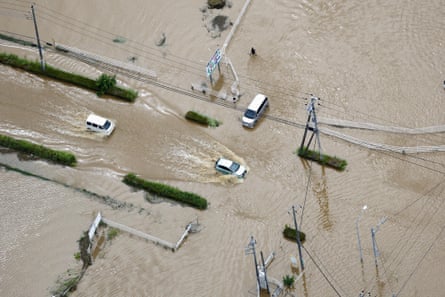
Eastern Japan has been hit by devastating rainfall that has left at least six people dead, thousands stranded and communities dealing with flooding, power outages and major transport disruptions. Chiba prefecture recorded exceptionally heavy rain, forcing authorities to issue their highest-level warning as emergency teams responded to flooded roads and homes.
Highlights
- At least six people have died following the heavy rain.
- Around 6,000 travellers were stranded overnight at Narita Airport.
- Nearly 26,000 households in Chiba were without electricity.
- Dozens of homes were flooded across several communities.
- Train services around Narita and Chiba were severely disrupted.
- Authorities have warned of landslides and further flooding.
Main Story
Heavy Rain Brings Eastern Japan to a Standstill
Communities in eastern Japan are recovering from torrential rainfall that caused widespread flooding late Thursday.
Chiba prefecture was particularly badly affected, with authorities issuing the highest-level heavy rain warning for the region for the first time.
The rainfall was so intense that a Japan Meteorological Agency official described it as developing into an unprecedented weather event.
The downpour triggered flooding, landslide warnings and widespread power failures, while roads and public transport networks were thrown into chaos.
Death Toll Rises
Several people lost their lives as floodwaters swept through affected areas.
Authorities initially confirmed four deaths before reporting two additional fatalities, bringing the total number of deaths to six.
Among those killed were a man believed to be in his 60s or 70s who was found in floodwater and a 66-year-old woman who became trapped inside a submerged vehicle.
Other victims were found collapsed in public areas, although authorities had not immediately established their identities.
Thousands Stranded at Narita Airport
The extreme weather also created major problems for travellers.
Approximately 6,000 people were forced to spend the night at Narita International Airport after transport services were disrupted.
Passengers slept across terminal areas as they waited for trains and other forms of transport to resume.
Sleeping bags were distributed to stranded travellers, while airport staff and others provided food and water.
One British traveller described spending about nine hours travelling before finally reaching the airport, where he attempted to get some rest while waiting for transport services to return to normal.
Train Services Disrupted
Rail services across parts of Chiba were badly affected.
Many trains operating to and from Narita were cancelled, leaving passengers stranded at stations.
Hundreds of people also spent the night at Chiba Station after services were suspended.
Other residents were moved to shelters as floodwater covered roads and entered residential areas.
Homes and Businesses Affected
The rainfall caused flooding in several cities, including Ichikawa, Kashiwa and Sakura.
Authorities reported that dozens of houses had been flooded, while water entered additional homes from below the floor level.
Nearly 26,000 households across Chiba were also left without electricity.
For local businesses, the disruption created uncertainty about when normal operations could resume.
Residents described the sudden flooding as particularly alarming because the situation deteriorated within a short period.
Weather Warnings Downgraded
By Friday morning, the highest-level heavy rain warnings had been reduced to level four.
However, authorities continued monitoring the situation because saturated ground can increase the risk of landslides and further flooding.
Residents in affected areas were urged to remain alert and follow instructions from local authorities.
Climate Change and Extreme Weather
The disaster has also renewed attention on the growing threat posed by extreme weather.
Scientists have warned that human-driven climate change is contributing to more frequent and intense weather events in different parts of the world.
For Japan, which regularly experiences typhoons, flooding and landslides, increasingly severe rainfall presents a major challenge for communities and emergency services.

