
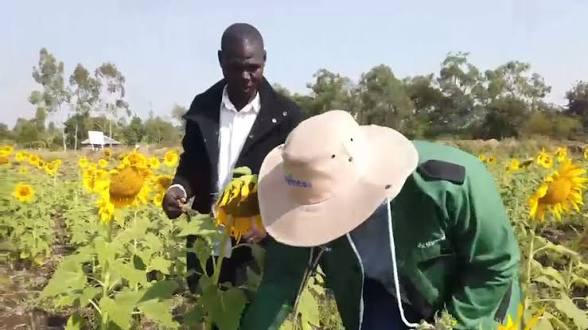
For years, farmers in parts of Ahero Irrigation Scheme faced a familiar challenge after harvesting rice: their fields remained unused for several months, leaving families with little income until the next farming season. Now, sunflower farming is changing that story, giving farmers an opportunity to earn from their land while waiting for the next rice cycle.
Highlights
- Sunflower farming is helping farmers earn during the gap between rice seasons.
- The crop takes about three months to mature.
- Farmers have access to a ready market for their sunflower produce.
- Sunflowers can be processed into cooking oil, biodiesel and animal feed cake.
- Canal rehabilitation is also supporting farming activities in Block M.
Main Story
For farmers in Kore, Block M, the months following the rice harvest no longer have to mean months without income.
Morris Otieno is among farmers who have embraced sunflower farming as an alternative way of making money while waiting for the next rice season.
He says government-supported activities, including the rehabilitation and cleaning of irrigation canals, have also brought renewed optimism among farmers in the area.
Excavators have been working to remove accumulated soil and other materials from the canals, helping improve the infrastructure that farmers depend on.
For Morris, the changes have made farmers feel that their concerns are finally receiving attention.
Making Use of the Rice Off-Season
According to Janet Nyaboke, an agronomist with Green Tech Hub, sunflower farming was introduced to make better use of farmland during the period when rice production is not taking place.
After harvesting rice, farmers can have between three and five months before the next crop cycle. Traditionally, some of these fields would remain unused or be used for livestock grazing.
Sunflowers are providing an alternative.
The crop can mature in roughly 90 days, meaning farmers can plant, harvest and earn from their land within the gap between rice seasons.
More Than Just a Crop
Sunflower farming also offers several potential uses beyond selling the harvested seeds.
The crop can be processed to produce edible oil, while other products can be used in making biodiesel and animal feed.
For farmers, having different uses and markets for the crop could create additional opportunities to generate income.
Nyaboke says the earnings can help families handle everyday expenses, including school fees, healthcare and food.
A New Sense of Hope
Morris says the additional income has already started changing how farmers view their future.
Beyond benefiting individual farmers, sunflower production also creates work for people involved in activities such as land preparation, planting, weeding and harvesting.
This means the economic benefits can extend beyond the farmers who own the land.
Morris recalls a time when families struggled financially after the rice harvest. Without another reliable crop or a ready market, meeting basic household needs could become difficult.
The situation also affected parents trying to keep their children in school and families trying to maintain a steady supply of food.
Looking Beyond Survival
With sunflower farming providing another income stream, Morris now sees the possibility of improving his family’s living conditions.
He says the money generated from farming could allow him to move from his previous mabati house to a better home.
For farmers in Block M, the bigger story is not simply about growing another crop. It is about finding ways to keep their land productive throughout the year and creating more reliable sources of income for their families.
As irrigation infrastructure improves and farmers explore crops such as sunflower, the hope is that the period between rice harvests can become a season of opportunity rather than financial struggle.
For Ahero’s farmers, the sunflower is becoming more than a crop it is a symbol of what can happen when idle land is turned into an opportunity.

