
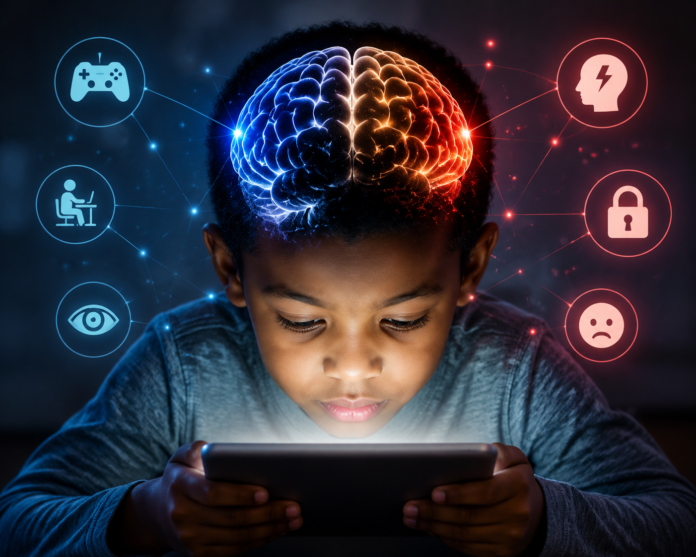
Technology has become part of everyday life, helping children learn, communicate and explore new ideas. However, spending too much time on digital devices such as smartphones, tablets and gaming consoles can affect how a child’s brain develops. Experts warn that unhealthy technology habits may influence attention, sleep, emotions and social skills.
Highlights
- Excessive screen time may affect children’s focus and concentration.
- Late-night device use can interfere with sleep patterns.
- Too much online activity may affect emotional wellbeing.
- Children need real-life experiences for healthy brain development.
- Parents can reduce risks by creating balanced digital habits.
Main Story
The Growing Role of Technology in Children’s Lives
Children today are growing up surrounded by technology. From online learning platforms to entertainment apps, digital devices have become a major part of childhood.
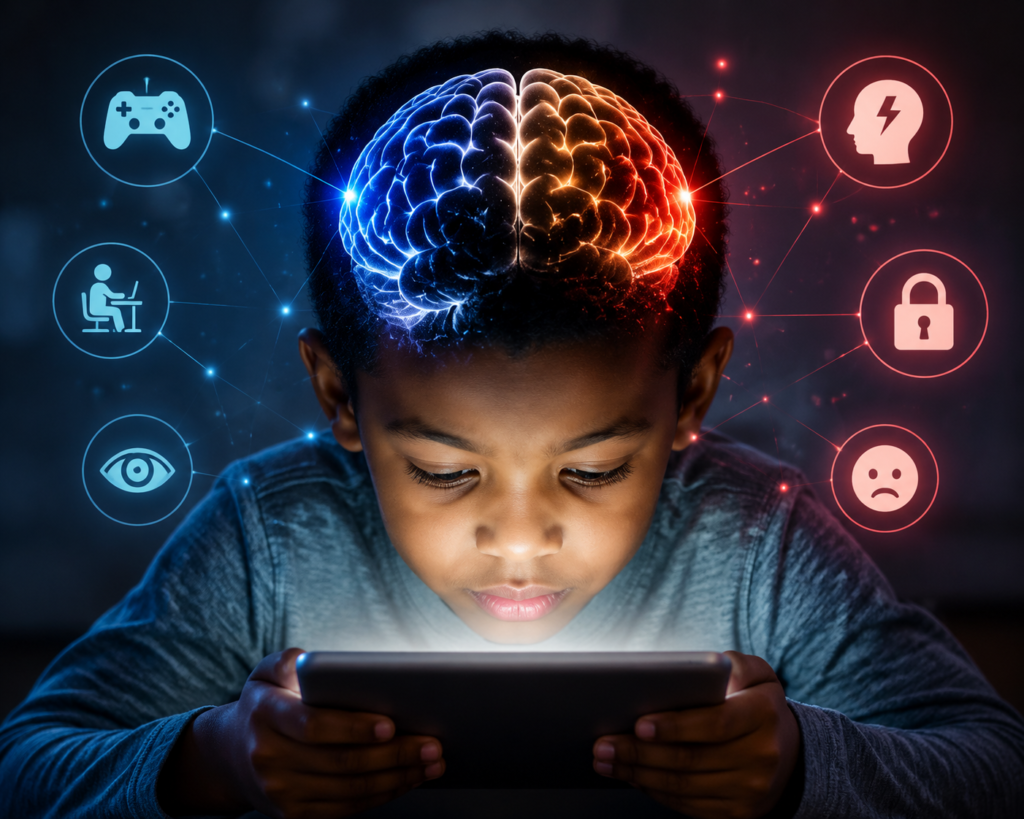
While technology can improve learning and creativity, too much screen exposure may create challenges for a child’s developing brain.
Impact on Attention and Learning
Fast-moving videos, games and constant notifications can train the brain to expect quick stimulation. Over time, some children may struggle with activities that require patience, focus and deeper thinking, such as reading or completing school assignments.
Sleep Problems Linked to Screen Use
Many children use phones or tablets before going to bed, but this habit can affect their sleep.
Screen light can interfere with the body’s natural sleep cycle, making it harder to fall asleep. Poor sleep can lead to tiredness, mood changes and difficulty concentrating during the day.
Effects on Social and Emotional Development
Children develop important social skills through real-life interactions with family, friends and their communities.
Spending too much time online may reduce opportunities for face-to-face communication, affecting skills such as understanding emotions, teamwork and building relationships.
Online Risks Facing Children
The internet provides endless information, but it also exposes children to dangers such as cyberbullying, harmful content and unrealistic comparisons on social media.
Without proper guidance, children may experience stress, anxiety or reduced confidence.
Technology Addiction
Many apps and games are designed to keep users engaged for long periods. Some children may find it difficult to control their screen time, affecting school performance, family relationships and daily routines.
How Parents Can Create Healthy Technology Habits
Parents can help children enjoy technology safely by:
- Setting reasonable screen-time limits.
- Encouraging outdoor activities and hobbies.
- Keeping devices away during meals and bedtime.
- Monitoring online content.
- Teaching children responsible internet use.
- Spending quality time together without screens.
Technology is a powerful tool, but the healthiest childhood experiences happen when digital learning is balanced with real-world connections, creativity and human interaction.

