
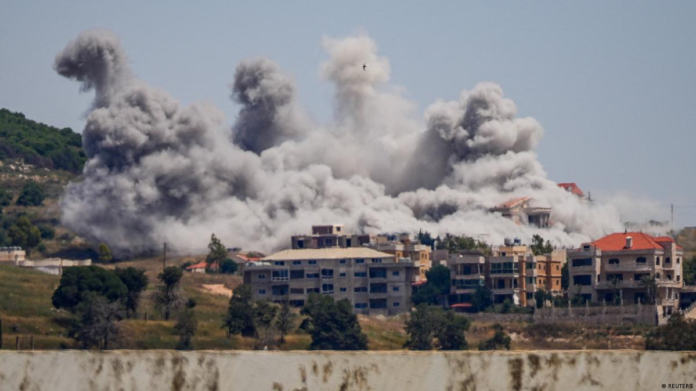
Israel and Lebanon have agreed to revive their fragile ceasefire arrangement under a new US-backed framework aimed at reducing tensions along the border. The deal introduces proposed security zones inside Lebanon where Hezbollah fighters would not be allowed to operate, though its success depends entirely on a complete halt to hostilities by the armed group.
Highlights
- Israel and Lebanon have agreed to renew a ceasefire framework.
- The deal was brokered through US-mediated negotiations.
- New security zones in southern Lebanon would exclude Hezbollah fighters.
- The agreement depends on Hezbollah ending all attacks.
- Airstrikes and rocket fire continued even as the deal was announced.
Main Story
New Ceasefire Framework Announced
A fresh diplomatic effort to calm months of fighting between Israel and Lebanon has resulted in a new ceasefire understanding facilitated by the United States.
In a joint statement released after the latest round of talks, the parties outlined plans to strengthen security along the border and prevent further escalation. Central to the proposal is a requirement that Hezbollah cease all attacks and withdraw its operatives from key areas in southern Lebanon.
The agreement also emphasized that Lebanon’s future should not be controlled by either foreign governments or armed non-state groups.
Security Zones Planned in Southern Lebanon
One of the most significant aspects of the arrangement is the proposed creation of special security zones where only the Lebanese Armed Forces would be permitted to operate.
The areas are expected to be located between the Israeli border and the Litani River, a region that has long been a flashpoint in conflicts involving Hezbollah and Israel.
However, officials have not yet released maps or detailed plans explaining how these zones will be managed on the ground.
Fighting Continues Despite Diplomatic Progress
Although the announcement was intended to signal a path toward de-escalation, violence continued across the region.
Israeli strikes reportedly targeted multiple locations in southern Lebanon, while Hezbollah launched rockets toward northern Israel. Casualties were reported on both sides as military operations persisted.
Lebanese authorities also accused Israel of targeting ambulances and military personnel, allegations that have added to growing concerns over civilian safety and the protection of medical workers during the conflict.
Political Reactions and Challenges Ahead
The proposed agreement has already drawn mixed reactions.
While international mediators view it as a step toward stability, some Israeli political figures have criticized the arrangement, arguing that it could eventually allow Hezbollah to regroup.
For Lebanon, the challenge remains balancing national security concerns with the influence of Hezbollah, which remains one of the country’s most powerful political and military forces.
Representatives from both nations are expected to meet again later this month as negotiators attempt to transform the current framework into a broader and more lasting agreement.
Humanitarian Impact Remains Severe
The conflict has left a significant humanitarian toll. Thousands of people have reportedly been killed since fighting intensified, while large numbers of civilians have been displaced from their homes.
Communities on both sides of the border continue to face uncertainty as military operations, political negotiations, and security concerns unfold simultaneously.
Whether the latest ceasefire initiative succeeds may depend on the willingness of all parties to maintain restraint and commit to long-term dialogue rather than further confrontation.
Read Also
- E-Citizen Money Trail Mystery: MPs Summon PS Kiptoo as Billions Fail to Reach Treasury (Spm Buzz | Stay Updated Stay Informed)
- The 10 Million Remote Job Trap: Why Most ‘Global’ Listings Are Ghost Postings Designed to Harvest Data (Spm Buzz | Stay Updated Stay Informed)
- “Maandamano Imegeuka Wizi” – Nairobi Man Tells (Spm Buzz | Stay Updated Stay Informed)
You Might Have Missed This
- Mulamwah Speaks on New Romance Weeks After Ruth K Split (Spm Buzz | Stay Updated Stay Informed)
- Murugi Munyi Shares Secret to a Successful Relationship (Spm Buzz | Stay Updated Stay Informed)
- Dem wa Facebook Explains Why She Treasures Her Relationship with Obinna (Spm Buzz | Stay Updated Stay Informed)
Closing Line
As diplomats push for peace, the true test will be whether the guns fall silent long enough for trust to return to a region that has endured years of conflict and uncertainty.Title Suggestions
Israel and Lebanon Renew Ceasefire Efforts as Hezbollah Faces New Restrictions
Fresh Israel-Lebanon Deal Hinges on Hezbollah Halting Attacks
US-Brokered Security Agreement Seeks to Ease Israel-Lebanon Conflict
Israel, Lebanon Reach New Ceasefire Understanding Amid Ongoing Violence
Intro
Israel and Lebanon have agreed to revive their fragile ceasefire arrangement under a new US-backed framework aimed at reducing tensions along the border. The deal introduces proposed security zones inside Lebanon where Hezbollah fighters would not be allowed to operate, though its success depends entirely on a complete halt to hostilities by the armed group.
Highlights
- Israel and Lebanon have agreed to renew a ceasefire framework.
- The deal was brokered through US-mediated negotiations.
- New security zones in southern Lebanon would exclude Hezbollah fighters.
- The agreement depends on Hezbollah ending all attacks.
- Airstrikes and rocket fire continued even as the deal was announced.
Main Story
New Ceasefire Framework Announced
A fresh diplomatic effort to calm months of fighting between Israel and Lebanon has resulted in a new ceasefire understanding facilitated by the United States.
In a joint statement released after the latest round of talks, the parties outlined plans to strengthen security along the border and prevent further escalation. Central to the proposal is a requirement that Hezbollah cease all attacks and withdraw its operatives from key areas in southern Lebanon.
The agreement also emphasized that Lebanon’s future should not be controlled by either foreign governments or armed non-state groups.
Security Zones Planned in Southern Lebanon
One of the most significant aspects of the arrangement is the proposed creation of special security zones where only the Lebanese Armed Forces would be permitted to operate.
The areas are expected to be located between the Israeli border and the Litani River, a region that has long been a flashpoint in conflicts involving Hezbollah and Israel.
However, officials have not yet released maps or detailed plans explaining how these zones will be managed on the ground.
Fighting Continues Despite Diplomatic Progress
Although the announcement was intended to signal a path toward de-escalation, violence continued across the region.
Israeli strikes reportedly targeted multiple locations in southern Lebanon, while Hezbollah launched rockets toward northern Israel. Casualties were reported on both sides as military operations persisted.
Lebanese authorities also accused Israel of targeting ambulances and military personnel, allegations that have added to growing concerns over civilian safety and the protection of medical workers during the conflict.
Political Reactions and Challenges Ahead
The proposed agreement has already drawn mixed reactions.
While international mediators view it as a step toward stability, some Israeli political figures have criticized the arrangement, arguing that it could eventually allow Hezbollah to regroup.
For Lebanon, the challenge remains balancing national security concerns with the influence of Hezbollah, which remains one of the country’s most powerful political and military forces.
Representatives from both nations are expected to meet again later this month as negotiators attempt to transform the current framework into a broader and more lasting agreement.
Humanitarian Impact Remains Severe
The conflict has left a significant humanitarian toll. Thousands of people have reportedly been killed since fighting intensified, while large numbers of civilians have been displaced from their homes.
Communities on both sides of the border continue to face uncertainty as military operations, political negotiations, and security concerns unfold simultaneously.
Whether the latest ceasefire initiative succeeds may depend on the willingness of all parties to maintain restraint and commit to long-term dialogue rather than further confrontation.
As diplomats push for peace, the true test will be whether the guns fall silent long enough for trust to return to a region that has endured years of conflict and uncertainty.

