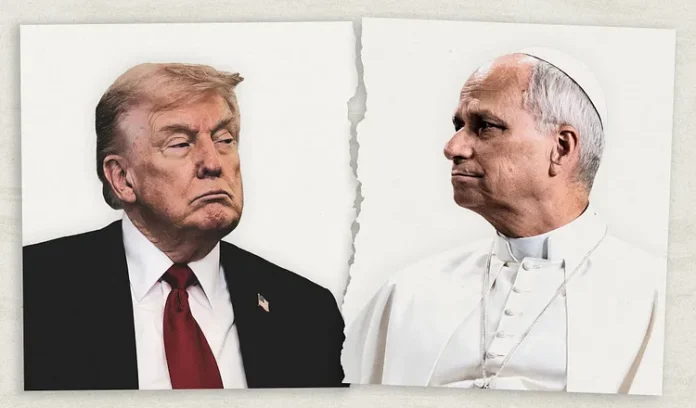
Tensions between Donald Trump and Pope Leo XIV have escalated further, with the US president refusing to apologize and defending a controversial social media post that drew global criticism.
Highlights:
- Trump refuses to apologize for remarks about Pope Leo
- Defends viral image, says it was meant to depict him as a doctor
- Pope reiterates commitment to peace and anti-war stance
- Dispute linked to ongoing Iran conflict
- Critics, including religious leaders, condemn Trump’s comments
Main Story:
Trump Stands His Ground
Speaking at the White House, Donald Trump made it clear he would not back down from his criticism of Pope Leo, arguing that the pontiff had publicly opposed his stance on the Iran conflict.
“He went public… I’m just responding,” Trump said, adding that he views the pope as “weak” on crime and foreign policy.
Pope Leo Responds Calmly
Pope Leo, speaking during his travels, pushed back against the criticism while maintaining a measured tone.
He emphasized that his message is rooted in the Gospel and focused on peace, dialogue, and reconciliation, not political rivalry. The pontiff also made it clear he would continue speaking out against war regardless of pressure.
Controversial Meme Sparks Backlash
The feud intensified after Trump posted, and later deleted, an AI-generated image portraying himself in a saint-like, healing role.
Defending the post, Trump claimed he believed it depicted him as a doctor “making people better,” and blamed media interpretation for the backlash.
However, the image drew criticism from a wide spectrum, including religious figures and some of Trump’s own supporters, who viewed it as inappropriate.
War in Iran at the Center
At the heart of the disagreement is the ongoing conflict involving Iran.
Pope Leo has consistently condemned war and warned against what he described as dangerous displays of power, while Trump has defended a hardline approach, arguing that preventing a nuclear Iran is a top priority.
The clash reflects broader differences between moral advocacy and political strategy in global leadership.
Rare Public Rift
Direct public criticism between a pope and a US president is highly unusual.
Religious leaders, including Paul S. Coakley, expressed disappointment, stressing that the pope’s role is spiritual rather than political.
What It Means
The exchange underscores a deeper divide over war, leadership, and the role of moral authority in global affairs.
While both sides insist they are acting in the best interest of their respective missions, the public nature of the clash has amplified its global significance.

