
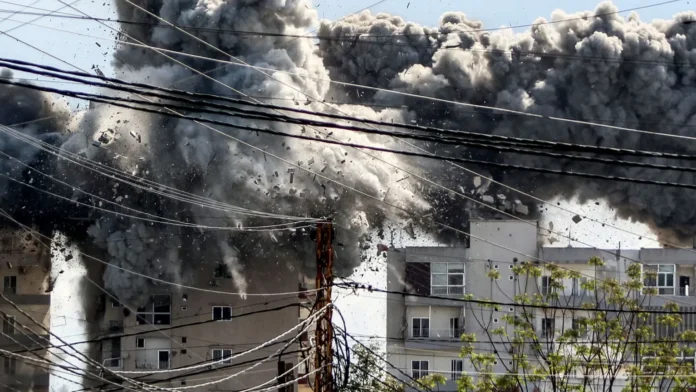
Hours after a US‑Iran ceasefire was announced, southern Lebanon witnessed renewed violence as Israeli forces launched air strikes, killing at least four people. The move highlights the fragile nature of regional truce agreements, with Israel making clear that Lebanon is not part of the US‑Iran deal.
Highlights
- Israeli air strikes near Sidon killed at least four civilians amid US‑Iran ceasefire
- Netanyahu emphasizes that Lebanon is excluded from the truce
- Hezbollah has paused some attacks under the Iran ceasefire but continues operations
- The Israeli military signals ongoing operations against Hezbollah in Lebanon
- Civilian safety and regional stability remain at risk
Main Story
Air Strikes Resume in Southern Lebanon
Early Wednesday, Israeli forces carried out air strikes across southern Lebanon, targeting areas including the outskirts of Sidon. According to Lebanon’s official news agency, at least four people were killed, reigniting fears of escalation in the region.
The attacks came shortly after a two-week ceasefire between the United States and Iran was announced, intended to pause hostilities in the broader Middle East and reopen critical maritime routes.
Lebanon Excluded from US‑Iran Truce
Israeli Prime Minister Benjamin Netanyahu clarified that the ceasefire does not cover Lebanon. Israeli operations against Hezbollah are to continue independently, emphasizing a distinction between Israel–Hezbollah tensions and the US‑Iran de-escalation.
Hezbollah’s Response
Hezbollah announced a temporary halt to rocket fire on northern Israel and Israeli troops in Lebanon as part of its compliance with the US‑Iran ceasefire. However, the group has not suspended all military activities, leaving uncertainty over the conflict’s trajectory.
Israeli Military Perspective
The Israeli Defense Forces confirmed that operations targeting Hezbollah in Lebanon will continue despite the broader ceasefire. The statement underscores Israel’s intention to maintain pressure on the Lebanese group while the US‑Iran deal limits direct conflict with Tehran.
Broader Ceasefire Context
The US‑Iran truce primarily focuses on halting attacks between Washington and Tehran, including pausing strikes on Iranian territory and ensuring free passage through the Strait of Hormuz. Lebanon’s exclusion from the agreement leaves a gap in regional de-escalation efforts, contributing to ongoing insecurity.
Why This Matters
- Continued violence in Lebanon could destabilize regional de-escalation initiatives
- Civilians face renewed threats, including displacement and infrastructure damage
- Ambiguities over ceasefire coverage risk heightening tensions between regional actors
Read Also
- Oil Prices Crash, Stocks Surge After US–Iran Ceasefire Deal
- Tensions Ease as US and Iran Seal Fragile Ceasefire Agreement
- Zimbabwe Split as Plan to Scrap Presidential Elections Sparks Debate

