
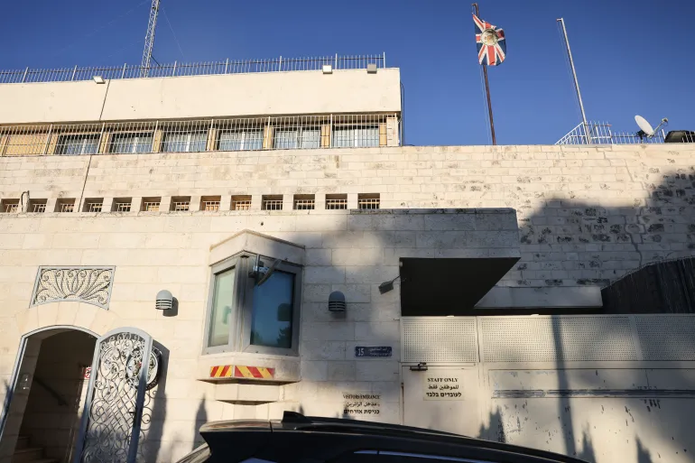
A diplomatic dispute between Israel and the United Kingdom over Britain’s consulate in occupied East Jerusalem has resulted in most UK diplomats leaving the building, although Britain insists the mission itself will remain operational.
Highlights
- Israel said the British Consulate in Jerusalem had closed its operations.
- The UK says the building will remain open as the UK Mission, Jerusalem.
- Twenty diplomats, including the consul general, are leaving temporarily.
- Seven UK diplomats will remain to carry out a limited range of duties.
- The dispute is linked to British sanctions targeting Israeli settlements in the occupied West Bank.
Main Story
UK maintains presence despite Israeli closure order
A diplomatic standoff between Israel and the UK has reached a compromise, with most British diplomats leaving the consulate in occupied East Jerusalem while a smaller team remains in the building.
Israeli Foreign Minister Gideon Saar said Israel had implemented measures announced in September following the UK’s decision to impose sanctions related to Israeli settlements in the occupied West Bank.
Saar said the British Consulate had ceased its operations and that its signage had been removed.
However, Britain disputes the characterization that the diplomatic facility has closed.
UK Foreign Secretary Ed Miliband said the building will continue operating and will be known as the UK Mission, Jerusalem.
Most diplomats leave
Under an understanding reached between the two governments, 20 British diplomats, including the consul general, are expected to leave Israel.
Israel said seven diplomats would be allowed to remain in the building, although their activities would be restricted.
The British government, however, said some staff and their families had been temporarily withdrawn because of security concerns.
Miliband maintained that the UK does not accept Israel’s position that it has the authority to close the mission.
He also reiterated Britain’s longstanding position that East Jerusalem is occupied territory.
Diplomatic dispute follows UK sanctions
The disagreement stems from Britain’s decision to impose sanctions connected to Israeli settlements in the occupied West Bank.
Israel had threatened to close the consulate in response, giving the UK a deadline to resolve the dispute.
The consulate has a long history, having been established in 1838. Its role includes managing Britain’s relations with Palestinians in Jerusalem, the West Bank and Gaza.
It operates separately from the UK’s embassy in Tel Aviv, which handles Britain’s primary diplomatic relationship with Israel.
Seven diplomats to remain
The Foreign, Commonwealth and Development Office said the seven officials staying behind would continue working independently and providing essential services.
British officials described the arrangement as a positive outcome because the entire diplomatic operation was not shut down.
Foreign Office minister Stephen Doughty said the UK would retain a presence and continue engaging with Palestinian authorities while discussions with Israel continue.
The British government has also reserved the option of taking what it described as reciprocal measures if the dispute is not resolved.
For now, however, officials say they will hold off on further action while diplomatic discussions continue.
A temporary compromise
The arrangement appears to have eased the immediate risk of a wider diplomatic confrontation between London and Tel Aviv.
Israel can maintain that the consulate’s previous operations have ended, while Britain continues to insist that its diplomatic presence in Jerusalem remains intact.
For the moment, the building remains occupied by British diplomatic staff, even as the two governments continue to disagree over its status and the broader political issues behind the dispute.
For now, the name on the building may have changed, but the bigger question remains: can the UK and Israel resolve their differences without allowing the diplomatic dispute to widen?

