
Ugandan President Yoweri Museveni has urged the country to draw more lessons from traditional cultural practices in its fight against HIV. Speaking in Fort Portal, Museveni pointed to Karamoja’s reported lower HIV prevalence and argued that traditional approaches to relationships and marriage could offer useful lessons for communities facing higher infection rates.
Highlights
- Museveni urged Uganda to reconsider the role of traditional marriage practices in HIV prevention.
- He cited Karamoja as an example of a region with comparatively lower HIV prevalence.
- The President called for greater preservation of indigenous knowledge and cultural practices.
- Fort Portal and Mbarara have recorded significantly higher HIV prevalence in available estimates.
- Museveni’s remarks have placed culture and marriage practices at the centre of a renewed HIV debate.
Main Story
Museveni pushes traditional approach to HIV prevention
President Yoweri Museveni has called for greater attention to Uganda’s traditional cultural practices as the country continues its efforts to address HIV.
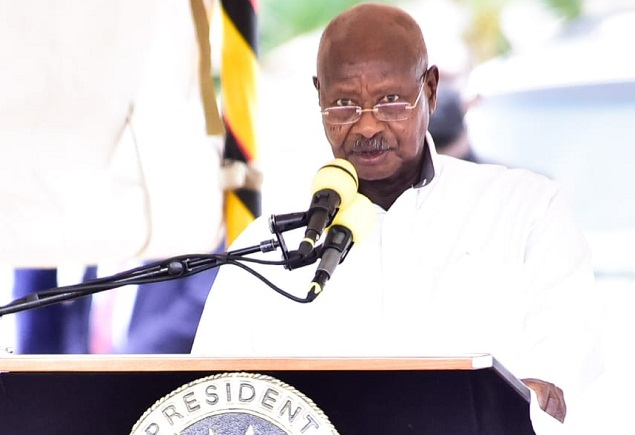
Speaking at Karuziika Palace in Fort Portal during the enthronement of Tooro’s 14th Omukama, Edward Rukidi Nyabongo I, Museveni argued that some traditional social structures could provide lessons for tackling the spread of HIV.
The President specifically pointed to Karamoja, saying the region’s traditional way of life coincides with lower HIV prevalence compared with some urban and southern parts of Uganda.
Karamoja becomes Museveni’s example
Museveni encouraged Ugandans to compare HIV figures from Karamoja with those recorded in places such as Fort Portal, Mbarara and Kampala.
He suggested that communities that have retained stronger traditional structures may have experienced different outcomes in the HIV epidemic.
The President attributed Karamoja’s reported HIV prevalence to around 3 per cent, while suggesting that some areas in southern Uganda record rates between 10 and 15 per cent.
However, the comparison forms part of Museveni’s broader argument about cultural practices and should not be interpreted as proof that traditional marriage systems alone determine HIV prevalence.
Focus on marriage and cultural values
Museveni placed traditional marriage practices at the centre of his remarks, arguing that cultural expectations around relationships and family life could contribute to healthier social behaviour.
He also encouraged cultural institutions to preserve indigenous knowledge and practices, saying some of these traditions could still offer useful approaches to modern social challenges.
His comments come as Uganda continues to balance public health interventions with conversations about culture, relationships and changing social behaviour.
HIV figures highlight regional differences
Available HIV estimates show substantial differences between parts of Uganda.
According to the 2025 Uganda AIDS Commission estimates cited in the report, Fort Portal City had an HIV prevalence of about 14 per cent, while Mbarara City recorded approximately 10 per cent.
These figures contrast with Museveni’s description of Karamoja as having a much lower prevalence.
The differences highlight the complex nature of HIV transmission, which is influenced by multiple social, behavioural, demographic and health-system factors rather than a single cultural practice.
Culture remains part of Uganda’s public health conversation
Museveni’s remarks have reopened discussion about whether traditional institutions can play a bigger role in addressing contemporary health challenges.
His appeal was not simply about marriage but also about preserving cultural knowledge that he believes could help communities respond to social problems.
As Uganda continues its HIV response, the challenge will be finding ways to combine effective public health strategies with cultural approaches that respect communities while protecting people’s health.
Uganda’s HIV conversation continues to evolve, but the bigger question remains: how can cultural wisdom and modern public health strategies work together to protect more lives?

